Comprehensive Eye Care & Vision Correction in Incheon · Multilingual International Concierge
23+ Years Clinical Experience
en-US


Ophthalmology Guide
Why You Should Get Your Eyes Checked for Macular Degeneration Regularly
Discover why regular eye exams for macular degeneration are crucial for early detection and vision health. Protect your sight—schedule your checkup today!
Schedule a ConsultationIntroduction: Seeing Clearly Today, Protecting Tomorrow
Picture this: you’re reading your favorite novel or checking messages on your phone, when suddenly the words seem slightly blurry or the lines on the screen look bent.
Understanding Macular Degeneration
The retina is often compared to the film inside a traditional camera. It captures light and translates it into images that your brain can interpret. At the very center of this delicate structure lies the macula.
- Dry AMD: The most common form, accounting for about 80–90% of cases. It occurs when the tissues of the macula gradually thin and tiny yellow deposits called drusen build up under the retina. Early stages may cause little to no symptoms, but as the disease advances, central vision slowly deteriorates. Patients may notice that printed words are increasingly blurred or that they need more light to read.
- Wet AMD: Less common but far more aggressive. Abnormal blood vessels grow beneath the retina and leak blood or fluid, which scars the macula. This type can progress rapidly, sometimes within weeks or months, and can cause sudden, severe central vision loss. Patients often describe straight lines appearing wavy, or a dark patch in the center of their vision.
Why Regular Screenings Are Essential
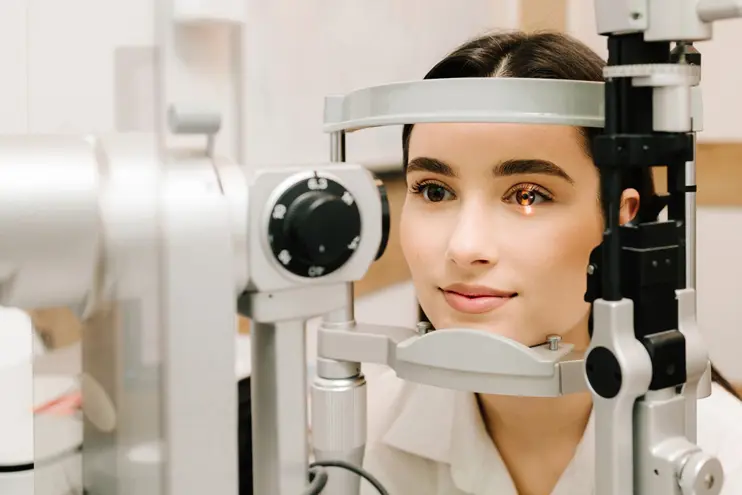
Unlike some health conditions that cause pain or discomfort, AMD is silent in its early stages. You may feel perfectly fine while the disease quietly progresses. Early retinal changes are detectable only through specialized imaging techniques such as Optical Coherence Tomography (OCT) or fundus photography.
- Nutritional supplements (AREDS2 formula) can reduce the risk of advanced AMD in certain patients.
- Lifestyle changes such as quitting smoking, improving diet, and protecting eyes from UV light make a measurable difference.
- For wet AMD, anti-VEGF injections can stop abnormal blood vessels from growing and preserve vision.
The Common Misconceptions Patients Have
Many people delay screenings because they assume worsening eyesight is just a natural part of aging. To be honest, it’s not always about buying stronger glasses or adjusting to “older eyes.” We often hear patients say: “I thought I just needed new lenses.” But glasses don’t solve macular degeneration.
Who Is Most at Risk?
While anyone can develop AMD, some groups face higher risk:
- Age: Most common after 50, risk increases significantly with each decade.
- Genetics: Family history plays a strong role. If your parents or siblings had AMD, your risk is elevated.
- Lifestyle: Smoking doubles the risk. Poor diet, high blood pressure, and obesity are also linked to AMD.
- Environment: Prolonged exposure to UV light without protection can increase risk.
What Happens During an AMD Exam?
At Global Ubal Eye Center, an AMD evaluation is a straightforward, non-invasive process:
How Early Action Protects Daily Life

The consequences of untreated macular degeneration reach far beyond eye charts. Central vision loss means losing the ability to:
- Read books, newspapers, or medication labels.
- Recognize the faces of friends and family.
- Drive safely, especially at night.
- Cook, sew, or engage in hobbies that require detail.
A Clinic That Understands and Cares
Global Ubal Eye Center, led by Dr. Heecheol Bae, has spent over two decades providing advanced eye care to patients from Korea and abroad. With state-of-the-art diagnostic tools, we are able to detect macular degeneration at its earliest stages and tailor treatment plans to each patient’s unique needs.
How Often Should You Book an Exam?
- Over 50 years old: At least once a year.
- With family history of AMD: Annual exams starting even earlier, around age 40–45.
- Noticing vision changes: Immediately — don’t delay. Distortions, blurriness, or difficulty reading are red flags.
Conclusion: Protecting Your Future Starts Now
Macular degeneration is a thief that works quietly, stealing central vision before you realize what’s happening. By the time symptoms appear, the damage is often permanent. But the good news is this: with regular screenings, early detection, and timely care, you can take back control.
More Articles
Continue reading our ophthalmology guides and vision care insights.

SMILE vs LASIK: Recovery Benchmarks for Vision Correction Care
South Korea has solidified its position as a global epicenter for ophthalmology, with the domestic LASIK and refractive surgery market projected to reach **USD 167.37 million by 2035**, growing at a steady CAGR of 8.54%.
Learn More

Prevalence of Myopia in Korea: The Value of Dream Lens Therapy
The prevalence of myopia among young people in South Korea has reached critical levels, often described as a "myopia epidemic." According to recent data from the **Korean National Health and Nutrition Examination Survey (KNHANES)**, the prevalence of myopia...
Learn More

Multidisciplinary Care: The Future of Korean Pediatric Eye Clinics
The landscape of pediatric eye care in South Korea is shifting rapidly. With nearly **21.9% of Korean children** estimated to be affected by various visual disorders according to nationwide health screenings, the demand for specialized intervention has never...
Learn More