Comprehensive Eye Care & Vision Correction in Incheon · Multilingual International Concierge
23+ Years Clinical Experience
en-US

Ophthalmology Guide
Why Regular Eye Exams Are Key for Managing Dry Eye Syndrome
Discover why regular eye exams are crucial for managing dry eye syndrome, preventing discomfort, and protecting vision health. Book your exam today!
Schedule a ConsultationIntroduction
Most people only think of visiting an eye doctor when their eyesight suddenly becomes blurry, when they struggle to read small print, or when they experience sharp discomfort. But in reality, the most common eye issues often build slowly over time, quietly influencing how we see and how we feel each day. One of these conditions is Dry Eye Syndrome.
Understanding Dry Eye Syndrome
Dry Eye Syndrome occurs when the eyes are unable to produce enough tears, or when tears evaporate too quickly. Many people imagine tears as simple water, but in truth, they are a delicate mixture of water, oil, and mucus. This blend keeps the eye’s surface smooth and moist, nourishes cells, and protects against infection. Without this balance, the eyes become irritated and vision can fluctuate.
Why Regular Eye Exams Make All the Difference
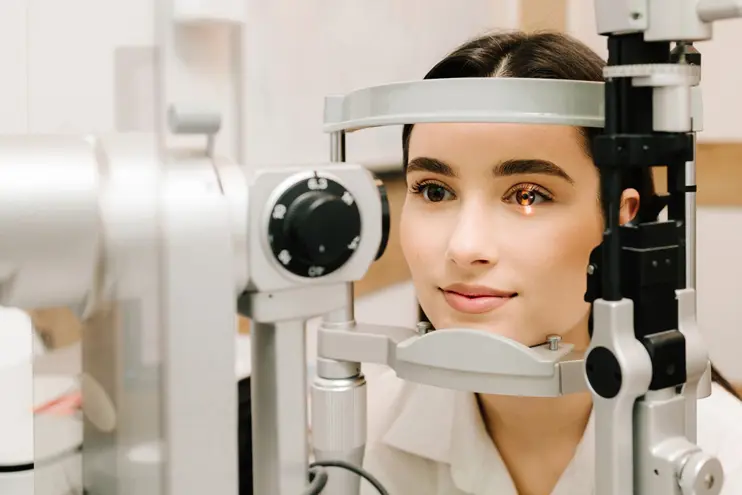
One of the most frustrating aspects of Dry Eye Syndrome is how subtle it can be in the beginning. Patients often adapt to discomfort without realizing it—using over-the-counter drops, avoiding certain tasks, or just living with the irritation. But professional eye exams reveal problems long before they become severe.
- Early Detection: Even when symptoms aren’t noticeable, changes in tear quality or corneal health may already be underway. Advanced diagnostics like tear film break-up time testing, Schirmer’s test, or meibography can identify early dysfunction in the glands that produce essential tear components.
- Personalized Treatment: Dry Eye Syndrome isn’t a single disease with a universal solution. Its causes range from aging and hormonal changes to autoimmune disorders, medications, and lifestyle habits like excessive screen use. Regular exams allow doctors to adjust treatments as needed, whether that means prescription medications, punctal plugs, or thermal therapies that improve gland function.
- Protection Against Long-Term Damage: Without consistent care, chronic dry eye can scar the cornea, create persistent inflammation, and even increase the risk of infections. For surgical patients—those preparing for LASIK or cataract surgery—dry eye management is essential to ensure safe and accurate results. Routine exams protect patients from complications that could affect their vision for life.
The Role of Lifestyle in Dry Eye
The modern lifestyle plays a significant role in why Dry Eye Syndrome is more common today than ever before. In South Korea, for instance, digital screen use ranks among the highest worldwide. People of all ages—from students preparing for exams to professionals working long office hours—spend much of their day staring at screens.
- The 20-20-20 rule: every 20 minutes, look at something 20 feet away for 20 seconds.
- Conscious blinking exercises to fully close the eyelids.
- Using humidifiers at home or in the office to keep air moist.
- Adjusting contact lens wear or switching to more breathable lens materials.
Overlooked Links Between Dry Eye and Other Conditions

One of the most important reasons to schedule regular eye exams is that Dry Eye Syndrome rarely exists in isolation. It can complicate or disguise other eye conditions:
- LASIK candidates: Without treating underlying dryness, surgical outcomes may be less accurate, leaving patients with ongoing discomfort or unstable vision.
- Cataract patients: Even after successful surgery, untreated dry eye can blur vision and reduce satisfaction with results.
- Contact lens wearers: Dryness often leads to intolerance, forcing patients to shorten wear time or stop wearing lenses altogether.
- Glaucoma patients: Long-term use of medicated eye drops can disrupt tear production, making dry eye a side effect of treatment.
The Global Ubal Eye Center Approach
At Global Ubal Eye Center, we believe that dry eye care should be proactive, not reactive. With over 23 years of experience, Dr. Heecheol Bae and our team provide personalized care grounded in advanced diagnostics and compassion for patients’ everyday struggles. Our clinic is equipped with specialized technology to analyze tear film stability and gland health, giving us insights that go far beyond surface symptoms.
A Patient’s Perspective
Conclusion: Protecting Vision, Preserving Comfort
More Articles
Continue reading our ophthalmology guides and vision care insights.

SMILE vs LASIK: Recovery Benchmarks for Vision Correction Care
South Korea has solidified its position as a global epicenter for ophthalmology, with the domestic LASIK and refractive surgery market projected to reach **USD 167.37 million by 2035**, growing at a steady CAGR of 8.54%.
Learn More

Prevalence of Myopia in Korea: The Value of Dream Lens Therapy
The prevalence of myopia among young people in South Korea has reached critical levels, often described as a "myopia epidemic." According to recent data from the **Korean National Health and Nutrition Examination Survey (KNHANES)**, the prevalence of myopia...
Learn More

Multidisciplinary Care: The Future of Korean Pediatric Eye Clinics
The landscape of pediatric eye care in South Korea is shifting rapidly. With nearly **21.9% of Korean children** estimated to be affected by various visual disorders according to nationwide health screenings, the demand for specialized intervention has never...
Learn More