Comprehensive Eye Care & Vision Correction in Incheon · Multilingual International Concierge
23+ Years Clinical Experience
en-US


Ophthalmology Guide
Why Eye Care Matters for Children with Learning Disabilities
Discover why eye care matters for children with learning disabilities. Improve focus, confidence, and success with proper vision support. Learn more today!
Schedule a ConsultationIntroduction: When Learning Challenges Overlap with Vision Struggles
Parents often describe the moment with a mix of frustration and worry: their child is bright, curious, and full of potential, but school feels like an uphill climb. The child struggles to read smoothly, loses focus quickly, or avoids homework altogether. Teachers may suggest more tutoring, psychologists may explore behavioral or cognitive assessments, and parents are left wondering what else they can do.
How Vision Shapes Learning
Around 80% of classroom learning is visual. From the moment a child begins to recognize letters, to when they solve math problems or navigate sports activities, their eyes act as the primary gateway to information. For children without any disabilities, a vision problem is already a hurdle. For children with dyslexia, ADHD, or developmental delays, that same hurdle can feel like a wall.
The Hidden Gap in School Screenings
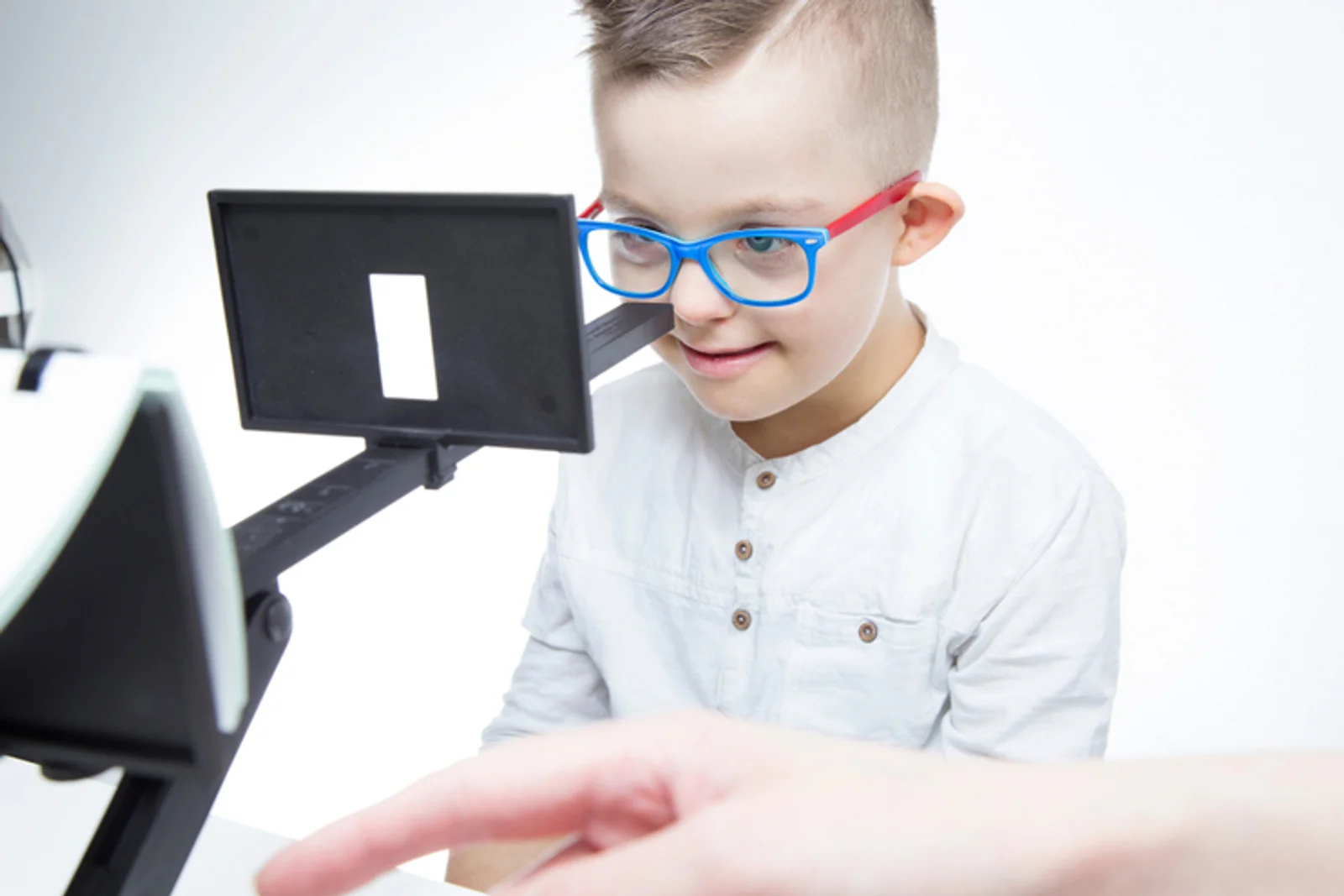
Many parents assume that school vision checks are enough. Unfortunately, these screenings are designed to catch only the most obvious problems, such as severe nearsightedness. They often miss subtle but impactful conditions like:
- Amblyopia (lazy eye): When one eye doesn’t develop normal vision, leading to poor depth perception.
- Convergence insufficiency: When the eyes struggle to work together up close, making reading exhausting.
- Astigmatism: Blurred or distorted vision at all distances, which can cause headaches and squinting.
- Focusing difficulties: Trouble shifting between near and far tasks, like looking from a book to the board.
Emotional and Social Impact of Vision Problems
Vision issues don’t just affect schoolwork—they shape a child’s confidence and social interactions.
What Parents Should Watch For
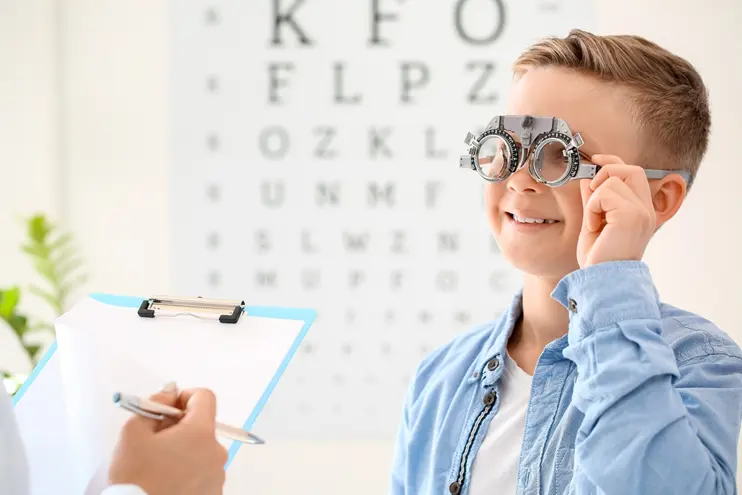
Children rarely articulate vision problems directly. They often assume everyone else sees the world as they do. That’s why parents play such a vital role in spotting subtle signs. Some red flags include:
- Frequent eye rubbing or blinking
- Tilting the head or covering one eye when reading
- Complaints of double vision or words “moving on the page”
- Holding books or tablets unusually close
- Frequent headaches after schoolwork
- Short attention span specifically during visual tasks
Eye Care in the Context of Learning Disabilities
It’s important to clarify: eye care does not “fix” a learning disability. Dyslexia, ADHD, autism, and other conditions have complex neurological roots. But eye care ensures that vision is not an additional barrier on top of those challenges.
- Dyslexia and Vision: Children with dyslexia may already find reading taxing. If they also have focusing or tracking issues, reading becomes doubly difficult. Correcting the vision issue doesn’t cure dyslexia but makes the reading process smoother.
- ADHD and Vision: Attention issues are magnified when a child struggles to see clearly. A pair of glasses won’t replace behavioral support, but it can reduce visual distractions and fatigue.
- Autism Spectrum Disorders: Children with autism may have unique sensory sensitivities, and vision problems can amplify sensory overload. A well-tailored eye care plan can help reduce stress in everyday environments.
The Global Ubal Eye Center Approach

At Global Ubal Eye Center, pediatric eye care is one of the areas closest to our hearts. With more than 23 years of experience in ophthalmology, Dr. Heecheol Bae and our team understand that children are not “small adults.” They require specialized attention, gentle communication, and diagnostic tools designed for developing eyes.
- Child-Friendly Testing: We use non-invasive methods that keep children comfortable and engaged.
- Personalized Care: Every treatment plan considers the child’s developmental needs, school demands, and family support system.
- Multilingual Support: We care for families not only from Korea but also from abroad, offering consultations in English, Japanese, Mongolian, and Russian.
- Long-Term Monitoring: Children’s vision changes as they grow. We guide parents on regular follow-ups to ensure problems are addressed early.
A Parent’s Perspective: Why This Matters
Conclusion: Clear Vision, Brighter Futures
More Articles
Continue reading our ophthalmology guides and vision care insights.

SMILE vs LASIK: Recovery Benchmarks for Vision Correction Care
South Korea has solidified its position as a global epicenter for ophthalmology, with the domestic LASIK and refractive surgery market projected to reach **USD 167.37 million by 2035**, growing at a steady CAGR of 8.54%.
Learn More

Prevalence of Myopia in Korea: The Value of Dream Lens Therapy
The prevalence of myopia among young people in South Korea has reached critical levels, often described as a "myopia epidemic." According to recent data from the **Korean National Health and Nutrition Examination Survey (KNHANES)**, the prevalence of myopia...
Learn More

Multidisciplinary Care: The Future of Korean Pediatric Eye Clinics
The landscape of pediatric eye care in South Korea is shifting rapidly. With nearly **21.9% of Korean children** estimated to be affected by various visual disorders according to nationwide health screenings, the demand for specialized intervention has never...
Learn More