Comprehensive Eye Care & Vision Correction in Incheon · Multilingual International Concierge
23+ Years Clinical Experience
en-US

Ophthalmology Guide
Why All-Laser LASIK Is the Future of Eye Surgery
Discover why All-Laser LASIK is revolutionizing vision correction. Learn about its precision, safety, and faster recovery—see the future clearly today!
Schedule a ConsultationIntroduction
If you’ve ever imagined life without glasses or contact lenses, you’ve probably heard of LASIK. But what many people don’t know is that not all LASIK is created equal — and a newer version called "All-Laser LASIK" (also known as bladeless or femtosecond LASIK) is rapidly becoming the global gold standard.
What Is All-Laser LASIK?
Traditional LASIK consists of two key steps:
Why All-Laser LASIK Is the Future
1. Enhanced Precision and Control
With a femtosecond laser, ophthalmologists can tailor the flap to each patient's corneal anatomy. At Global Ubal Eye Center, this ability is vital for treating patients with unique eye shapes, high prescriptions, or thin corneas. The result? More accurate outcomes and reduced surgical risks.
2. Better Safety Profile
Mechanical blades, while historically reliable, carry a higher risk of complications such as irregular flaps, buttonholes, or incomplete cuts. All-Laser LASIK dramatically reduces these risks. The laser's precision also supports better wound healing and flap adherence.
3. Faster Recovery and Visual Clarity
Patients often report sharper vision within hours and minimal discomfort. In our experience, most patients return to daily activities within a day or two. This is especially beneficial for international patients who travel to South Korea for surgery and have limited recovery time.
4. Expanded Eligibility for Patients
One of the most promising aspects of All-Laser LASIK is how it opens doors for patients previously told they weren’t candidates. Thin corneas, higher degrees of astigmatism, or certain topographies can now be safely treated. That’s a game-changer for many people who thought laser vision correction was out of reach.
5. Alignment with Long-Term Vision Health
At Global Ubal Eye Center, we emphasize the importance of lifelong eye health. Vision correction isn’t just about what you see tomorrow—it’s about protecting your eyes decades down the line. All-Laser LASIK reduces corneal trauma, which may help preserve structural integrity and ocular surface health over time.
Step-by-Step: How All-Laser LASIK Works
Step 1: Comprehensive Assessment
We begin with an in-depth evaluation: corneal mapping, pupil measurements, tear film analysis, retinal imaging, and glaucoma screening. This ensures we recommend LASIK only when it’s safe and appropriate. We also ask about your lifestyle — are you a swimmer? A pilot? A parent chasing after toddlers? These details help us shape your treatment.
Step 2: Femtosecond Laser Flap Creation
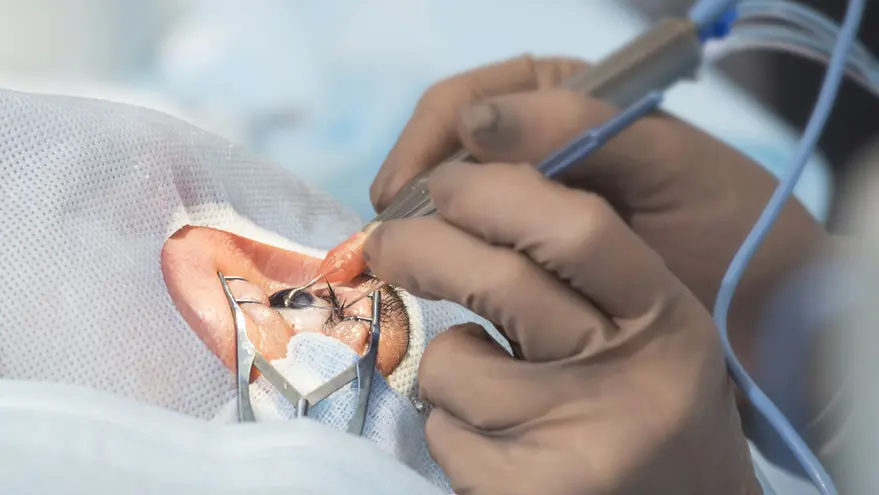
After numbing the eye with drops, a femtosecond laser creates the corneal flap in seconds. It’s painless, quiet, and incredibly precise. Most patients describe this step as a mild pressure — nothing more.
Step 3: Excimer Laser Reshaping
The excimer laser then reshapes the cornea based on a personalized treatment plan. Using advanced tracking systems, the laser adjusts for even the slightest eye movement. Each pulse of light is calculated to ensure optimal results.
Step 4: Flap Repositioning
The corneal flap is carefully repositioned. It bonds naturally without stitches and begins healing almost immediately. Because the edges of the flap are so clean and smooth, the healing process is faster and more predictable than with traditional LASIK.
Step 5: Post-Operative Care
Patients receive protective eyewear, medicated drops, and detailed recovery instructions. Follow-up visits monitor healing and screen for dry eye, which we actively manage to ensure long-term comfort. We even offer guidance for international patients on how to continue care once they return home.
The Bigger Picture: What Most People Overlook

- Technology Isn’t Everything: The surgeon's experience and the clinic's follow-up care matter just as much. That’s why we combine advanced diagnostics with multilingual patient support.
- Eyes Change Over Time: Even after LASIK, you may experience presbyopia or cataracts later in life. Our clinic continues to monitor these changes.
- Customization Is Key: Every All-Laser LASIK procedure at our center is tailored, whether you're a marathon runner or a graphic designer.
- Not Everyone Is a Candidate: We’re honest about who should and shouldn’t get LASIK. Sometimes, a different procedure like LASEK or an implantable lens is more appropriate.
Why International Patients Choose Global Ubal Eye Center
Final Thoughts: Choosing a Future-Proof Option
More Articles
Continue reading our ophthalmology guides and vision care insights.

SMILE vs LASIK: Recovery Benchmarks for Vision Correction Care
South Korea has solidified its position as a global epicenter for ophthalmology, with the domestic LASIK and refractive surgery market projected to reach **USD 167.37 million by 2035**, growing at a steady CAGR of 8.54%.
Learn More

Prevalence of Myopia in Korea: The Value of Dream Lens Therapy
The prevalence of myopia among young people in South Korea has reached critical levels, often described as a "myopia epidemic." According to recent data from the **Korean National Health and Nutrition Examination Survey (KNHANES)**, the prevalence of myopia...
Learn More

Multidisciplinary Care: The Future of Korean Pediatric Eye Clinics
The landscape of pediatric eye care in South Korea is shifting rapidly. With nearly **21.9% of Korean children** estimated to be affected by various visual disorders according to nationwide health screenings, the demand for specialized intervention has never...
Learn More