Comprehensive Eye Care & Vision Correction in Incheon · Multilingual International Concierge
23+ Years Clinical Experience
en-US

Ophthalmology Guide
When Should You Consider Glasses for Your Child? A Guide
Discover when kids may need vision correction. Learn signs your child needs glasses & get expert tips for healthy eyesight. Read our full guide today!
Schedule a ConsultationIntroduction
As parents, one of our greatest hopes is to see our children thrive — to watch them discover the world, learn with curiosity, and grow with confidence. But what if something as fundamental as clear vision is holding them back? Many parents don’t realize that children often adapt silently to vision problems.
Why Early Vision Care Matters
Children rarely recognize or complain about blurry vision. Unlike adults, who can easily compare their eyesight to what they know it should be, children often assume that what they see is normal. Because of this, vision problems in childhood can go unnoticed until they begin to affect learning, behavior, or even emotional well-being.
Common Signs Your Child May Need Glasses
Parents often ask us: “How do I know if my child really needs glasses?” While only an eye exam can provide a definitive answer, here are some behaviors that may signal a vision problem:
- Squinting frequently — as if trying to sharpen blurry images.
- Sitting too close to screens or holding books very near — a common sign of nearsightedness (myopia).
- Covering or closing one eye while reading or watching TV — which may indicate amblyopia (lazy eye) or strabismus (misaligned eyes).
- Frequent eye rubbing or headaches — often linked to eye strain or uncorrected vision issues.
- Difficulty concentrating in class — sometimes mistaken for attention problems when the root cause is visual.
When Should a Child Have Their First Eye Exam?
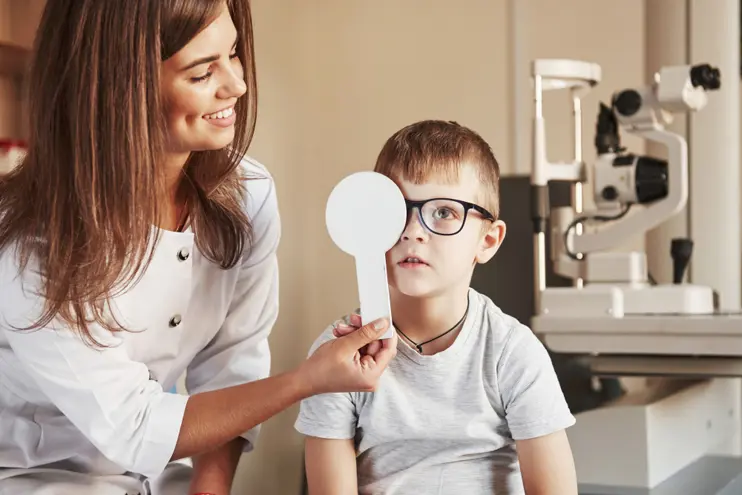
A common misconception is that eye exams only become important once a child can read or begins formal schooling. In reality, specialists recommend much earlier evaluations. Pediatric ophthalmologists typically suggest:
- Infants (newborn to 1 year): Vision should be checked regularly by a pediatrician. Serious conditions like congenital cataracts or retinopathy can sometimes be detected early.
- Ages 3–5: A comprehensive eye exam is essential at least once during this period. This is when amblyopia (“lazy eye”) and other alignment problems often appear.
- Before entering school: Ensures that vision problems don’t interfere with learning. Imagine trying to read your first words when the letters are always blurry.
- Every 1–2 years thereafter: Since children’s eyes grow and change, regular checkups are important to monitor shifts in vision.
Glasses for Children: More Than Just Clarity
When adults wear glasses, the goal is straightforward — to see better. But for children, glasses carry a deeper significance. Properly prescribed and fitted eyewear can:
- Prevent amblyopia: If one eye has poorer vision, the brain may start favoring the stronger eye, leaving the weaker one underdeveloped.
- Support alignment: Correcting refractive errors helps reduce the risk of strabismus (crossed eyes).
- Enhance learning: Clear vision directly impacts focus, comprehension, and school performance.
- Boost self-esteem: A child who no longer struggles to see the board or read comfortably often gains confidence and participates more actively.
Helping Your Child Adjust to Glasses
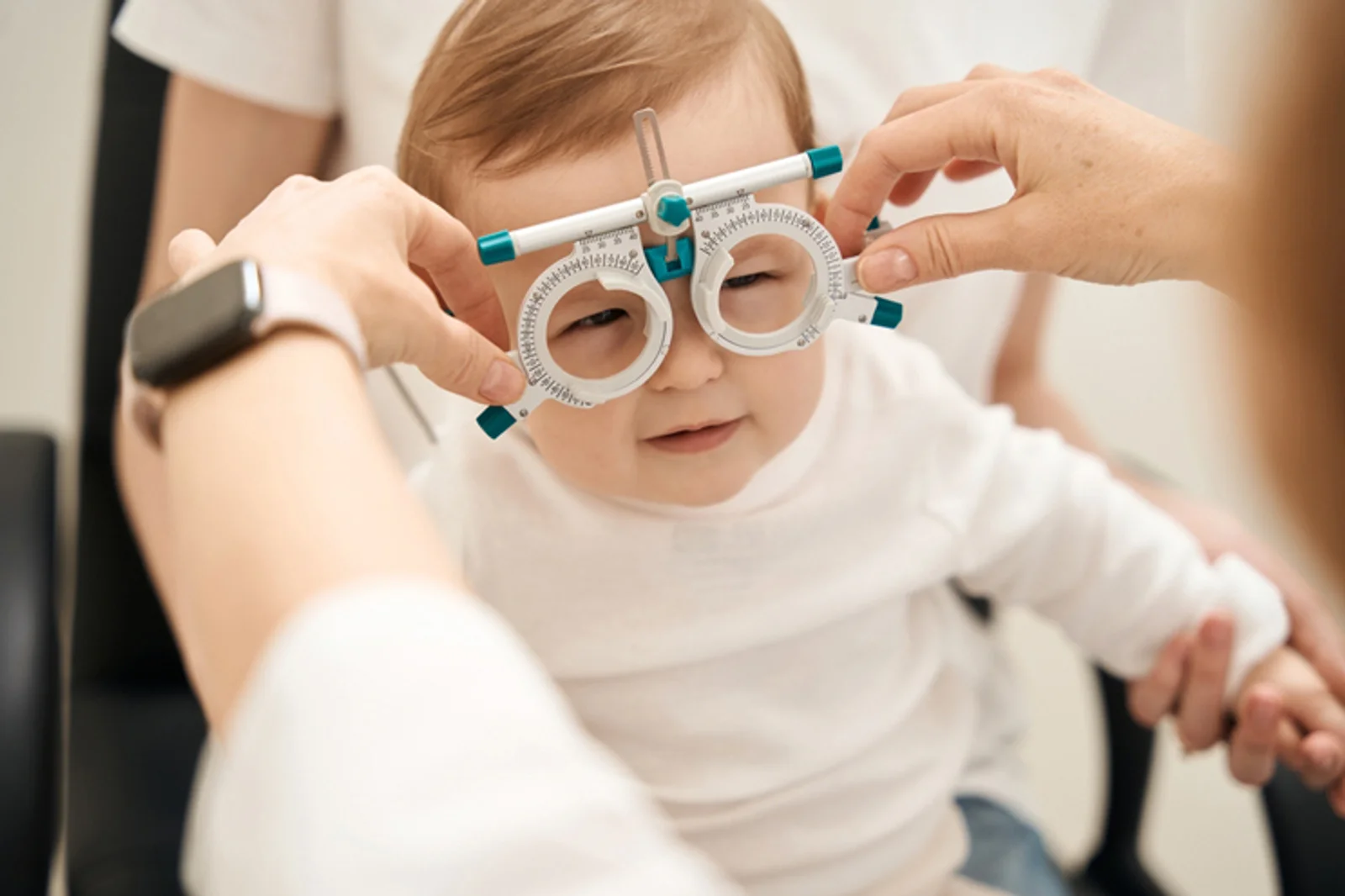
Convincing a child to wear glasses consistently is not always easy. Some may feel self-conscious, while others simply forget. At our clinic, we’ve seen that the adjustment process is smoother when parents approach it with patience and positivity:
- Let them choose their frames: When children have a say in picking frames, they feel more ownership and pride in wearing them.
- Normalize glasses in the family: If parents or siblings wear glasses, emphasize that it’s perfectly normal.
- Praise, don’t pressure: Gentle encouragement works better than constant reminders.
- Work with teachers: Teachers can help reinforce good habits during school hours.
- Check comfort regularly: Glasses that are too tight, loose, or slipping will discourage consistent wear.
Why Expert Care Makes the Difference
Not all eye exams are created equal. For children especially, precision and patience matter as much as technology. At Global Ubal Eye Center, Dr. Heecheol Bae and our pediatric team take the time to tailor exams for young patients. We use child-friendly techniques, explain findings in simple terms, and ensure that both parents and children feel comfortable throughout the process.
Conclusion: Clear Vision, Bright Future
If you notice your child squinting, struggling at school, or showing signs of eye strain, don’t dismiss it as a passing phase. Early eye exams and the right pair of glasses can prevent serious complications and unlock your child’s potential. Think of glasses not just as a correction tool, but as an investment in your child’s growth, confidence, and long-term eye health.
More Articles
Continue reading our ophthalmology guides and vision care insights.

SMILE vs LASIK: Recovery Benchmarks for Vision Correction Care
South Korea has solidified its position as a global epicenter for ophthalmology, with the domestic LASIK and refractive surgery market projected to reach **USD 167.37 million by 2035**, growing at a steady CAGR of 8.54%.
Learn More

Prevalence of Myopia in Korea: The Value of Dream Lens Therapy
The prevalence of myopia among young people in South Korea has reached critical levels, often described as a "myopia epidemic." According to recent data from the **Korean National Health and Nutrition Examination Survey (KNHANES)**, the prevalence of myopia...
Learn More

Multidisciplinary Care: The Future of Korean Pediatric Eye Clinics
The landscape of pediatric eye care in South Korea is shifting rapidly. With nearly **21.9% of Korean children** estimated to be affected by various visual disorders according to nationwide health screenings, the demand for specialized intervention has never...
Learn More