Comprehensive Eye Care & Vision Correction in Incheon · Multilingual International Concierge
23+ Years Clinical Experience
en-US

Ophthalmology Guide
What’s the Difference Between Multifocal and Monofocal Cataract Lenses?
Discover the difference between multifocal and monofocal cataract lenses to find your best vision option. Compare benefits and choose what fits you—learn more!
Schedule a ConsultationIntroduction
It usually starts with something small: lights seem a little too bright at night, your glasses no longer feel "strong enough," or reading fine print requires a bit more squinting than usual. These are often early signs of cataracts — a condition that affects the natural lens inside your eye, making it cloudy and reducing your ability to see clearly.
Understanding Intraocular Lenses: What They Do
Your natural eye lens is a transparent structure located just behind the iris. It works much like the lens of a camera — focusing light onto the retina so you can see clearly. Over time, due to aging, genetics, or environmental exposure, this lens can become cloudy. This condition is known as cataract, and it's one of the most common causes of vision loss worldwide.
- Nearsightedness (Myopia)
- Farsightedness (Hyperopia)
- Astigmatism
Monofocal Lenses: Focused Simplicity
What Are They?
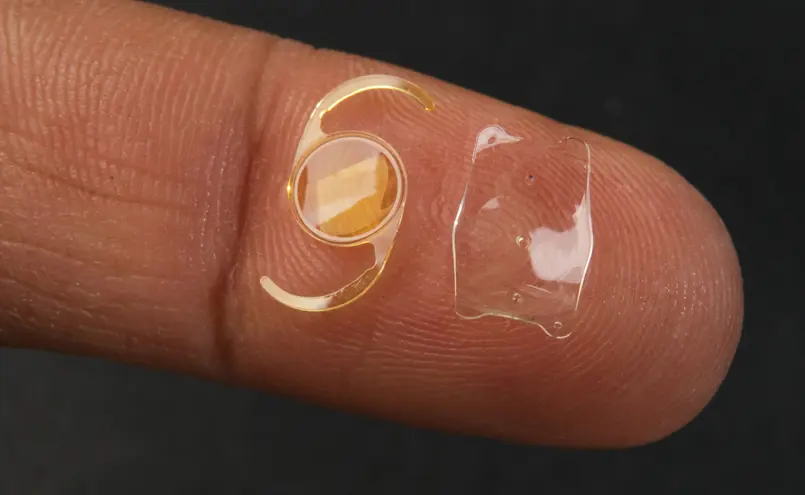
Monofocal IOLs are designed to provide clear vision at a single distance — typically either near, intermediate, or far. Most patients choose to have them set for distance vision, meaning they will see distant objects clearly but still require glasses for near tasks like reading or using a smartphone.
Pros:
- Crisp distance vision: Excellent clarity for driving, outdoor activities, and watching TV.
- Minimal optical side effects: These lenses are less likely to cause glare, halos, or contrast issues.
- Reliable and proven: Monofocal lenses have decades of clinical success.
- Good for eyes with comorbidities: Ideal for patients with retinal disease, glaucoma, or other eye health concerns.
Cons:
- Glasses are still needed for near or mid-range tasks.
- No seamless range of vision: You’ll likely find yourself reaching for your reading glasses often.
Multifocal Lenses: Vision Across Distances
What Are They?
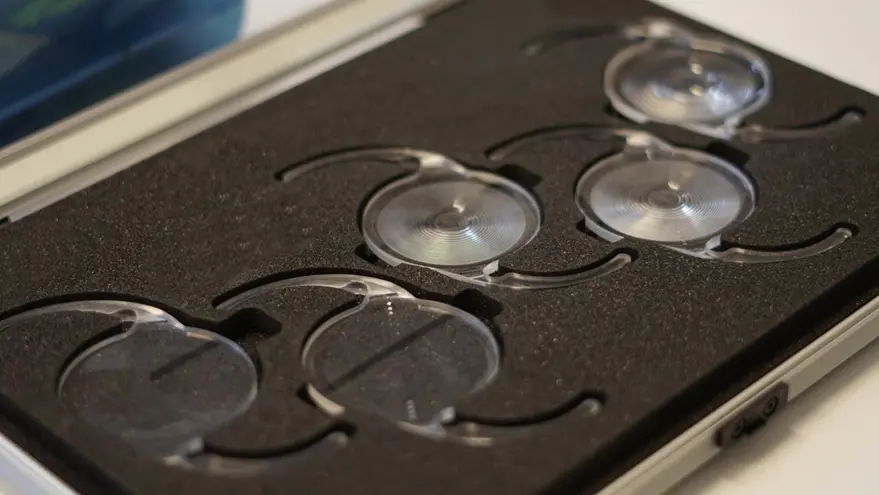
Multifocal IOLs feature multiple focal points, allowing you to see clearly at near, intermediate, and far distances. They achieve this by splitting incoming light across different focal zones, which your brain then processes into a unified visual experience.
Pros:
- Reduced dependence on glasses: Many patients find they no longer need spectacles for most daily tasks.
- Greater convenience: Ideal for people who read often, work on computers, or lead active lifestyles.
- All-distance vision: From texting on your phone to reading street signs, multifocal lenses cover the spectrum.
Cons:
- Potential visual disturbances: Halos or glare around lights, especially at night, can occur.
- Contrast sensitivity may decrease: Some patients report reduced clarity in dim lighting.
- Not ideal for all eye types: Conditions like macular degeneration or significant dry eye may interfere with performance.
Extended Depth of Focus (EDOF): A New Middle Ground
There’s also a newer category of lenses known as EDOF (Extended Depth of Focus) lenses. These lenses aim to provide a continuous range of vision — similar to multifocal — but with fewer side effects like halos or glare. Brands like Tecnis Symfony and AcrySof IQ Vivity are examples we offer at Global Ubal Eye Center.
Making the Right Choice for Your Vision
Choosing between monofocal and multifocal lenses isn’t a one-size-fits-all decision. It depends on:
- Your daily activities: Are you reading often? Driving at night? Working on a computer?
- Your tolerance for visual adaptation: Can your brain adjust to seeing through multiple focal points?
- The health of your eyes: Conditions like glaucoma or macular issues may limit your options.
- Your personal preferences: Do you mind wearing glasses for certain tasks?
Life After Surgery: What to Expect
Whether you choose monofocal or multifocal lenses, cataract surgery is a transformative experience. Most patients see significant improvement within just a few days. Colors appear more vibrant. Reading becomes easier. Driving feels safer.
- Tear film support to prevent dryness.
- Scheduled follow-ups to monitor healing.
- Personalized advice on lighting, screen use, and adaptation.
Final Thoughts: Trust Your Eyes to Experience
Cataract surgery is one of the most successful procedures in modern medicine — but the outcome depends heavily on the choices made before surgery. The type of lens you choose can shape your daily life for years to come.
More Articles
Continue reading our ophthalmology guides and vision care insights.

SMILE vs LASIK: Recovery Benchmarks for Vision Correction Care
South Korea has solidified its position as a global epicenter for ophthalmology, with the domestic LASIK and refractive surgery market projected to reach **USD 167.37 million by 2035**, growing at a steady CAGR of 8.54%.
Learn More

Prevalence of Myopia in Korea: The Value of Dream Lens Therapy
The prevalence of myopia among young people in South Korea has reached critical levels, often described as a "myopia epidemic." According to recent data from the **Korean National Health and Nutrition Examination Survey (KNHANES)**, the prevalence of myopia...
Learn More

Multidisciplinary Care: The Future of Korean Pediatric Eye Clinics
The landscape of pediatric eye care in South Korea is shifting rapidly. With nearly **21.9% of Korean children** estimated to be affected by various visual disorders according to nationwide health screenings, the demand for specialized intervention has never...
Learn More