Comprehensive Eye Care & Vision Correction in Incheon · Multilingual International Concierge
23+ Years Clinical Experience
en-US

Ophthalmology Guide
What You Should Know About Cataract Surgery for Presbyopia Treatment
Discover how cataract surgery helps treat presbyopia, restore clear vision, and reduce dependence on glasses. Learn more about treatment options today!
Schedule a ConsultationIntroduction: When Reading Glasses Become Part of Daily Life
It often begins subtly. You’re in a café, trying to read the menu, and suddenly you find yourself holding it farther away just to see the text clearly. At first, you may laugh it off or buy a pair of inexpensive reading glasses at the pharmacy.
Understanding Presbyopia: The Natural Lens Stiffens with Age
Presbyopia is not a disease. It is simply the natural stiffening of the crystalline lens inside the eye. In younger years, this lens flexes easily, allowing us to shift focus from distant mountains to a book in our hands within seconds. But after decades of use, the lens loses its elasticity. By middle age, it becomes difficult to focus on near objects, leading to the familiar need for reading glasses.
Cataracts and Presbyopia: Why They Overlap
Cataracts occur when the natural lens of the eye becomes cloudy, typically with age. Like presbyopia, cataracts are nearly inevitable if one lives long enough. The overlap is significant: patients who develop cataracts almost always already have presbyopia.
- Blurred, cloudy vision from the cataract.
- Difficulty reading or focusing up close from presbyopia.
How Cataract Surgery Works Today
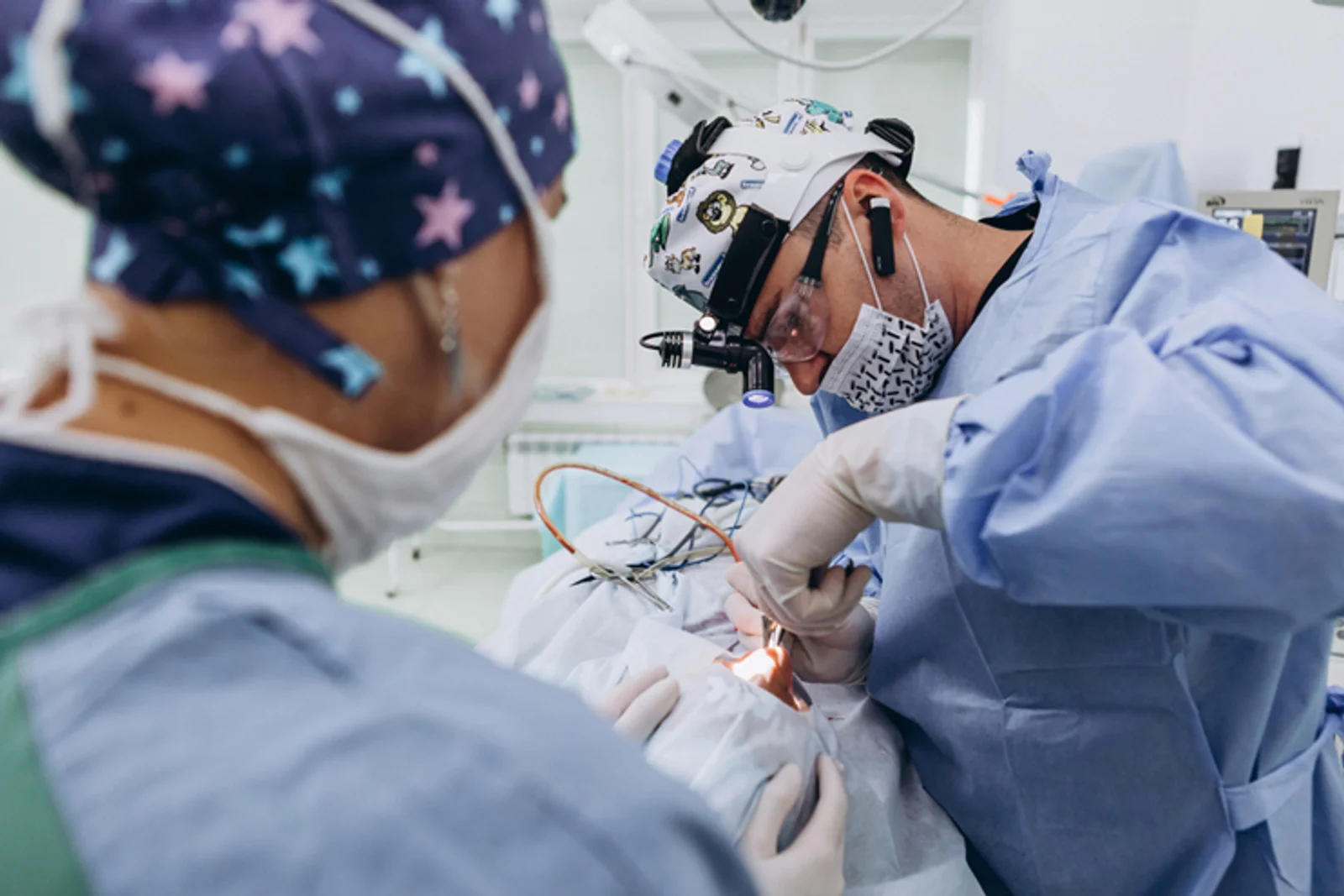
Modern cataract surgery is one of the safest and most effective procedures in medicine. At Global Ubal Eye Center, we use laser-assisted cataract surgery, which brings precision and consistency beyond what was possible with manual techniques.
Intraocular Lenses (IOLs): The Key to Treating Presbyopia During Cataract Surgery
The real advancement in presbyopia treatment lies in the technology of intraocular lenses. Instead of a standard monofocal lens, patients now have the option to choose lenses that restore vision at multiple distances.
Types of Presbyopia-Correcting IOLs
Multifocal IOLs: Provide near, intermediate, and distance vision by splitting light into different focal points. They work well for patients who want independence from glasses for most tasks.
Extended Depth of Focus (EDOF) IOLs: Offer a continuous range of vision, especially between intermediate and distance, with fewer issues like halos or glare. Ideal for people who drive at night or work extensively on digital devices.
Accommodating IOLs: Designed to mimic the natural focusing ability of the lens, these shift position in the eye to help with different focal points.
An architect who needs both near and distance clarity for drawing and site visits may benefit from a multifocal lens.
A retiree who enjoys hiking and night driving may prefer an EDOF lens to minimize visual disturbances.
Who Is the Best Candidate?
Not every patient with presbyopia needs cataract surgery immediately. If cataracts are not yet developed, other options such as reading glasses, multifocal contact lenses, or corneal inlays may be more suitable.
- Already have visually significant cataracts.
- Struggle with both cloudy vision and presbyopia.
- Wish to reduce dependence on glasses after surgery.
- Are in good general eye health (no uncontrolled glaucoma, severe retinal disease, or corneal scarring).
Beyond Vision: The Emotional and Practical Benefits
Patients often underestimate how deeply vision impacts daily life until after surgery. Many describe cataract surgery as “getting their youth back.”
- Reading without glasses feels liberating.
- Driving becomes safer and more confident.
- Colors appear more vibrant, restoring a sense of vitality.
- The constant frustration of misplacing glasses disappears.
What Recovery Looks Like
Recovery is typically smooth and quick:
- Mild irritation or blurriness is normal for a few days.
- Most patients resume regular activities within a week.
- Vision stabilizes over the following weeks.
Cataract Surgery vs. Other Presbyopia Treatments
While cataract surgery is highly effective for patients with both cataracts and presbyopia, it is not the only option for presbyopia alone. For comparison:
- Reading glasses: Simple and affordable, but inconvenient for those who want freedom.
- Contact lenses: Multifocal contacts can help, but they require maintenance and may cause dryness.
- Corneal refractive surgery (LASIK/PresbyLASIK): Works for some presbyopic patients without cataracts, but does not address lens aging.
- Refractive lens exchange (RLE): Essentially the same as cataract surgery but performed before cataracts form.
Conclusion: A Chance to See Clearly Again
More Articles
Continue reading our ophthalmology guides and vision care insights.

SMILE vs LASIK: Recovery Benchmarks for Vision Correction Care
South Korea has solidified its position as a global epicenter for ophthalmology, with the domestic LASIK and refractive surgery market projected to reach **USD 167.37 million by 2035**, growing at a steady CAGR of 8.54%.
Learn More

Prevalence of Myopia in Korea: The Value of Dream Lens Therapy
The prevalence of myopia among young people in South Korea has reached critical levels, often described as a "myopia epidemic." According to recent data from the **Korean National Health and Nutrition Examination Survey (KNHANES)**, the prevalence of myopia...
Learn More

Multidisciplinary Care: The Future of Korean Pediatric Eye Clinics
The landscape of pediatric eye care in South Korea is shifting rapidly. With nearly **21.9% of Korean children** estimated to be affected by various visual disorders according to nationwide health screenings, the demand for specialized intervention has never...
Learn More