Comprehensive Eye Care & Vision Correction in Incheon · Multilingual International Concierge
23+ Years Clinical Experience
en-US

Ophthalmology Guide
What to Expect During Lens Implant Surgery
Learn what to expect during lens implant surgery, including the procedure, recovery process, and results. Get expert insights to help you prepare for a successful surgery.
Schedule a ConsultationIntroduction: A Clear Path to Better Vision
If you're experiencing blurry vision, struggling with cataracts, or relying heavily on glasses for reading or distance, lens implant surgery may be the solution you've been searching for. At Global Ubal Eye Center, we offer cutting-edge lens implant procedures tailored to your unique vision needs, whether it’s cataract surgery, refractive vision correction, or treating presbyopia. Led by the expertise of Dr.
What is Lens Implant Surgery?
Lens implant surgery involves replacing the natural lens of the eye with an artificial one. This procedure is often performed for patients with cataracts — a condition where the natural lens becomes cloudy, impairing vision — but it can also be used for patients seeking vision correction due to refractive errors. The artificial lens used is called an intraocular lens (IOL).
Pre-Surgery Preparation: Getting Ready for Your Procedure
Before the surgery, your ophthalmologist, Dr. Heecheol Bae, or another experienced member of our team will conduct a thorough eye examination. This includes a series of tests to measure the size and shape of your eye, as well as the degree of any cataract or refractive error. Based on these measurements, a custom treatment plan will be developed for you.
- Fasting for a few hours before the procedure (if you are undergoing sedation).
- Arranging transportation: You won’t be able to drive yourself home after the procedure, as your vision may still be blurry.
- Medications: You may be asked to use certain eye drops to help prepare your eyes for the surgery.
The Day of Your Lens Implant Surgery: Step-by-Step

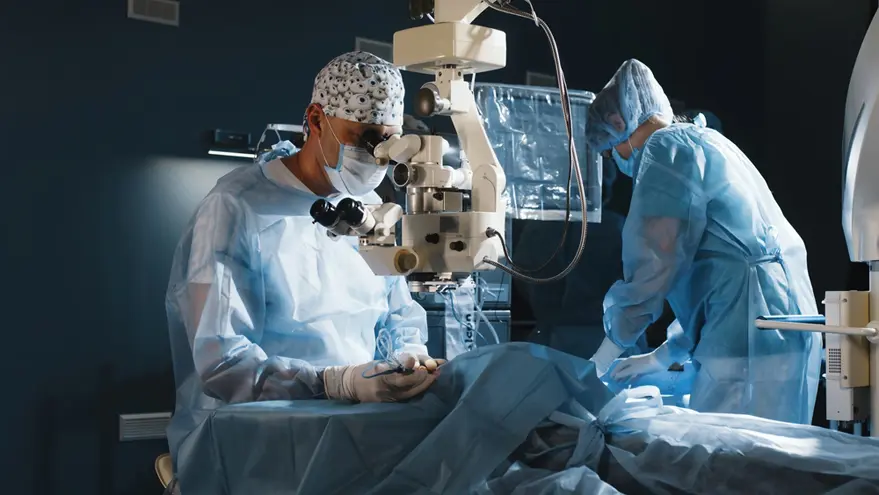
When you arrive at Global Ubal Eye Center, you'll be welcomed by our compassionate staff, who will guide you through the process and make you feel comfortable. Here’s a step-by-step look at what happens during your lens implant surgery:
1. Preoperative Care
Before the surgery begins, you'll be given a sedative to help you relax. You’ll remain awake throughout the procedure, but you’ll be comfortably numb, and the sedation will ensure you don’t feel any pain. The surgical area around your eye will be cleansed, and a sterile drape will be placed over your face to maintain a clean environment.
2. Anesthesia for Comfort
The surgery itself is typically done under local anesthesia, which means the area around your eye will be numbed with either eye drops or an injection. This ensures you won’t feel pain, although you might experience some pressure or mild discomfort.
3. Creating a Tiny Incision
Once you're fully numb, the surgeon will make a very small incision (often less than 2mm) at the edge of your cornea — the clear, dome-shaped surface of the eye. This incision is so small that stitches are rarely required afterward.
4. Removing the Natural Lens
Next, the surgeon will carefully remove the cloudy natural lens that is causing vision problems. This is done using a technique called phacoemulsification, where ultrasound energy is used to break up the lens into tiny pieces, which are then suctioned out.
5. Inserting the New Lens
Once the natural lens is removed, the surgeon will insert the new IOL into the space that held the original lens. The IOL is folded for easy insertion and unfolds once inside the eye. Depending on your needs, you may receive a monofocal lens (for distance vision), a multifocal lens (to correct both near and far vision), or a toric lens (for astigmatism).
6. Closing the Incision
The incision used for the procedure is so small that it typically doesn’t require stitches. The wound is self-healing, and the small incision usually closes on its own in a short period of time.
7. Postoperative Care
Once the lens is in place, the procedure is complete, and you’ll be monitored for a short while in a recovery area. You may experience blurry vision or a mild scratchy sensation as the eye heals. These sensations are temporary and should subside within a few hours.
After Surgery: Recovery and What to Expect

Possible Risks and Complications
Why Choose Global Ubal Eye Center?
Conclusion: See the World with Clarity and Confidence
More Articles
Continue reading our ophthalmology guides and vision care insights.

SMILE vs LASIK: Recovery Benchmarks for Vision Correction Care
South Korea has solidified its position as a global epicenter for ophthalmology, with the domestic LASIK and refractive surgery market projected to reach **USD 167.37 million by 2035**, growing at a steady CAGR of 8.54%.
Learn More

Prevalence of Myopia in Korea: The Value of Dream Lens Therapy
The prevalence of myopia among young people in South Korea has reached critical levels, often described as a "myopia epidemic." According to recent data from the **Korean National Health and Nutrition Examination Survey (KNHANES)**, the prevalence of myopia...
Learn More

Multidisciplinary Care: The Future of Korean Pediatric Eye Clinics
The landscape of pediatric eye care in South Korea is shifting rapidly. With nearly **21.9% of Korean children** estimated to be affected by various visual disorders according to nationwide health screenings, the demand for specialized intervention has never...
Learn More