Comprehensive Eye Care & Vision Correction in Incheon · Multilingual International Concierge
23+ Years Clinical Experience
en-US


Ophthalmology Guide
The Impact of Macular Degeneration on Your Vision and How to Cope
Discover how macular degeneration affects your vision and explore practical coping strategies to maintain quality of life. Learn more and protect your sight today.
Schedule a ConsultationIntroduction: When the World Starts to Blur at the Center

There is a moment many patients remember clearly — often more vividly than their diagnosis. It’s that quiet pause during an eye exam when they cover one eye, try to focus on a single letter, and realize something isn’t right.
Why the Macula Is So Essential — And So Vulnerable
Vision is not one single function. The eye is more like a city with specialized zones, each responsible for a different task. The macula is comparable to a busy central square where all the detail-oriented work takes place.
- read comfortably
- recognize faces
- perceive small shapes and contours
- distinguish colors
- focus on fine details in both bright and dim environments
A Closer Look at What Really Happens in Macular Degeneration

Most patients only hear the words “dry” and “wet,” but understanding the difference can empower you to take control of your condition.
Dry AMD: The Quiet, Gradual Shift
Dry AMD is the most common form. It develops slowly, almost imperceptibly. Patients often describe needing brighter light to read or feeling that printed text looks “washed out.” The retina thins over time, and deposits called drusen accumulate between layers of retinal tissue.
Wet AMD: Urgent, But Often Treatable
Wet AMD is less common but more dangerous if ignored. Fragile new blood vessels form beneath the retina and leak fluid or blood, causing sudden distortion or the appearance of a dark spot in the center of your vision.
What Many People Don’t Realize About AMD (But Should)
This is one of those truths ophthalmologists know but rarely include in articles:
How Macular Degeneration Shapes Daily Life
Numbers and diagrams tell only part of the story. The rest comes from the lived experiences patients share with us every day.
Learning to Adapt: Realistic, Humane Coping Strategies
What helps most patients isn’t just medical treatment — it’s learning how to adapt in ways that preserve dignity and independence.
Light Becomes a Lifeline
Not harsh light, but bright, even, comfortable illumination. Many patients feel immediate relief by upgrading home lighting. A well-lit reading corner can feel like getting part of your old vision back.
Contrast Is Your Friend
Bold letters, thicker fonts, dark utensils on a light table or vice versa — these small adjustments reduce strain.
Magnification Is Modern, Not Old-Fashioned
Digital magnifiers, smartphone enlarger apps, e-book readers with adjustable fonts — these tools empower, not limit. One patient told us, “The first time I used a reading app, it felt like getting my eyes back.”
Rely on Peripheral Vision When Needed
Peripheral vision is strong in AMD. Learning how to use it consciously can improve reading, walking, and even hobbies.
Emotional Adaptation Matters
Those who embrace tools early and talk openly about their condition tend to maintain confidence longer.
How Ophthalmologists Approach AMD Clinically
Dry AMD Management
While there is no cure yet, we focus on slowing progression using:
- nutritional support based on AREDS2 research
- smoking cessation guidance
- careful monitoring
- personalized lifestyle recommendations
Wet AMD Management
Anti-VEGF injections — often described as “saving vision” treatments — reduce leakage, minimize swelling, and help stabilize central vision. They require follow-up but deliver remarkable results for many patients.
The Power of Precision Diagnostics
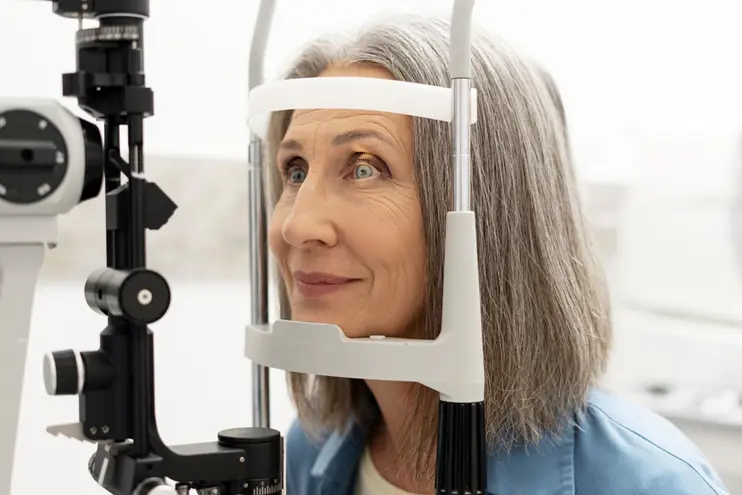
With modern tools like OCT angiography, fundus imaging, and wide-field retinal scanners, we can track your macular health with incredible detail.
Your Support System Matters More Than You Think
People often underestimate the role of community in coping with AMD. Having a spouse, child, or friend who understands the condition makes daily life smoother. We encourage families to attend exams together when possible, because AMD is much easier to manage when everyone understands what’s happening and how to help in small, respectful ways.
How Global Ubal Eye Center Helps Patients with AMD
Conclusion: Your Vision Still Has a Future
More Articles
Continue reading our ophthalmology guides and vision care insights.

SMILE vs LASIK: Recovery Benchmarks for Vision Correction Care
South Korea has solidified its position as a global epicenter for ophthalmology, with the domestic LASIK and refractive surgery market projected to reach **USD 167.37 million by 2035**, growing at a steady CAGR of 8.54%.
Learn More

Prevalence of Myopia in Korea: The Value of Dream Lens Therapy
The prevalence of myopia among young people in South Korea has reached critical levels, often described as a "myopia epidemic." According to recent data from the **Korean National Health and Nutrition Examination Survey (KNHANES)**, the prevalence of myopia...
Learn More

Multidisciplinary Care: The Future of Korean Pediatric Eye Clinics
The landscape of pediatric eye care in South Korea is shifting rapidly. With nearly **21.9% of Korean children** estimated to be affected by various visual disorders according to nationwide health screenings, the demand for specialized intervention has never...
Learn More