Comprehensive Eye Care & Vision Correction in Incheon · Multilingual International Concierge
23+ Years Clinical Experience
en-US

Ophthalmology Guide
Struggling with Presbyopia and Cataracts? Book Your Consultation
Struggling with presbyopia and cataracts? Discover effective treatment options and restore clear vision. Book your expert consultation today!
Schedule a ConsultationIntroduction
The quiet changes that creep into our vision with age
If you’ve ever held a restaurant menu at arm’s length to read it clearly… or noticed that headlights now seem more like bright halos than crisp beams, you may be facing what millions do after 40: presbyopia and cataracts.
What’s Really Going On: Presbyopia and Cataracts Explained
When patients first notice changes in their vision — like struggling to read their phone in the morning or dealing with annoying glare during night driving — they often assume it’s just fatigue or “normal aging.” And while age is indeed the main factor, the real story is more specific: your lens is changing.
Presbyopia: The stiffening of your natural lens
Presbyopia typically begins in your 40s and progresses slowly over time. It happens when the lens inside your eye becomes less flexible, making it harder to shift focus between near and far objects. This is why reading small print or switching between your computer and your phone starts to feel like a visual workout.
Cataracts: Clouding the lens from the inside
Cataracts are different but closely related. Instead of losing flexibility, the lens becomes cloudy due to protein buildup inside it. This leads to a dull, washed-out view of the world — like looking through a foggy window.
- Colors seem less vibrant
- Bright lights cause halos or glare
- Your prescription seems to “change” every year
The Overlap: Why These Two Often Show Up Together
Here’s something most people don’t realize — and many clinics forget to explain:
So what’s the takeaway?
Many patients who come to us for one issue — say, struggling with near vision — are surprised to learn they’re already experiencing early cataracts, too. Others wait until cataracts become visibly disruptive, not realizing their presbyopia could have been managed earlier.
How We Treat Presbyopia and Cataracts — The Modern Way
Advanced Diagnostics for a Clearer Picture
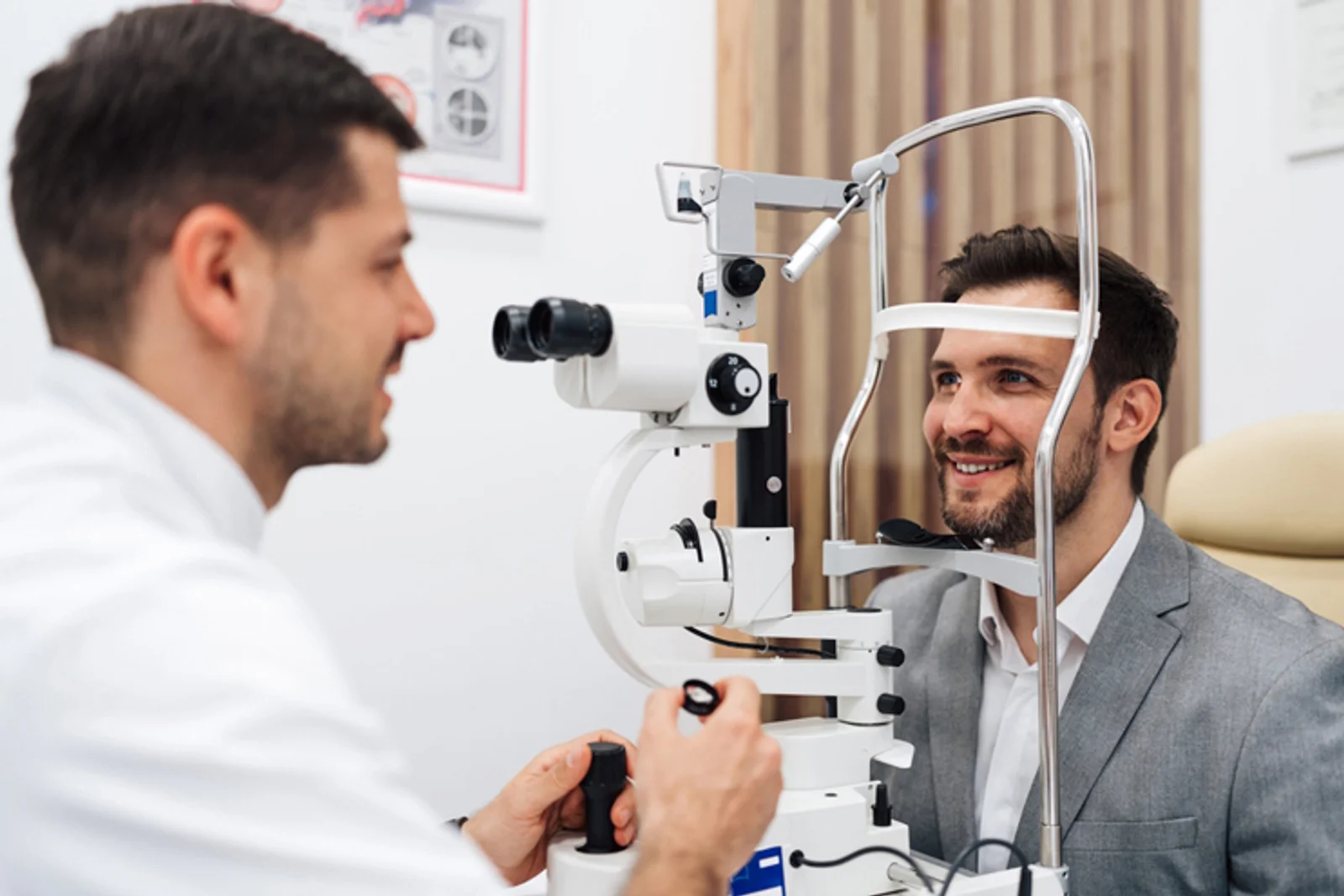
Before any treatment, we start with comprehensive diagnostics. Our clinic is equipped with high-resolution imaging, wavefront analysis, and tear film evaluation to ensure we fully understand your visual system. This helps us not only detect cataracts early, but also rule out other conditions like glaucoma or retinal disease that can complicate treatment.
Custom Intraocular Lenses (IOLs)
For patients undergoing cataract surgery, one of the most exciting innovations is the choice of intraocular lenses. These artificial lenses can correct not just cataracts but also presbyopia, astigmatism, and even mild refractive errors. Whether it’s a multifocal IOL that helps you see both near and far, or a toric IOL to address astigmatism, we tailor the selection to your needs.
Laser-Assisted Cataract Surgery
Precision matters, especially when dealing with the delicate structures of the eye. That’s why we offer laser-assisted cataract surgery, which uses a femtosecond laser to make incisions and soften the lens. This technique allows for greater accuracy, faster recovery, and better outcomes.
Non-Surgical Options for Presbyopia
Not everyone with presbyopia is ready for surgery — and that’s okay. We also fit patients with custom contact lenses, including multifocal designs or Dream Lenses (orthokeratology), which gently reshape the cornea overnight. These options are ideal for patients looking for non-invasive ways to maintain clear vision throughout the day.
What Real Patients Often Tell Us

Here’s what we hear all the time:
Why Choose Global Ubal Eye Center?
We’re more than a clinic — we’re a team that listens, adapts, and treats every patient like family.
- 23+ years of ophthalmology excellence, trusted by thousands in Korea and abroad
- Multilingual care in Korean, English, Japanese, Mongolian, and Russian
- Cutting-edge technology combined with deeply personal, patient-first care
- Led by Dr. Heecheol Bae, former professor and recognized leader in cataract and vision correction surgery
Conclusion: It’s Time to Take Your Vision Seriously — and Gently
If you’ve been quietly adapting to blurry near vision or struggling with glare while driving at night, you’re not alone — and you don’t have to live that way. Presbyopia and cataracts are not just signs of aging; they’re medical conditions with real, effective solutions.
More Articles
Continue reading our ophthalmology guides and vision care insights.

SMILE vs LASIK: Recovery Benchmarks for Vision Correction Care
South Korea has solidified its position as a global epicenter for ophthalmology, with the domestic LASIK and refractive surgery market projected to reach **USD 167.37 million by 2035**, growing at a steady CAGR of 8.54%.
Learn More

Prevalence of Myopia in Korea: The Value of Dream Lens Therapy
The prevalence of myopia among young people in South Korea has reached critical levels, often described as a "myopia epidemic." According to recent data from the **Korean National Health and Nutrition Examination Survey (KNHANES)**, the prevalence of myopia...
Learn More

Multidisciplinary Care: The Future of Korean Pediatric Eye Clinics
The landscape of pediatric eye care in South Korea is shifting rapidly. With nearly **21.9% of Korean children** estimated to be affected by various visual disorders according to nationwide health screenings, the demand for specialized intervention has never...
Learn More