Comprehensive Eye Care & Vision Correction in Incheon · Multilingual International Concierge
23+ Years Clinical Experience
en-US

Ophthalmology Guide
Signs Your Child Needs Glasses: How to Recognize Vision Problems
Discover the key signs your child needs glasses. Learn how to spot vision problems early and protect their eye health with expert tips today!
Schedule a ConsultationIntroduction
As parents, we’re quick to notice when our child has a fever, a cough, or even the smallest change in appetite. But vision problems? Those often go unseen — not because they aren’t there, but because children rarely complain about them. To a child, blurry vision may feel completely normal.
Why Children’s Vision Problems Often Go Unnoticed
Children don’t always know how to explain what they see. If their world is blurry, they often assume that everyone else sees it the same way. Unlike adults — who quickly recognize when their vision changes — kids adapt quietly. They sit closer to the TV, tilt their heads, or memorize words in a book rather than admit they can’t see them clearly.
Common Signs Your Child May Need Glasses
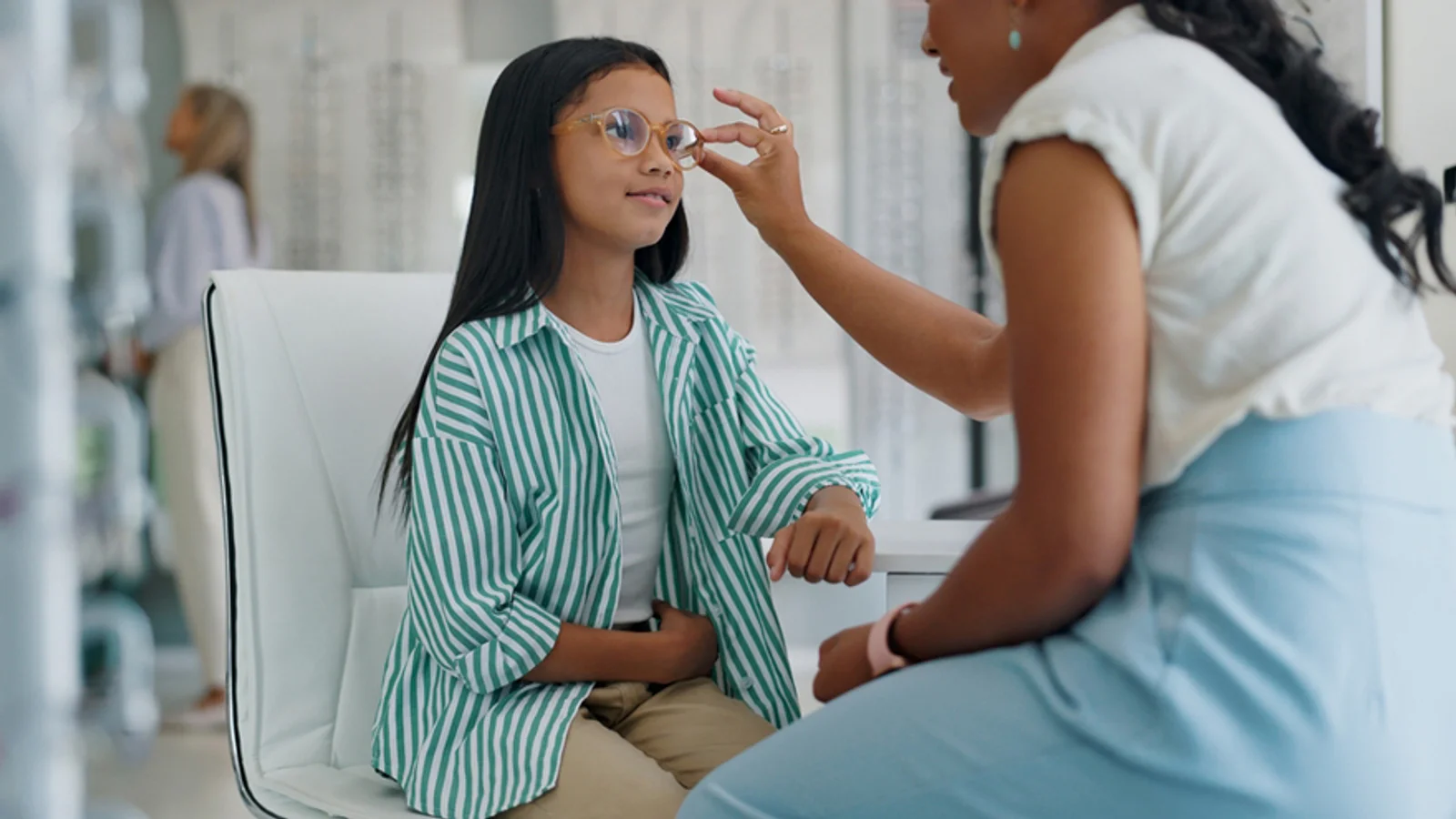
Every child expresses vision problems differently, but certain patterns often stand out. At Global Ubal Eye Center, these are the most frequent signs we encounter:
1. Frequent Squinting
Squinting is the body’s attempt to sharpen blurry vision. If your child constantly squints when watching TV, reading, or looking across a classroom, it’s often a sign of refractive error.
2. Sitting Too Close or Holding Objects Very Near
Children with nearsightedness tend to move closer to books, screens, or the television. What seems like an innocent habit may actually be a natural adjustment for clearer vision.
3. Headaches and Eye Strain
Does your child complain of headaches after school? This may not be stress alone. Eye strain from uncorrected vision problems often leads to fatigue, particularly during reading or screen use.
4. Covering One Eye or Tilting the Head
Children sometimes cover one eye or tilt their head to reduce double vision or compensate for one weaker eye. This can be a sign of amblyopia, strabismus (eye misalignment), or uneven vision between the eyes.
5. Academic or Attention Difficulties
It’s not uncommon for vision issues to be mistaken for attention problems. A child struggling to see the board or keep up with reading may seem distracted or uninterested in schoolwork — when in reality, they simply cannot see clearly.
6. Excessive Eye Rubbing
Eye rubbing isn’t always about tiredness. It can indicate strain, allergies, or even early corneal issues. In some cases, frequent rubbing in childhood has been linked to the development of keratoconus, a condition that alters the shape of the cornea.
When to Schedule an Eye Exam
So, when should parents act? Ideally, children should have:
- Their first comprehensive eye exam around ages 3–4
- Another exam before starting primary school
- Regular follow-ups every 1–2 years, or more often if vision problems run in the family
Why Early Detection Matters So Much
Think of vision like the foundation of a house. If the base is unstable, the entire structure struggles. In the same way, blurred or distorted vision can affect much more than just eyesight.
- Academic impact: Reading, writing, and board work all depend on clear sight. Even mild vision problems can make school unnecessarily difficult.
- Social confidence: A child who can’t recognize friends across the playground may feel isolated.
- Eye development: Untreated issues like amblyopia are far harder to correct after the age of 7–8, when the brain’s visual pathways mature.
Supporting Your Child Through Glasses
For many children, the first pair of glasses feels like a big change. Some embrace it with excitement, while others resist, worried about standing out. Parents can play an essential role in easing this transition:
- Frame choice matters: Let your child help select their frames. When they feel ownership, they’re more likely to wear them proudly.
- Positive reinforcement: Celebrate the moment they put on their glasses and notice details they never saw before — the leaves on trees, the words on signs, the clarity of the world.
- Normalize glasses: Share stories of family members or favorite celebrities who wear glasses. This helps children see it as normal rather than different.
Beyond Glasses: Other Pediatric Vision Treatments
A Growing Challenge in Korea: The Rise of Childhood Myopia
Conclusion: Giving Your Child the Gift of Clear Sight
More Articles
Continue reading our ophthalmology guides and vision care insights.

SMILE vs LASIK: Recovery Benchmarks for Vision Correction Care
South Korea has solidified its position as a global epicenter for ophthalmology, with the domestic LASIK and refractive surgery market projected to reach **USD 167.37 million by 2035**, growing at a steady CAGR of 8.54%.
Learn More

Prevalence of Myopia in Korea: The Value of Dream Lens Therapy
The prevalence of myopia among young people in South Korea has reached critical levels, often described as a "myopia epidemic." According to recent data from the **Korean National Health and Nutrition Examination Survey (KNHANES)**, the prevalence of myopia...
Learn More

Multidisciplinary Care: The Future of Korean Pediatric Eye Clinics
The landscape of pediatric eye care in South Korea is shifting rapidly. With nearly **21.9% of Korean children** estimated to be affected by various visual disorders according to nationwide health screenings, the demand for specialized intervention has never...
Learn More