Comprehensive Eye Care & Vision Correction in Incheon · Multilingual International Concierge
23+ Years Clinical Experience
en-US

Ophthalmology Guide
Should You Consider Cataract Surgery for Presbyopia? Find Out
Discover if cataract surgery can correct presbyopia, its benefits, risks & alternatives. Learn when surgery is right for you—explore your options today!
Schedule a ConsultationIntroduction: When Vision Becomes a Turning Point
There’s a moment many people remember vividly — stretching their arm just a little farther to read a text, squinting at a restaurant menu, or fumbling for reading glasses that never seem to be where you left them. This is presbyopia, a natural sign of aging eyes. For a while, glasses or contact lenses may seem like enough.
Presbyopia vs. Cataracts: The Lens at the Heart of It All
The lens of the eye is an extraordinary structure — clear, flexible, and perfectly balanced to bend light onto the retina. But with age, two separate changes occur.
- Presbyopia: Begins in the early to mid-40s.
- The lens hardens, losing flexibility, which makes focusing on nearby objects difficult.
- Common signs include needing brighter light, holding reading material farther away, or frequent changes in reading glasses.
How Cataract Surgery Can Also Correct Presbyopia
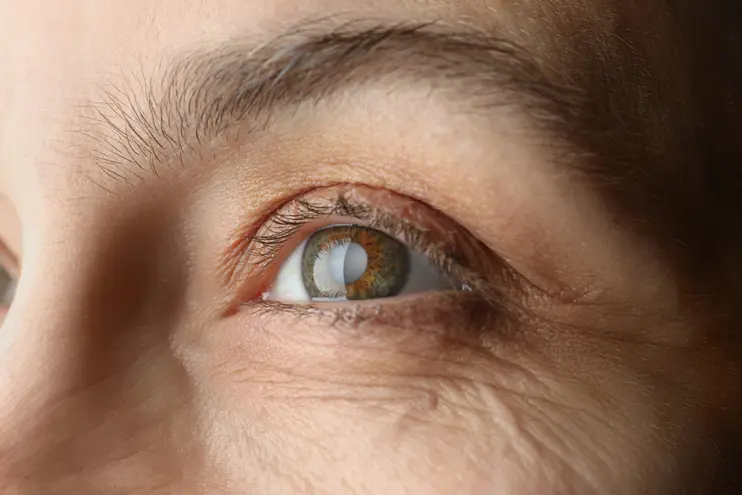
The short answer is: yes. Thanks to advances in lens technology, cataract surgery has become not only a way to restore clarity but also a way to reduce dependence on glasses.
- Monofocal IOLs: Correct vision at one distance (usually far). Glasses are still needed for reading.
- Multifocal IOLs: Provide multiple zones of focus (near, intermediate, and far), reducing the need for glasses.
- Extended Depth of Focus (EDOF) IOLs: Create a smooth range of vision, especially helpful for computer and daily tasks, with fewer halos at night.
- Monovision correction: One eye is corrected for distance and the other for near vision, simulating natural flexibility.
What Many People Miss: Lifestyle, Not Just Technology
To be honest, it’s not always about “the latest lens.” Patients often walk into our clinic asking for the most advanced option, believing it will be perfect for them. But the truth is more nuanced.
- A retired teacher who spends hours reading novels may be happiest with multifocal lenses.
- A professional driver may prioritize crisp night vision, making EDOF lenses safer.
- Someone with glaucoma or retinal disease may be advised against multifocal lenses, since contrast sensitivity could be affected.
The Korean Perspective: Earlier Surgery for Better Living
In Korea, cataract surgery is increasingly performed earlier than in many Western countries. While older generations waited until the cataract was very advanced — often called “ripe” — today’s patients are choosing surgery when cataracts are still mild but symptoms are affecting quality of life.
- Productivity: In a country where digital work culture is intense, presbyopia combined with early cataracts makes everyday tasks exhausting.
- Safety: With dense urban traffic and late-night commutes, glare and poor night vision from cataracts pose real risks.
- Lifestyle: Patients today value convenience and independence — they don’t want to be limited by glasses or poor vision.
Risks, Limitations, and Managing Expectations
Even though cataract surgery is one of the safest procedures in medicine, it is still surgery. Risks include:
- Infection (rare but serious).
- Inflammation or swelling after surgery.
- Glare or halos, especially with certain multifocal lenses.
- The possibility of needing glasses for fine tasks.
Patient Stories: Real-Life Transformations
Case 1: The Architect
A 58-year-old architect came to us frustrated. Reading blueprints was a struggle, and night driving had become nerve-wracking due to glare. Diagnosis: early cataracts + presbyopia.
- Solution: Femtosecond laser-assisted cataract surgery with EDOF IOLs.
- Outcome: He regained crisp intermediate vision for design work, reduced glare at night, and no longer needed multiple pairs of glasses.
Case 2: The Multilingual Traveler
A 62-year-old retiree loved traveling across Asia but hated juggling reading glasses for menus, guidebooks, and phones. She also wanted to avoid glasses in group photos.
- Solution: Multifocal IOLs for near and far correction.
- Outcome: She enjoyed greater freedom, though we explained she might still need glasses for very fine print in dim restaurants.
How Global Ubal Eye Center Approaches Cataract + Presbyopia Surgery
When Should You Consider Cataract Surgery for Presbyopia?
Conclusion: Clearer Vision, Fuller Living
More Articles
Continue reading our ophthalmology guides and vision care insights.

SMILE vs LASIK: Recovery Benchmarks for Vision Correction Care
South Korea has solidified its position as a global epicenter for ophthalmology, with the domestic LASIK and refractive surgery market projected to reach **USD 167.37 million by 2035**, growing at a steady CAGR of 8.54%.
Learn More

Prevalence of Myopia in Korea: The Value of Dream Lens Therapy
The prevalence of myopia among young people in South Korea has reached critical levels, often described as a "myopia epidemic." According to recent data from the **Korean National Health and Nutrition Examination Survey (KNHANES)**, the prevalence of myopia...
Learn More

Multidisciplinary Care: The Future of Korean Pediatric Eye Clinics
The landscape of pediatric eye care in South Korea is shifting rapidly. With nearly **21.9% of Korean children** estimated to be affected by various visual disorders according to nationwide health screenings, the demand for specialized intervention has never...
Learn More