Comprehensive Eye Care & Vision Correction in Incheon · Multilingual International Concierge
23+ Years Clinical Experience
en-US

Ophthalmology Guide
Robotic and AI-Supported Planning for Premium Eye Surgery in Korea
Learn how AI-supported planning and robotic precision at Global Ubal Eye Center in Korea improve outcomes for premium cataract and presbyopia surgery
Schedule a ConsultationIn South Korea, the landscape of vision correction is shifting rapidly as an aging, tech-savvy population seeks "premium" results that go beyond simple sight restoration. With nearly 42% of Korean adults over the age of 40 experiencing some form of cataract-a figure that jumps to over 94% for those 70 and older-the demand for precision is no longer a luxury but a standard.
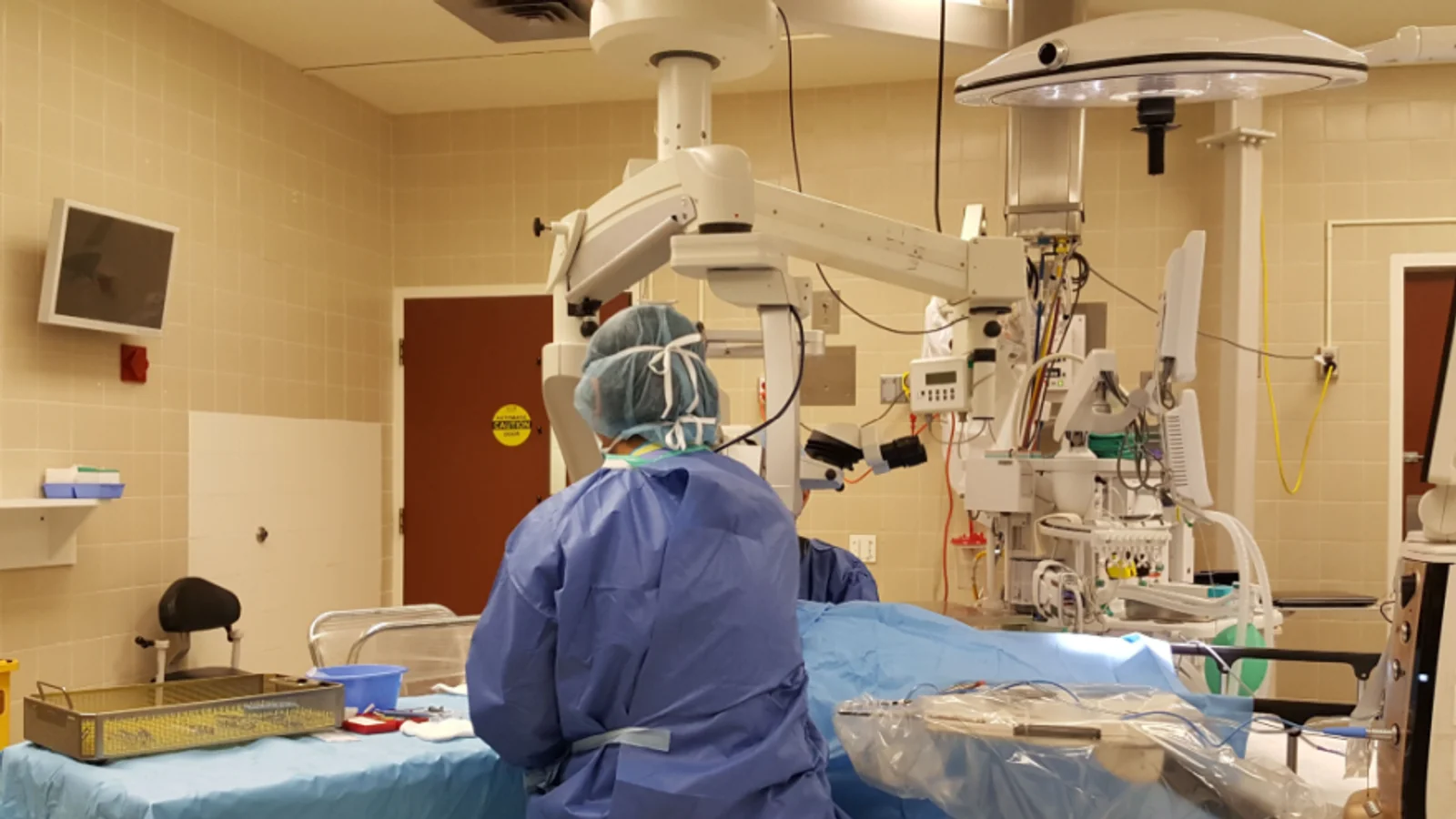
What is AI-Supported Planning?
AI-supported planning involves the use of deep-learning algorithms to analyze thousands of data points from a patient’s eye, including corneal curvature, axial length, and anterior chamber depth. Unlike old calculators, these AI models (such as the latest cloud-based platforms from Zeiss or Alcon) can:
- Predict Refractive Outcomes: Suggest the most accurate intraocular lens (IOL) power with up to 80-90% accuracy within 0.50D.
- Personalize Formula Selection: Automatically identify which mathematical formula (e.g., Barrett Universal II vs. AI-driven models) is best suited for an individual’s unique eye shape.
- Reduce Human Transcription Errors: Direct data integration from diagnostic devices to the surgical suite prevents manual data entry mistakes.
| Feature | Conventional Cataract Surgery | Robotic & AI-Supported Surgery |
|---|---|---|
| Surgical Precision | Manual blade incisions | Femtosecond laser (Robotic) incisions |
| Lens Selection | Standard static formulas | AI-driven predictive modeling |
| Recovery Time | 1–2 weeks for full stability | 2–4 days for functional vision |
| Vision Quality | Corrects one distance (needs glasses) | Corrects all distances (Premium IOLs) |
| Cost (in Korea) | ₩1,000,000 – ₩1,800,000 | ₩4,000,000 – ₩7,500,000 |
More Articles
Continue reading our ophthalmology guides and vision care insights.

SMILE vs LASIK: Recovery Benchmarks for Vision Correction Care
South Korea has solidified its position as a global epicenter for ophthalmology, with the domestic LASIK and refractive surgery market projected to reach **USD 167.37 million by 2035**, growing at a steady CAGR of 8.54%.
Learn More

Prevalence of Myopia in Korea: The Value of Dream Lens Therapy
The prevalence of myopia among young people in South Korea has reached critical levels, often described as a "myopia epidemic." According to recent data from the **Korean National Health and Nutrition Examination Survey (KNHANES)**, the prevalence of myopia...
Learn More

Multidisciplinary Care: The Future of Korean Pediatric Eye Clinics
The landscape of pediatric eye care in South Korea is shifting rapidly. With nearly **21.9% of Korean children** estimated to be affected by various visual disorders according to nationwide health screenings, the demand for specialized intervention has never...
Learn More