Comprehensive Eye Care & Vision Correction in Incheon · Multilingual International Concierge
23+ Years Clinical Experience
en-US


Ophthalmology Guide
Presbyopia Treatments: Restore Near Vision After 40
Discover modern presbyopia treatments at Global Ubal Eye Center. Regain near vision clarity with expert care and advanced technology.
Schedule a ConsultationWhat Is Presbyopia?
Presbyopia is a normal part of aging where the eye’s lens loses its flexibility, making it harder to focus on close objects. Most people notice changes starting in their 40s, although some may develop symptoms earlier depending on genetics, eye health, and lifestyle factors.
- Presbyopia affects virtually everyone as they age, even those who’ve never worn glasses before.
- Unlike nearsightedness or farsightedness, it specifically impairs close-up vision due to changes in the crystalline lens.
- Symptoms often start with squinting or needing to hold reading material farther away.
The Daily Impact of Presbyopia
Tasks that rely on sharp near vision become frustrating and even hazardous if left unaddressed:
- Reading a book or smartphone – Many people struggle with small fonts or dim lighting.
- Threading a needle or intricate crafts – Detail work becomes time-consuming and error-prone.
- Cooking and reading labels – Essential for safe food prep and medication accuracy.
- Using screens for work or leisure – Digital eye strain becomes more pronounced.
Why Vision Gets Blurry: The Science of Presbyopia
With age, the lens of the eye becomes stiff and the surrounding ciliary muscles weaken, reducing the ability to focus light correctly on the retina—a process known as accommodation.
- Holding reading materials at arm’s length.
- Headaches and eye fatigue after near tasks.
- Difficulty adjusting between distances (e.g., reading a book and watching TV).
- Increased reliance on brighter lighting for close-up tasks.
Treatment Options: From Simple Fixes to Advanced Care
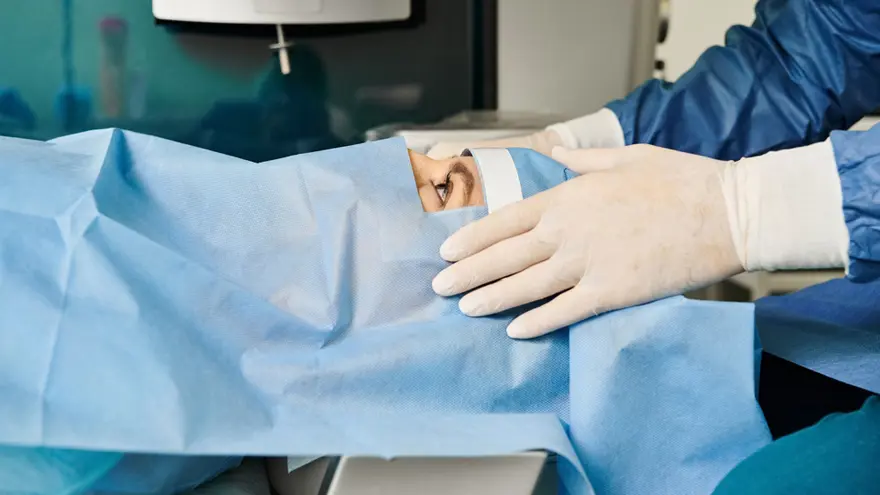
Non-Surgical Choices
Non-surgical interventions are often the first line of defense:
- Reading Glasses: Affordable and ideal for occasional near tasks, but not convenient for on-the-go activities.
- Bifocals/Multifocals: Glasses that incorporate different optical powers to accommodate both near and far vision.
- Contact Lenses: Multifocal Contacts: Designed with concentric rings or alternating zones to aid clear vision at varying distances.
- Monovision Contacts: One eye is optimized for distance, the other for near—offering practical results for many.
Advanced Surgical Options
Surgical options appeal to those looking for more permanent correction and convenience:
- Laser Vision Correction (e.g., LASIK, PRK): Uses excimer or femtosecond lasers to reshape the cornea, enhancing depth of focus. Variants like PresbyLASIK create multifocal corneal zones.
- Corneal Inlays: Tiny, biocompatible rings placed in the cornea to enhance near vision.
- Devices like the Kamra™ inlay work by creating a pinhole effect to extend depth of field.
Monovision Strategy
Monovision is widely used both surgically and non-surgically. It leverages the brain’s ability to combine images from one near-focused and one distance-focused eye.
- Effective for active individuals seeking to reduce glasses use.
- Compatible with contact lenses or LASIK.
Why Patients Trust Global Ubal Eye Center
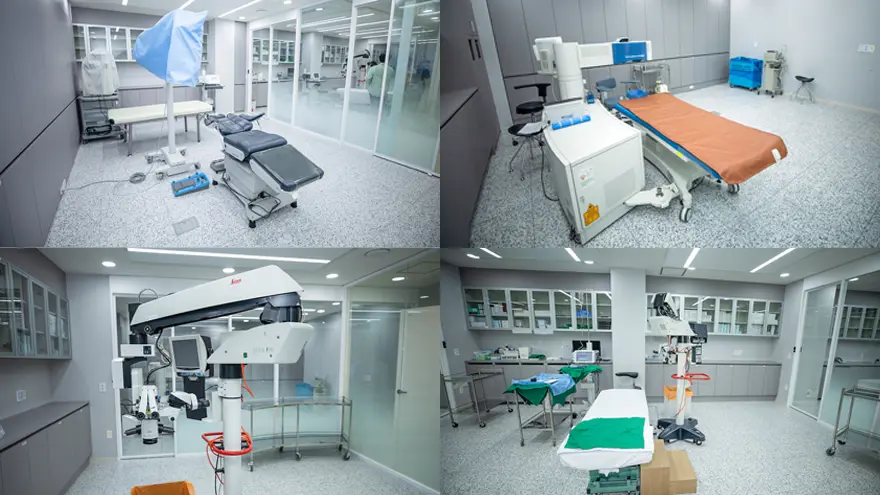
Located in Incheon, Korea, Global Ubal Eye Center is a destination for vision restoration:
- 23+ Years of Experience: Treating a wide range of refractive errors and ocular conditions.
- Cutting-Edge Equipment: Includes wavefront diagnostics, femtosecond lasers, and OCT imaging.
- Global Patient Focus: With multilingual services and a strong track record among international patients.
- Safety Excellence: Adheres to international sterilization standards and FDA-cleared technologies.
Patient Voices
Paul, 59, underwent refractive lens exchange. “Two weeks later, I was reading again without glasses. It felt like I got my freedom back.”
Safety and Recovery
Global Ubal’s team prioritizes safety from the first consultation:
- Pre-Surgical Exams: Assess corneal thickness and curvature.
- Evaluate tear film and ocular surface health.
- Use wavefront and topographic imaging for treatment precision.
FAQs
Conclusion: Take Control of Your Vision Health
More Articles
Continue reading our ophthalmology guides and vision care insights.

SMILE vs LASIK: Recovery Benchmarks for Vision Correction Care
South Korea has solidified its position as a global epicenter for ophthalmology, with the domestic LASIK and refractive surgery market projected to reach **USD 167.37 million by 2035**, growing at a steady CAGR of 8.54%.
Learn More

Prevalence of Myopia in Korea: The Value of Dream Lens Therapy
The prevalence of myopia among young people in South Korea has reached critical levels, often described as a "myopia epidemic." According to recent data from the **Korean National Health and Nutrition Examination Survey (KNHANES)**, the prevalence of myopia...
Learn More

Multidisciplinary Care: The Future of Korean Pediatric Eye Clinics
The landscape of pediatric eye care in South Korea is shifting rapidly. With nearly **21.9% of Korean children** estimated to be affected by various visual disorders according to nationwide health screenings, the demand for specialized intervention has never...
Learn More