Comprehensive Eye Care & Vision Correction in Incheon · Multilingual International Concierge
23+ Years Clinical Experience
en-US


Ophthalmology Guide
Premium Lens Implants: A Guide to Better Vision After Cataract Surgery
Discover how premium lens implants can enhance your vision after cataract surgery. Explore options, benefits & what to expect. Learn more in our full guide!
Schedule a ConsultationIntroduction
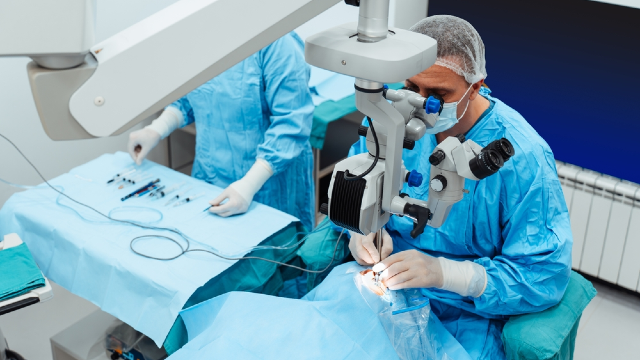
At some point in life, most of us will face the prospect of cataracts. For many, it begins subtly — a bit of glare while driving at night, difficulty reading small print under dim lighting, or a general sense that the world has become slightly hazier. Fortunately, cataract surgery today is one of the safest and most effective procedures in modern medicine.
What Are Premium Lens Implants?
Whenever we perform cataract surgery, we remove the eye’s clouded natural lens and replace it with an artificial intraocular lens (IOL). That much is standard. But not all IOLs are alike.
A “standard” or monofocal IOL corrects vision largely at one distance (usually far). After surgery, many patients still need glasses for near-work (reading, phone) or intermediate tasks (computer).
Types of Premium IOLs
- Toric IOLs: Specifically crafted for patients with corneal astigmatism. Astigmatism causes blurry or distorted vision due to an irregular corneal shape. Toric IOLs correct this refractive error during cataract surgery, combining clarity and convenience.
- Multifocal and Trifocal IOLs: These lenses are engineered with distinct optical zones for near, intermediate, and far vision. Patients can move between reading a text message, using a computer, and driving without needing multiple pairs of glasses.
- Extended Depth of Focus (EDOF) IOLs: EDOF lenses provide a more seamless range of vision by extending the focus rather than splitting it into zones. They are especially suitable for people concerned about visual disturbances like halos and glare at night.
- Accommodative and Light-Adjustable Lenses: Mimicking the natural focusing ability of the eye, accommodative lenses shift position slightly in response to eye muscle movement. Light-adjustable lenses, on the other hand, allow fine-tuning after surgery using special light treatments — though not yet widely available in Korea.
Why Choose a Premium IOL?
Enhanced Visual Range
The biggest advantage is simple: greater freedom. Instead of wearing glasses to read or see your dashboard clearly, premium lenses allow sharper, multifocal vision tailored to your lifestyle.
Lifestyle-Centric Clarity
You might be an avid reader, a tech user, or a driver who often travels at night. Whatever your daily routine involves, premium IOLs provide flexibility. For example, a patient who frequently uses a computer for work may benefit more from an EDOF lens than a standard lens.
Built-in Astigmatism Correction
If you have moderate to high astigmatism, a toric IOL ensures your cataract surgery addresses both issues at once. This dual-function benefit can significantly improve visual sharpness.
Better Low-Light and Night Vision
Thanks to advanced optics, many premium lenses offer enhanced contrast sensitivity. This is particularly valuable in Korea, where many people drive, walk, or commute at night, and good night vision is essential for comfort and safety.
Improved Quality of Life
Several studies show that patients with premium IOLs report higher satisfaction and reduced dependency on corrective eyewear. It’s not just about the numbers on a vision chart — it’s about the ability to enjoy life without limitations.
How We Choose Premium IOLs — At Global Ubal Eye Center
We approach IOL selection with the same care as we do any other complex medical decision: holistically, patiently, and with your long-term wellbeing in mind.
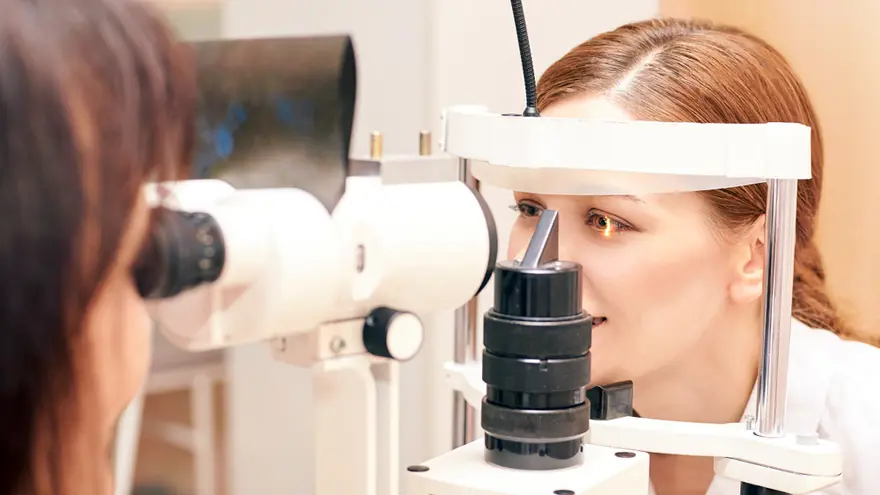
1. In-Depth Eye Examination
We begin with a meticulous assessment of your eye health:
- Corneal topography
- Axial length measurement
- Retinal imaging
- Tear film stability tests
- Intraocular pressure (IOP) evaluation
2. Lifestyle and Vision Goals Discussion
We take time to understand how you use your eyes every day. We ask:
- Do you drive often or at night?
- Do you read or use computers daily?
- Do you already wear multifocal glasses?
- How important is it to avoid glasses altogether?
- What hobbies or work tasks matter most to you?
3. Transparent Education
We don’t oversell. We clearly explain the pros and cons of each lens type, including the financial costs. For instance:
- Multifocal lenses may cause temporary halos
- Toric lenses require accurate axis alignment
- EDOF lenses may offer more natural transitions but slightly reduced near vision
Myths and Misconceptions
Why Global Ubal Eye Center?
Real-World Example
Conclusion: Is a Premium Lens Implant Right for You?
More Articles
Continue reading our ophthalmology guides and vision care insights.

SMILE vs LASIK: Recovery Benchmarks for Vision Correction Care
South Korea has solidified its position as a global epicenter for ophthalmology, with the domestic LASIK and refractive surgery market projected to reach **USD 167.37 million by 2035**, growing at a steady CAGR of 8.54%.
Learn More

Prevalence of Myopia in Korea: The Value of Dream Lens Therapy
The prevalence of myopia among young people in South Korea has reached critical levels, often described as a "myopia epidemic." According to recent data from the **Korean National Health and Nutrition Examination Survey (KNHANES)**, the prevalence of myopia...
Learn More

Multidisciplinary Care: The Future of Korean Pediatric Eye Clinics
The landscape of pediatric eye care in South Korea is shifting rapidly. With nearly **21.9% of Korean children** estimated to be affected by various visual disorders according to nationwide health screenings, the demand for specialized intervention has never...
Learn More