Comprehensive Eye Care & Vision Correction in Incheon · Multilingual International Concierge
23+ Years Clinical Experience
en-US

Ophthalmology Guide
Premium Cataract Surgery in Korea: What Sets It Apart
Discover what makes premium cataract surgery in Korea exceptional—advanced tech, expert surgeons & personalized care. Learn more about your options today!
Schedule a ConsultationIntroduction
You wake up one morning and notice the world seems a little dimmer. Headlights dazzle more than they used to. Reading your phone takes extra effort. You chalk it up to age — but the truth is, something deeper may be unfolding. Cataracts develop slowly, almost silently, and before long they begin to interfere with the moments that matter most.
What Exactly Is Premium Cataract Surgery?
To understand premium cataract surgery, it helps to first understand the basics. A cataract is a clouding of the eye’s natural lens, usually due to aging. Traditional cataract surgery involves removing the cloudy lens and replacing it with a clear artificial lens (intraocular lens, or IOL).
Korea's Reputation for Surgical Excellence
Korea has established itself as a global leader in eye care, with a reputation built on precision, safety, and innovation. At premier centers like Global Ubal Eye Center, our surgical teams bring decades of experience, coupled with some of the most advanced ophthalmic technologies in the world.
The Diagnostic Edge: Why Preoperative Testing Matters
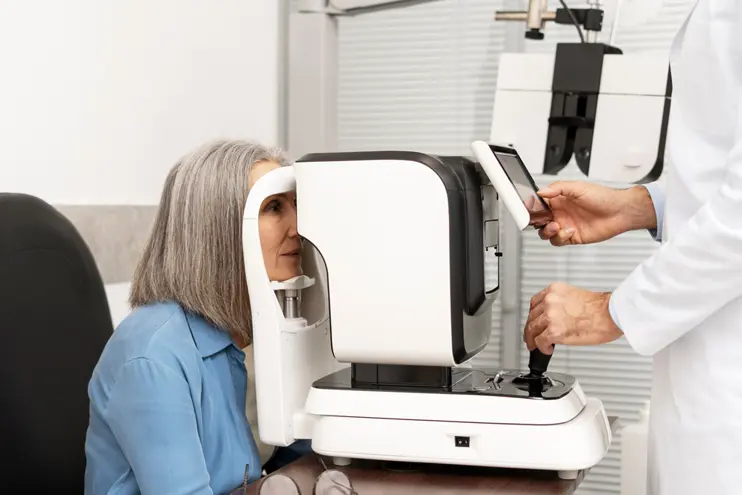
Premium surgery begins with premium diagnostics. This is one of the key areas that separates standard from advanced cataract care.
- Corneal topography to assess the shape and curvature of the cornea
- Optical biometry to precisely measure the eye for accurate IOL power calculation
- Wavefront analysis to detect minute visual imperfections
- Anterior segment OCT to image the eye's internal structures
Advanced Surgical Techniques: Laser-Assisted Precision
In premium procedures, femtosecond lasers are often used to perform some of the key steps of cataract surgery. This includes creating incisions, softening the lens, and preparing the capsule for IOL placement. Compared to manual techniques, laser-assisted surgery offers:
- Greater accuracy
- Less trauma to the eye
- Improved IOL centration
- Faster recovery times
The Game-Changer: Choosing the Right Intraocular Lens (IOL)
This is where premium cataract surgery truly becomes personal. In a standard procedure, a monofocal IOL is implanted, which typically restores vision at one distance (usually far). Patients will still need glasses for reading or intermediate work.
- Multifocal IOLs: Provide vision at multiple distances (far, intermediate, near)
- Extended Depth of Focus (EDOF) IOLs: Deliver a continuous range of focus with fewer visual side effects
- Toric IOLs: Correct astigmatism for sharper vision
Personalized Planning: No Two Surgeries Are Alike

At Global Ubal Eye Center, one of our core principles is personalization. That means:
- Reviewing your visual priorities (e.g., Do you work on a computer all day? Do you knit or read a lot?)
- Considering your ocular history and anatomy
- Discussing how much independence from glasses you want
What Recovery Looks Like
Recovery from cataract surgery in Korea is usually swift. Many of our patients notice significant improvement within 24 hours. However, full visual adaptation may take a few weeks, especially with multifocal or EDOF lenses.
- Close post-op monitoring
- Adjustments as needed
- Clear, multilingual support (in Korean, English, Japanese, Mongolian, and Russian)
Why Global Ubal Eye Center?
We bring more than 23 years of ophthalmology experience to every consultation. Led by Dr. Heecheol Bae, a former professor at Kyunghee University College of Medicine, our clinic specializes in cataract, LASIK/LASEK, glaucoma, and retinal care.
- State-of-the-art imaging and laser equipment
- International patient services
- Compassionate, patient-first care
- A meticulous surgical approach that respects your visual goals
Conclusion
By the time most patients come to us, they’ve spent months — sometimes years — adjusting to compromised vision. They’ve rearranged their lives around dimness, glare, and dependency on glasses. But the moment their cataracts are removed, something powerful happens: the world sharpens. Faces brighten. Words leap off the page. Life begins to feel accessible again.
More Articles
Continue reading our ophthalmology guides and vision care insights.

SMILE vs LASIK: Recovery Benchmarks for Vision Correction Care
South Korea has solidified its position as a global epicenter for ophthalmology, with the domestic LASIK and refractive surgery market projected to reach **USD 167.37 million by 2035**, growing at a steady CAGR of 8.54%.
Learn More

Prevalence of Myopia in Korea: The Value of Dream Lens Therapy
The prevalence of myopia among young people in South Korea has reached critical levels, often described as a "myopia epidemic." According to recent data from the **Korean National Health and Nutrition Examination Survey (KNHANES)**, the prevalence of myopia...
Learn More

Multidisciplinary Care: The Future of Korean Pediatric Eye Clinics
The landscape of pediatric eye care in South Korea is shifting rapidly. With nearly **21.9% of Korean children** estimated to be affected by various visual disorders according to nationwide health screenings, the demand for specialized intervention has never...
Learn More