Comprehensive Eye Care & Vision Correction in Incheon · Multilingual International Concierge
23+ Years Clinical Experience
en-US

Ophthalmology Guide
Pediatric Ophthalmology Korea 2026 | Kids Eye Care Guide
Expert pediatric ophthalmology in Korea for international families. Learn about children's eye care, safety, and English services at Global Ubal Eye Center.
Schedule a ConsultationIntroduction
For parents in New York or Los Angeles finding world class eye care for their children often feels like an overwhelming journey. When your child vision is at stake the distance between continents disappears in favor of seeking the most advanced pediatric ophthalmology korea has to offer.

What Is Pediatric Ophthalmology Korea
Pediatric ophthalmology korea refers to the specialized medical field dedicated to diagnosing and treating eye conditions in infants children and adolescents within the South Korean healthcare system. This field is distinct from adult ophthalmology because a child eyes are still developing and their visual system is highly plastic.
Defining Specialized Care For Young Patients
The difference between adult and pediatric eye anatomy is significant. A child eye is shorter and the lens is more flexible which affects how light focuses on the retina. In the context of pediatric ophthalmology korea specialists must account for the fact that a child may not be able to verbalize their symptoms. This is why board certified specialists are required for pediatric ophthalmology korea services.
Common Conditions Treated At Global Ubal
The range of conditions managed under pediatric ophthalmology korea is broad. One of the most common issues we address is pediatric myopia or nearsightedness. With the increase in digital device usage myopia has become a global epidemic. Pediatric ophthalmology korea clinics are at the forefront of myopia control using a variety of methods to slow the elongation of the eye.
The Importance Of Early Intervention
There is a golden period for vision development that typically occurs between the ages of three and seven. During this time the connection between the eye and the brain is being hardwired. In pediatric ophthalmology korea we stress that any interference with clear vision during this period can have permanent consequences. This is why preventative screening protocols used in Incheon are so vital.
Benefits Of Children Eye Care Korea
Choosing children eye care korea offers numerous advantages for international families. The South Korean medical system is world renowned for its efficiency and its use of high end technology. For a parent from New York or Chicago the level of care available for children eye care korea often exceeds what is available locally especially when considering the speed of access to specialists.
Advanced Diagnostic Technology
One of the primary benefits of children eye care korea is the access to non invasive imaging tools specifically designed for smaller eyes. Children are often anxious during medical exams so having technology that can capture clear images in a fraction of a second is essential.
Child Friendly Clinical Environments
Global Ubal Eye Center has been designed to reduce what is commonly known as white coat syndrome. We know that if a child is scared the results of their eye exam may not be accurate. Children eye care korea focuses on creating a welcoming atmosphere where the diagnostic process feels more like a series of games than a medical test.
Cost Effectiveness And Quality
When comparing children eye care korea to premium clinics in the United States many families find that they can receive a higher level of care at a more manageable price point.
The Pediatric Ophthalmology Process In Korea
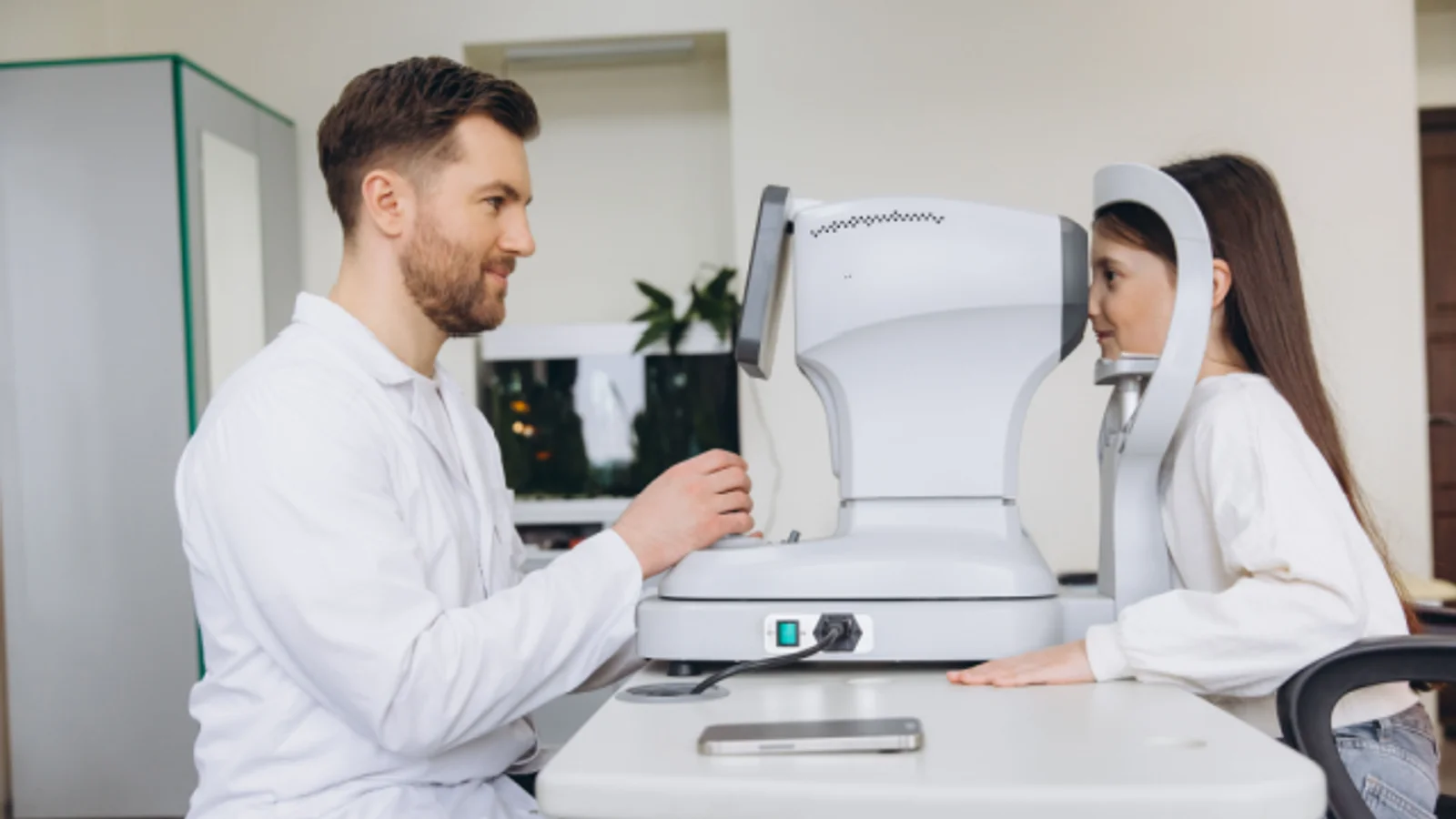
Understanding the steps involved in pediatric ophthalmology korea can help alleviate the anxiety that parents often feel when seeking medical care abroad. The process is designed to be thorough yet easy to navigate for those who do not speak Korean. From the moment you contact Global Ubal Eye Center we provide a clear roadmap for your child journey through pediatric ophthalmology korea services.
Step 1: The Initial Consultation And English Screening
The first step in pediatric ophthalmology korea involves a detailed consultation. For international families this begins with our English speaking coordinator who acts as a bridge between the parents and the medical team. We start with pre consultation questionnaires that allow us to understand the child medical history and any specific concerns the parents may have.
| Test Name | Purpose | Duration |
|---|---|---|
| Cycloplegic Refraction | Precise prescription measurement by relaxing eye muscles | 30 40 mins |
| Binocular Vision Test | Checking eye alignment and how eyes work together | 15 mins |
| Fundus Examination | Comprehensive retina and optic nerve health check | 10 mins |
| Axial Length Measurement | Critical for myopia progression tracking | 5 mins |
Recovery And Long Term Vision Care For Kids
Safety And Technology Kids LASIK Korea And Advanced Treatments
Planning Your Visit Pediatric Eye Care For International Families
| Departure City | Average Flight Time | Time Zone Difference | Recommended Stay |
|---|---|---|---|
| Los Angeles (LAX) | 13 Hours | +16 Hours | 7 10 Days |
| New York (JFK) | 15 Hours | +13 Hours | 10 14 Days |
| Houston (IAH) | 14.5 Hours | +14 Hours | 7 10 Days |
Why Choose Global Ubal Eye Center For Pediatric Ophthalmology

How To Book Your Pediatric Consultation
Conclusion
Author Bio
Frequently Asked Questions
More Articles
Continue reading our ophthalmology guides and vision care insights.

SMILE vs LASIK: Recovery Benchmarks for Vision Correction Care
South Korea has solidified its position as a global epicenter for ophthalmology, with the domestic LASIK and refractive surgery market projected to reach **USD 167.37 million by 2035**, growing at a steady CAGR of 8.54%.
Learn More

Prevalence of Myopia in Korea: The Value of Dream Lens Therapy
The prevalence of myopia among young people in South Korea has reached critical levels, often described as a "myopia epidemic." According to recent data from the **Korean National Health and Nutrition Examination Survey (KNHANES)**, the prevalence of myopia...
Learn More
Multidisciplinary Care: The Future of Korean Pediatric Eye Clinics
The landscape of pediatric eye care in South Korea is shifting rapidly. With nearly **21.9% of Korean children** estimated to be affected by various visual disorders according to nationwide health screenings, the demand for specialized intervention has never...
Learn More