Comprehensive Eye Care & Vision Correction in Incheon · Multilingual International Concierge
23+ Years Clinical Experience
en-US

Ophthalmology Guide
Most Common Vision Problems in Children and How to Treat Them
Discover the most common vision problems in children, their symptoms, and effective treatments. Help your child see clearly—learn more today!
Schedule a ConsultationIntroduction: Seeing the World Through a Child’s Eyes
A child’s first smile at a parent, their joy when they recognize a favorite toy, the excitement of discovering letters in a book—so much of childhood is filtered through vision. For most parents, eyesight is something we take for granted until a problem appears. But what if your child’s world has always been blurry? What if they’ve never known what “clear” vision feels like?
Why Eye Health in Childhood Matters
Vision isn’t just about seeing clearly—it’s about how a child interacts with life. In fact, studies suggest that 80% of learning is visual. From recognizing shapes and letters to developing hand-eye coordination, good eyesight lays the foundation for education and social development.
The Most Common Vision Problems in Children
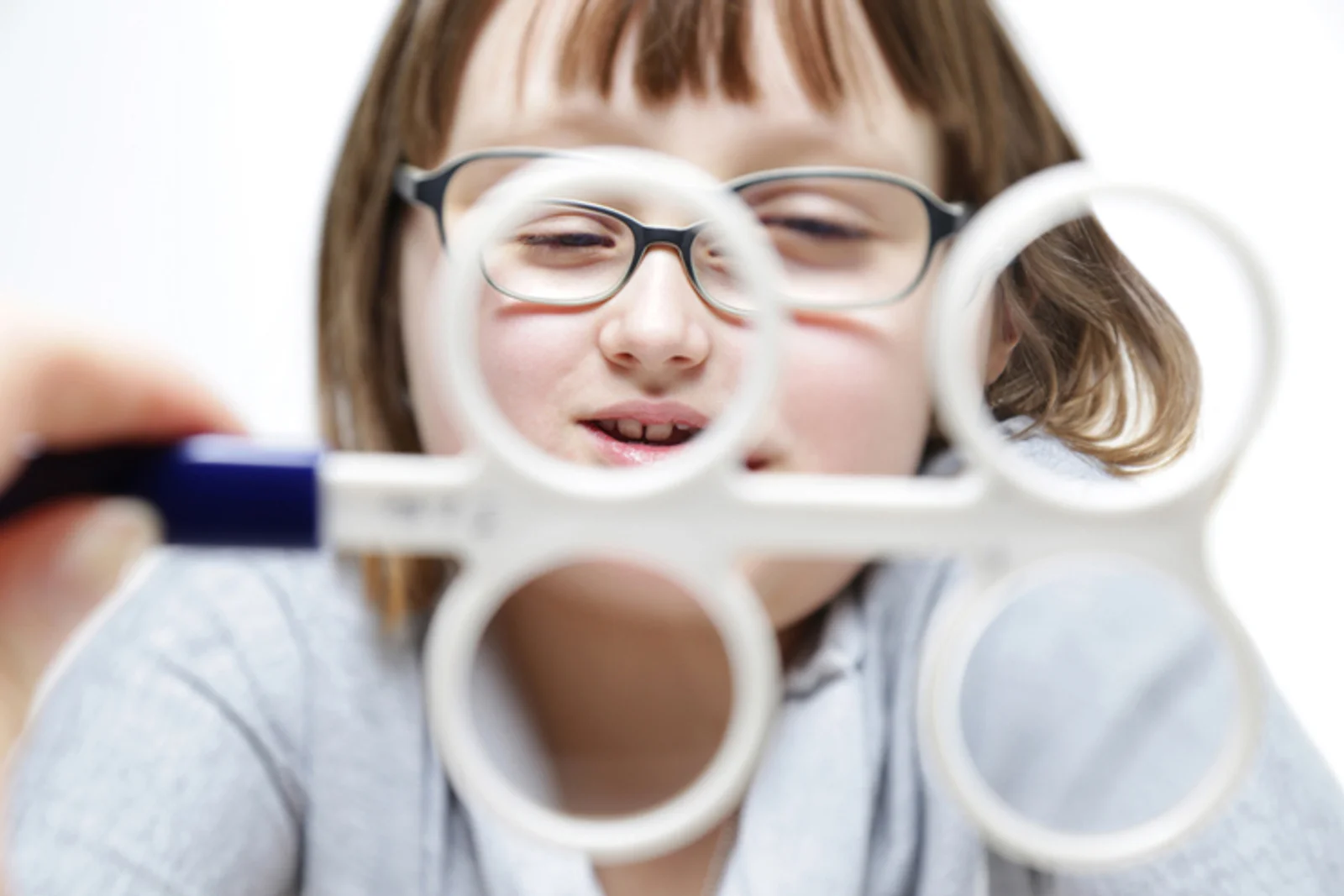
Refractive Errors (Nearsightedness, Farsightedness, Astigmatism)
The majority of childhood vision problems fall into this category.
- Nearsightedness (Myopia): The child sees nearby objects clearly but struggles to see distant things, like the classroom board.
- Farsightedness (Hyperopia): The child can see far away but may struggle with reading, coloring, or homework.
- Astigmatism: Caused by an irregular curvature of the cornea, leading to blurred or distorted vision at all distances.
Amblyopia (Lazy Eye)
Amblyopia is one of the most misunderstood childhood conditions. It happens when one eye is weaker, and the brain begins to “ignore” it. Over time, this eye doesn’t develop normal vision.
- Corrective glasses to address refractive errors.
- Patching therapy, where the stronger eye is covered to encourage the weaker eye to develop.
- In some cases, vision therapy exercises designed to retrain the brain.
Strabismus (Crossed or Misaligned Eyes)
Strabismus is when the eyes are misaligned—one may turn inward, outward, upward, or downward. Parents sometimes notice this in photographs, where one eye seems to be “looking elsewhere.”
- Glasses may correct some cases, especially when the misalignment is linked to refractive errors.
- Eye exercises or vision therapy can help strengthen coordination.
- Surgery may be needed to adjust the muscles controlling eye movement.
Congenital Cataracts
While cataracts are usually associated with aging, they can also occur in infants and young children. Congenital cataracts cloud the natural lens of the eye, blocking normal vision development.
- Surgical removal of the cloudy lens, often followed by the implantation of an artificial intraocular lens.
- Post-surgery, children may still require glasses or contact lenses to fine-tune their vision.
Pediatric Glaucoma
This is a rare but serious condition where increased pressure inside the eye damages the optic nerve. Unlike adult glaucoma, pediatric glaucoma may present with more visible signs: unusually large eyes, excessive tearing, or sensitivity to light.
- Surgery is often required to lower eye pressure and protect the optic nerve.
- Ongoing monitoring is crucial, as pediatric glaucoma is a lifelong condition.
How Parents Can Support Their Child’s Eye Health
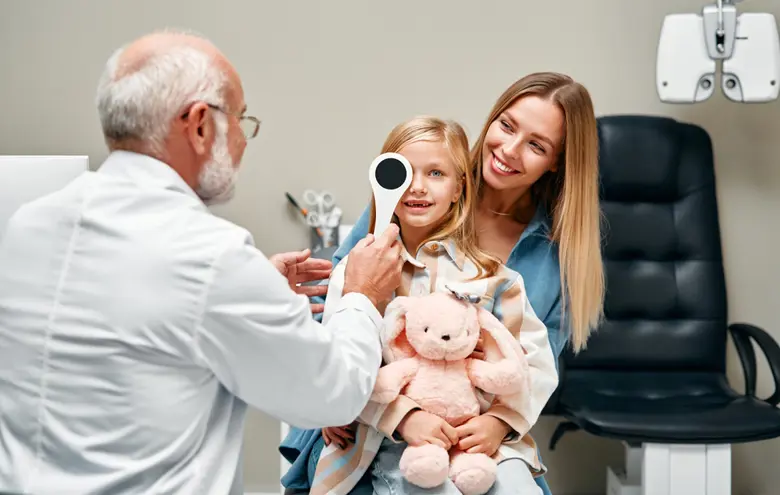
Eye health is not only about treatment—it’s about habits and prevention. Here’s what parents can do:
- Schedule routine exams. Children should have a comprehensive eye check around age 3, before school entry, and regularly thereafter.
- Watch for subtle clues. Head tilting, squinting, covering one eye, or frequent eye rubbing all suggest a vision issue.
- Encourage outdoor play. Research consistently shows that time spent outdoors slows the onset of myopia. Natural light and distance viewing both protect the developing eye.
- Balance screen time. Digital learning is unavoidable, but setting limits and encouraging regular breaks can prevent eye strain.
- Model healthy habits. When parents prioritize eye care, children learn to value it too.
Why Choose Specialized Pediatric Eye Care
Children aren’t simply “small adults.” Their eyes are still developing, and their emotional needs during an eye exam require patience and empathy.
- Using equipment scaled for children.
- Creating a child-friendly environment to reduce anxiety.
- Explaining every step to parents so they feel confident in the care process.
Conclusion: Protecting a Child’s Window to the World
Vision is a gift, and in childhood, it’s the gateway to learning, connection, and discovery. The most common vision problems in children—refractive errors, amblyopia, strabismus, congenital cataracts, and glaucoma—may sound daunting, but with early detection and proper care, most can be successfully managed.
More Articles
Continue reading our ophthalmology guides and vision care insights.

SMILE vs LASIK: Recovery Benchmarks for Vision Correction Care
South Korea has solidified its position as a global epicenter for ophthalmology, with the domestic LASIK and refractive surgery market projected to reach **USD 167.37 million by 2035**, growing at a steady CAGR of 8.54%.
Learn More

Prevalence of Myopia in Korea: The Value of Dream Lens Therapy
The prevalence of myopia among young people in South Korea has reached critical levels, often described as a "myopia epidemic." According to recent data from the **Korean National Health and Nutrition Examination Survey (KNHANES)**, the prevalence of myopia...
Learn More

Multidisciplinary Care: The Future of Korean Pediatric Eye Clinics
The landscape of pediatric eye care in South Korea is shifting rapidly. With nearly **21.9% of Korean children** estimated to be affected by various visual disorders according to nationwide health screenings, the demand for specialized intervention has never...
Learn More