Comprehensive Eye Care & Vision Correction in Incheon · Multilingual International Concierge
23+ Years Clinical Experience
en-US

Ophthalmology Guide
Most Common Pediatric Vision Problems and How to Treat Them
Discover the most common pediatric vision problems, their symptoms, and treatments. Help your child see clearly—learn more from expert guidance today!
Schedule a ConsultationIntroduction
When we think about our children’s health, we often picture strong bones, balanced nutrition, and regular check-ups with the pediatrician. But what many families don’t realize is that vision care is just as important, if not more so, for a child’s long-term well-being. Good eyesight is the foundation for learning, social development, and even emotional confidence.
Why Pediatric Eye Health Matters
In Korea and across the world, modern lifestyles are affecting children’s eyesight. More hours on smartphones, tablets, and computers mean less time outdoors, and research has shown that this directly increases the risk of myopia (nearsightedness). Yet myopia is only one piece of the puzzle.
Common Pediatric Vision Problems
Refractive Errors (Myopia, Hyperopia, Astigmatism)
Refractive errors are by far the most common pediatric vision problems. Myopia (nearsightedness) makes distant objects blurry, while hyperopia (farsightedness) affects near vision. Astigmatism, caused by an irregular curvature of the cornea, distorts vision at all distances.
- What parents may notice: squinting, sitting close to the TV, holding books very close, or struggling to see the classroom board.
- Treatment: Glasses are the standard solution. However, at Global Ubal Eye Center we also provide orthokeratology lenses (Dream Lenses), which are worn overnight to gently reshape the cornea. This not only corrects vision temporarily but can also slow the progression of myopia in children.
Amblyopia (Lazy Eye)
Amblyopia develops when one eye doesn’t achieve normal vision because the brain relies more heavily on the other. This can happen if the eyes are misaligned, or if one eye has a much stronger prescription than the other.
- What parents may notice: frequent closing of one eye, poor depth perception, or the child bumping into objects on one side.
- Treatment: Early detection is critical. Glasses, patching the stronger eye, or vision therapy can strengthen the weaker eye. With proper intervention before the age of 7, the prognosis is excellent.
Strabismus (Crossed Eyes or Misalignment)
Strabismus occurs when the eyes point in different directions. This can lead to double vision or suppression of one eye, and eventually amblyopia if untreated.
- What parents may notice: the eyes crossing inward or drifting outward, especially when the child is tired.
- Treatment: Depending on severity, treatment may include glasses, prism lenses, exercises, or surgery. At Global Ubal Eye Center, surgical correction is performed with precision, restoring both eye alignment and binocular vision.
Congenital Cataracts
Cataracts in children are rare but serious. These cloud the lens of the eye, preventing light from properly reaching the retina and disrupting normal visual development.
- What parents may notice: a cloudy pupil, lack of response to visual cues, or unusual eye movements.
- Treatment: If the cataract significantly blocks vision, surgery is required — often within the first months of life. After surgery, children usually need corrective lenses and careful monitoring.
Eye Allergies and Dry Eye in Children
Seasonal allergies, air pollution, and heavy screen use can all trigger red, itchy, or watery eyes in children.
- What parents may notice: frequent rubbing of the eyes, excessive blinking, or watery discharge.
- Treatment: Antihistamine drops, artificial tears, and lifestyle changes such as limiting screen time help. At Global Ubal Eye Center, we also teach preventive strategies to reduce eye strain in young patients.
How Parents Can Protect Their Child’s Vision
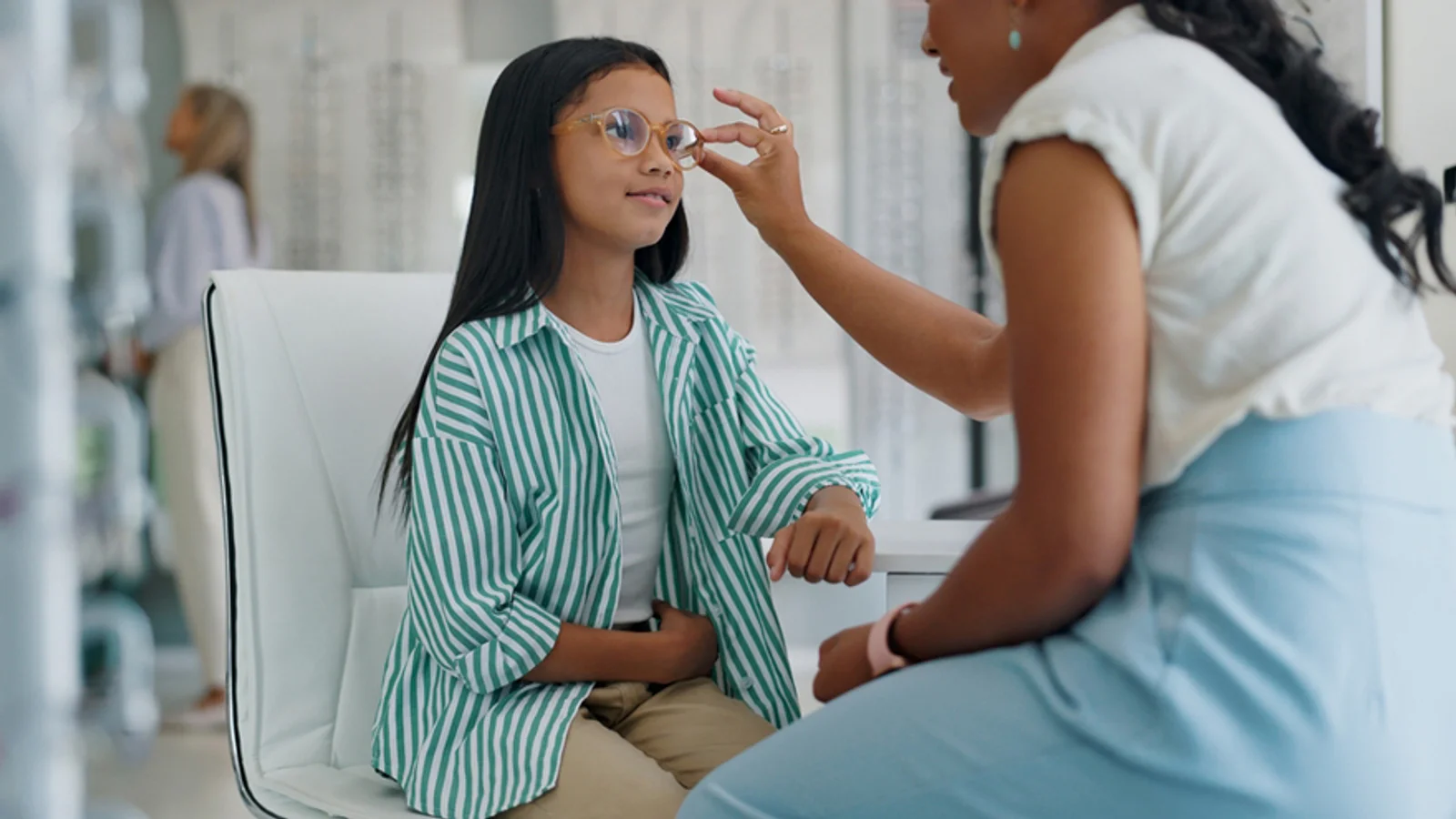
Eye exams should be part of every child’s routine care, just like dental visits. School screenings are helpful but limited — only a full ophthalmic evaluation can detect subtle but important problems.
- Encourage daily outdoor play to slow the onset of myopia.
- Set healthy screen time limits and ensure proper lighting during reading or study.
- Watch for subtle cues: a child tilting their head, rubbing their eyes, or avoiding near tasks may be signaling a vision issue.
- Pay attention to academic or behavioral changes — they may be linked to vision, not just learning style or mood.
The Global Ubal Eye Center Approach
Conclusion
More Articles
Continue reading our ophthalmology guides and vision care insights.

SMILE vs LASIK: Recovery Benchmarks for Vision Correction Care
South Korea has solidified its position as a global epicenter for ophthalmology, with the domestic LASIK and refractive surgery market projected to reach **USD 167.37 million by 2035**, growing at a steady CAGR of 8.54%.
Learn More

Prevalence of Myopia in Korea: The Value of Dream Lens Therapy
The prevalence of myopia among young people in South Korea has reached critical levels, often described as a "myopia epidemic." According to recent data from the **Korean National Health and Nutrition Examination Survey (KNHANES)**, the prevalence of myopia...
Learn More

Multidisciplinary Care: The Future of Korean Pediatric Eye Clinics
The landscape of pediatric eye care in South Korea is shifting rapidly. With nearly **21.9% of Korean children** estimated to be affected by various visual disorders according to nationwide health screenings, the demand for specialized intervention has never...
Learn More