Comprehensive Eye Care & Vision Correction in Incheon · Multilingual International Concierge
23+ Years Clinical Experience
en-US


Ophthalmology Guide
Macular Degeneration Treatment Korea | Global Ubal Eye Center
Expert AMD treatment in Korea with English-speaking retina specialists. Advanced diagnosis, anti-VEGF therapy, and personalized care at Global Ubal Eye Center.
Schedule a ConsultationIntroduction
If your father or mother developed macular degeneration in their sixties or seventies, you already know the fear: a family member's gradual loss of central vision, the independence they lost, the impact on their quality of life. And you may be asking yourself: am I next? The truth is, if you have a family history of age-related macular degeneration, your risk is significantly elevated.

What Is Macular Degeneration and Why Treatment in Korea Matters
What Is Age-Related Macular Degeneration?
Age-related macular degeneration, commonly called AMD, is a progressive deterioration of the macula. The macula is the central region of the retina responsible for sharp, detailed central vision. This is the part of your eye that allows you to read, recognize faces, drive safely, and perform detail work.
Your Personal Risk: Family History, Age, and Lifestyle Factors
Your risk of developing macular degeneration depends on multiple factors working together. Family history is the strongest genetic predictor. If one parent has AMD, your risk increases approximately fifty percent. If both parents have AMD, your risk approaches seventy to eighty percent. These are not guarantees, but they are meaningful signals that warrant early screening and prevention strategies.
| Risk Factor | Increases Risk | Your Assessment |
|---|---|---|
| Family history (one parent with AMD) | Approximately 50 percent | Checkbox |
| Family history (both parents with AMD) | Approximately 70 to 80 percent | Checkbox |
| Age over 60 | High | Checkbox |
| Current or former smoker | 2x | Checkbox |
| Excessive sun exposure (lifetime) | Moderate | Checkbox |
| Diet high in saturated fat, low in antioxidants | Moderate | Checkbox |
Why Early Macular Degeneration Detection Matters
Early detection of AMD is one of the most important factors determining long-term vision outcomes. If we identify early dry AMD or pre-clinical wet AMD before symptoms appear, we can implement preventive strategies, nutritional interventions, and monitoring protocols that slow progression.
Macular Degeneration Diagnosis and Early Detection in Korea
The Comprehensive Macular Degeneration Diagnostic Protocol at Global Ubal Eye Center
Comprehensive macular degeneration diagnosis in Korea at Global Ubal Eye Center involves an eight-step protocol designed to detect AMD at the earliest possible stage and assess your complete retinal health picture.
Advanced Imaging Technologies at Global Ubal Eye Center
Our diagnostic imaging platform features the Heidelberg Engineering Spectralis OCT system. This cutting-edge technology provides ultra-high-resolution imaging at five-micron resolution, enabling detection of drusen, pigment epithelium changes, and early neovascular activity with unprecedented clarity.
Remote Pre-Screening for International Patients
Global Ubal Eye Center offers remote pre-screening specifically designed for international patients. You can submit recent eye imaging, your medical history, and a family history questionnaire via our secure patient portal. Our specialists review these materials and perform a preliminary assessment to determine your candidacy, risk level, and recommended diagnostic workup.
Treatment Options for Macular Degeneration at Global Ubal Eye Center
Treatment Strategy for Wet AMD: Anti-VEGF Therapy and Laser
Wet AMD occurs when abnormal blood vessel growth underneath the macula, a process called choroidal neovascularization, leaks fluid and blood. This leakage causes rapid vision deterioration if left untreated. The good news is that wet AMD responds well to modern treatment when initiated promptly.
| AMD Type | Progression | Treatment Options | Success Rate |
|---|---|---|---|
| Wet AMD | Rapid (days to weeks) | Anti-VEGF injections, laser therapy, combination approaches | 90% stabilization, 30-40% improvement |
| Dry AMD | Slow (months to years) | Monitoring, AREDS2 vitamins, lifestyle modification, emerging therapies | Variable, dependent on subtype |
Management Strategies for Dry AMD: Observation, Nutrition, and Emerging Therapies
Dry AMD, also called geographic atrophy, progresses more slowly than wet AMD but is currently less amenable to treatment. In dry AMD, the light-sensitive cells in the macula gradually break down without the abnormal blood vessel growth seen in wet disease.
Advanced Retinal Care Technology and Equipment at Global Ubal Eye Center
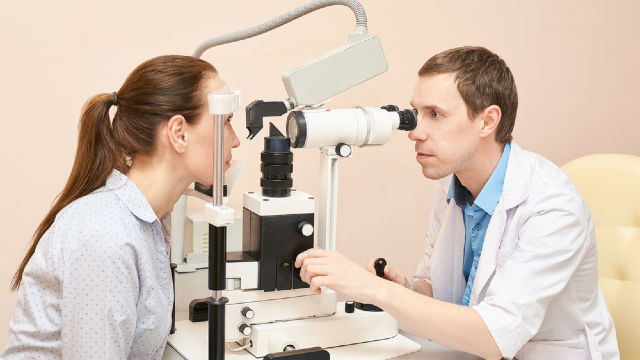
Global Ubal Eye Center's Multi-Specialist Retina Team
What to Expect: Your Macular Degeneration Diagnosis and Treatment Journey
Why Choose Global Ubal Eye Center for Macular Degeneration Treatment and Assessment
How to Book Your Macular Degeneration Assessment at Global Ubal Eye Center

Frequently Asked Questions About Macular Degeneration Treatment in Korea
Conclusion
About the Author
More Articles
Continue reading our ophthalmology guides and vision care insights.

SMILE vs LASIK: Recovery Benchmarks for Vision Correction Care
South Korea has solidified its position as a global epicenter for ophthalmology, with the domestic LASIK and refractive surgery market projected to reach **USD 167.37 million by 2035**, growing at a steady CAGR of 8.54%.
Learn More

Prevalence of Myopia in Korea: The Value of Dream Lens Therapy
The prevalence of myopia among young people in South Korea has reached critical levels, often described as a "myopia epidemic." According to recent data from the **Korean National Health and Nutrition Examination Survey (KNHANES)**, the prevalence of myopia...
Learn More

Multidisciplinary Care: The Future of Korean Pediatric Eye Clinics
The landscape of pediatric eye care in South Korea is shifting rapidly. With nearly **21.9% of Korean children** estimated to be affected by various visual disorders according to nationwide health screenings, the demand for specialized intervention has never...
Learn More