Comprehensive Eye Care & Vision Correction in Incheon · Multilingual International Concierge
23+ Years Clinical Experience
en-US


Ophthalmology Guide
Lens Implant Surgery vs. Cataract Surgery: Which Is Right for You?
Compare lens implant surgery vs. cataract surgery to find the best fit for your vision needs. Discover key differences and benefits—learn more today!
Schedule a ConsultationIntroduction: When Vision Starts to Shift
You wake up one morning and realize you’re holding your phone farther from your face than usual. Reading labels in the grocery store? Not as effortless as it used to be. Maybe you’ve started noticing halos around headlights or a general haze to your vision.
Understanding the Basics: Two Surgeries, One Goal
Lens Implant Surgery (Refractive Lens Exchange)
Lens implant surgery, often called Refractive Lens Exchange (RLE) or clear-lens extraction, is performed to correct refractive errors like myopia, hyperopia, and presbyopia. Even though your natural lens might still be clear, it’s replaced with an artificial intraocular lens (IOL) to improve focus and reduce dependence on glasses or contacts.
Cataract Surgery
Cataract surgery becomes necessary when the eye’s natural lens becomes cloudy, impacting daily life. The symptoms can include blurred vision, glare, difficulty reading, and poor night vision. In this case, the cloudy lens is removed and replaced with an IOL, often restoring sharpness and clarity.
Why Choose One Over the Other?
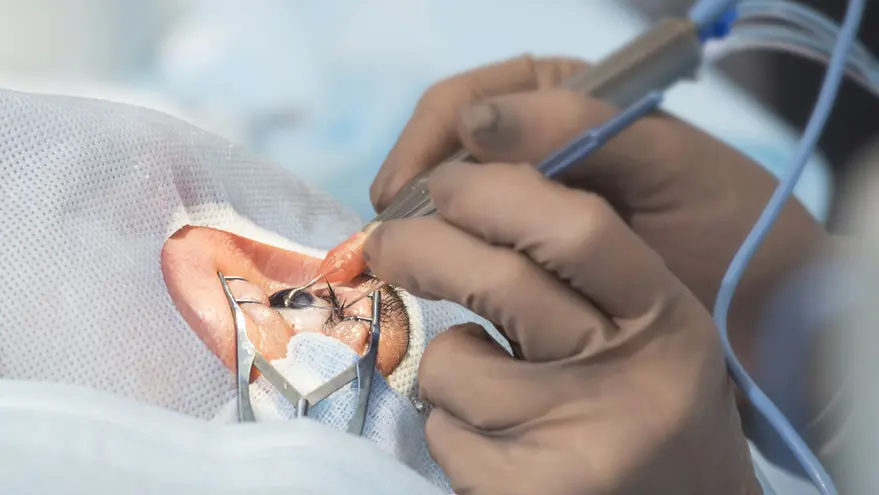
Cataract Surgery Is the Right Fit If...
- You’re experiencing symptoms like glare, halos, or blurred vision that interfere with daily tasks.
- Your ophthalmologist has diagnosed a clinically significant cataract.
- You’re eligible for insurance coverage or national health system support, as cataract surgery is a medically necessary procedure.
Lens Implant Surgery May Be Right If...
- You’re bothered by wearing glasses or contacts, and your lens is still relatively clear.
- You’re diagnosed with presbyopia or have severe refractive errors.
- You aren’t a candidate for LASIK or other corneal refractive procedures.
- You want to correct vision before a cataract forms, rather than waiting for it to develop fully.
What Happens During the Surgeries?
Both procedures involve similar steps:
- Monofocal lenses offer sharp vision at one distance — usually far — but glasses may still be needed for reading.
- Multifocal lenses can reduce dependence on glasses entirely but may cause more glare or halos.
- Extended Depth of Focus (EDOF) lenses are designed for smoother vision across multiple distances.
- Toric lenses are used to correct astigmatism.
How We Decide: The Global Ubal Approach

Every patient is different. Here's how we help you make the decision:
1. Full Diagnostic Assessment
We evaluate not just the lens but also your retina, cornea, optic nerve, and ocular surface. A small change in one part of the eye may influence your candidacy for either surgery.
2. Lifestyle and Vision Goals
- Do you need sharp night vision for driving?
- Is reading without glasses a top priority?
- Do you spend hours on screens or prefer outdoor activities?
3. Refractive Profile and Ocular Health
- High myopia or hyperopia?
- Early signs of lens clouding?
- Any retinal issues or glaucoma risk?
4. Choosing the Right IOL
We discuss the pros and cons of monofocal, toric, multifocal, and extended-depth-of-focus (EDOF) lenses — explaining what each means for your real-world vision. Our patients are shown simulations and real-life expectations.
5. Timing and Long-Term Planning
Some patients want early intervention. Others prefer to wait until the cataract progresses. Either is valid, depending on personal preferences and medical factors. We’ll guide you with honesty and clinical clarity. We also consider whether you may need a second eye surgery soon after, and plan accordingly.
Common Scenarios We See
- A 52-year-old accountant with early presbyopia and +4.50 hyperopia: She chooses RLE with a multifocal lens to eliminate her need for glasses entirely.
- A 70-year-old retired teacher with worsening glare and cloudy vision: We perform cataract surgery using a toric IOL to address both the cataract and her astigmatism.
- A 60-year-old patient with moderate cataract and mild macular degeneration: We opt for a monofocal IOL with enhanced contrast sensitivity and build a long-term follow-up plan to manage retinal health.
- A 45-year-old pilot with high myopia and thin corneas not suitable for LASIK: He chooses lens replacement surgery for refractive correction, minimizing long-term risk of retinal detachment.
What Patients Often Overlook
Conclusion: It’s Not Just a Lens — It’s Your Vision for Life
More Articles
Continue reading our ophthalmology guides and vision care insights.

SMILE vs LASIK: Recovery Benchmarks for Vision Correction Care
South Korea has solidified its position as a global epicenter for ophthalmology, with the domestic LASIK and refractive surgery market projected to reach **USD 167.37 million by 2035**, growing at a steady CAGR of 8.54%.
Learn More

Prevalence of Myopia in Korea: The Value of Dream Lens Therapy
The prevalence of myopia among young people in South Korea has reached critical levels, often described as a "myopia epidemic." According to recent data from the **Korean National Health and Nutrition Examination Survey (KNHANES)**, the prevalence of myopia...
Learn More

Multidisciplinary Care: The Future of Korean Pediatric Eye Clinics
The landscape of pediatric eye care in South Korea is shifting rapidly. With nearly **21.9% of Korean children** estimated to be affected by various visual disorders according to nationwide health screenings, the demand for specialized intervention has never...
Learn More