Comprehensive Eye Care & Vision Correction in Incheon · Multilingual International Concierge
23+ Years Clinical Experience
en-US

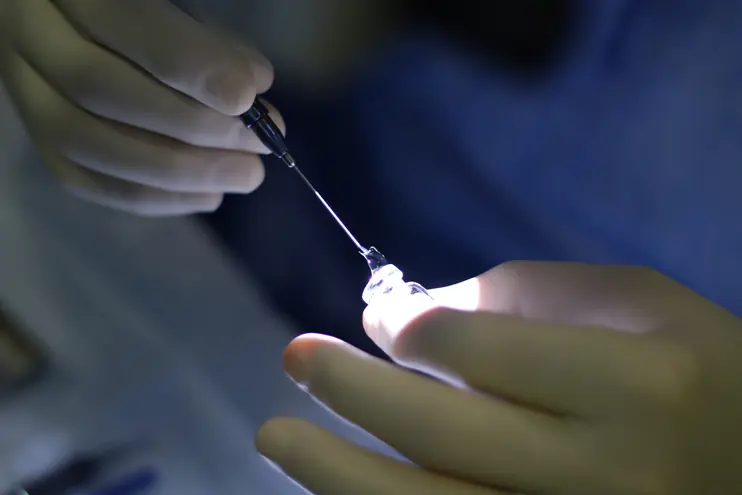
Ophthalmology Guide
Lens Implant Surgery: The Right Treatment for Your Vision Needs
Discover if lens implant surgery is right for you. Improve your vision with this advanced treatment—explore benefits, risks, and more. Learn more today!
Schedule a ConsultationIntroduction: When Vision Starts to Change
There’s a quiet moment many people experience — maybe while reading a text message, or driving home as the streetlights blur — when they realize their vision just isn’t as sharp as it used to be. For some, it’s gradual: the letters on a page become softer, colors seem duller, and glasses that once worked perfectly no longer feel strong enough.
What Is Lens Implant Surgery?
Lens implant surgery, medically known as intraocular lens (IOL) implantation, involves replacing or supplementing the eye’s natural lens with an artificial lens designed to restore clear vision. It’s a remarkably precise procedure, guided by advanced imaging and biometric measurements unique to each patient’s eyes.
Why More People Are Choosing Lens Implant Surgery

To be honest, it’s not always about technology or convenience. Many of our patients tell us they simply want to feel confident again — to see faces clearly, read menus comfortably, or drive at night without fear of glare. Lens implant surgery offers more than vision correction; it restores a sense of freedom.
- Permanent Vision Restoration: The implanted lens doesn’t degrade over time, meaning your results are stable and long-lasting — unlike glasses or contact lenses, which often need updating.
- Elimination of Cataracts: Cataract surgery is the most performed and successful eye surgery in the world. Once the cloudy lens is replaced, your vision is not only restored but also protected from future cataract development.
- Treatment for Presbyopia: Around middle age, the eye naturally loses its ability to focus up close. Multifocal or trifocal lenses can bring back near and distance clarity, eliminating the need for reading glasses.
- A Solution for High Prescriptions or Thin Corneas: Some patients aren’t suitable for laser eye surgery. Lens implants offer an alternative with predictable and safe outcomes.
The Science and Procedure Behind Lens Implant Surgery
For patients, lens implant surgery can sound intimidating at first. But once they understand how it works, most are surprised by its simplicity and gentleness.
1. Comprehensive Diagnostic Evaluation
The journey begins with precision diagnostics. Using instruments such as corneal topography, retinal OCT, and axial length biometry, our team measures every dimension of your eye. These data points guide the custom selection of your intraocular lens, ensuring it fits your visual needs precisely.
2. Micro-Incision and Lens Removal
Under local anesthesia (eye drops), a small incision — often less than 2 millimeters — is made at the edge of the cornea. Through this incision, the natural lens is gently emulsified using ultrasonic or femtosecond laser technology and then removed.
3. Lens Implant Placement
The chosen intraocular lens is folded and inserted through the same incision. Once inside, it unfolds into perfect position, replacing the natural lens permanently.
4. Fast Recovery
Because the incision is so small, it usually seals naturally without stitches. Most patients notice improved vision within hours or days, and normal activities can resume quickly with minimal restrictions.
Types of Intraocular Lenses (IOLs)
Choosing the right lens is as critical as the surgery itself. That’s why, at Global Ubal Eye Center, we take time to match each patient’s lens to their lifestyle and visual priorities.
1. Monofocal Lenses
These lenses focus at one fixed distance, usually for far vision. You’ll enjoy sharp distance clarity but may need reading glasses for near work. They remain a reliable, high-quality option for patients who prioritize stable, crisp distance vision.
2. Multifocal and Trifocal Lenses
For those who want a glasses-free lifestyle, these advanced lenses provide multiple focal points — near, intermediate, and far. They allow smooth transitions between distances, whether reading a phone screen or driving.
3. Toric Lenses
If you have astigmatism, toric IOLs correct corneal curvature irregularities, resulting in sharper and more balanced vision across the field.
4. EDOF (Extended Depth of Focus) Lenses
The Recovery Process: Clearer Vision, Day by Day
Why Choose Global Ubal Eye Center
Conclusion: Seeing Life Clearly Again
More Articles
Continue reading our ophthalmology guides and vision care insights.

SMILE vs LASIK: Recovery Benchmarks for Vision Correction Care
South Korea has solidified its position as a global epicenter for ophthalmology, with the domestic LASIK and refractive surgery market projected to reach **USD 167.37 million by 2035**, growing at a steady CAGR of 8.54%.
Learn More

Prevalence of Myopia in Korea: The Value of Dream Lens Therapy
The prevalence of myopia among young people in South Korea has reached critical levels, often described as a "myopia epidemic." According to recent data from the **Korean National Health and Nutrition Examination Survey (KNHANES)**, the prevalence of myopia...
Learn More

Multidisciplinary Care: The Future of Korean Pediatric Eye Clinics
The landscape of pediatric eye care in South Korea is shifting rapidly. With nearly **21.9% of Korean children** estimated to be affected by various visual disorders according to nationwide health screenings, the demand for specialized intervention has never...
Learn More