Comprehensive Eye Care & Vision Correction in Incheon · Multilingual International Concierge
23+ Years Clinical Experience
en-US

Ophthalmology Guide
Is Cataract Surgery the Answer for Presbyopia? Here’s What to Know
Discover if cataract surgery can correct presbyopia, how it works, and who benefits most. Explore options and see if it’s right for your vision—learn more!
Schedule a ConsultationIntroduction: When Aging Eyes Begin to Change
There’s a quiet moment in nearly every adult’s life when the world starts to blur — not dramatically, but just enough to notice. A text message seems harder to read, the restaurant menu needs a little more light, and suddenly, your reading glasses become a constant companion.
What Exactly Is Presbyopia?
Presbyopia is not an eye disease — it’s a normal biological process. Inside your eye is a clear, flexible structure called the crystalline lens, responsible for focusing light precisely on your retina. In your younger years, this lens easily changes shape, allowing you to focus on near and far objects instantly.
The Overlap: When Presbyopia and Cataracts Meet
Think of presbyopia and cataracts as two stops on the same journey.
- In presbyopia, the lens loses flexibility.
- In cataracts, the lens loses clarity.
Traditional Cataract Surgery vs. Modern Presbyopia-Correcting Surgery

Cataract surgery has come a long way.
The Role of Premium Intraocular Lenses (IOLs)
During cataract surgery, your cloudy lens is gently removed and replaced with a clear, artificial one — an intraocular lens (IOL).
- Monofocal IOLs: Provide clear vision at one fixed distance (usually far). Reading glasses are still needed.
- Multifocal IOLs: Divide light into multiple focal points, offering near, intermediate, and distance vision.
- Extended Depth of Focus (EDOF) IOLs: Provide a smoother, continuous range of focus with fewer visual side effects.
- Toric IOLs: Correct astigmatism in addition to other refractive errors.
When Is the Right Time to Consider Cataract Surgery for Presbyopia?
A common misconception is that you should “wait” until a cataract becomes severe before having surgery. This advice comes from older eras of ophthalmology, when surgical technology was less precise and recovery was slower.
- Increasing glare or halos around lights at night
- Difficulty reading even with new glasses
- Colors appearing dull or yellowish
- Frequent changes in your spectacle prescription
How the Procedure Works
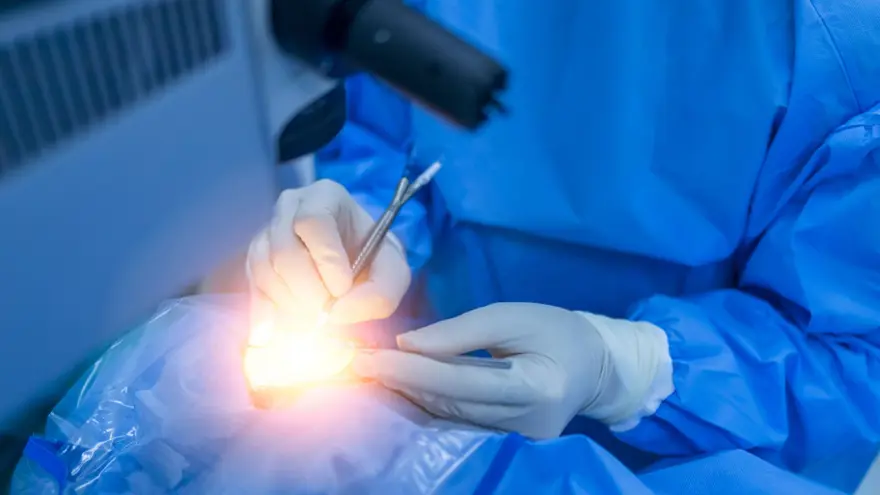
Modern cataract surgery is one of the safest and most refined surgeries in medicine. It usually takes 10–15 minutes per eye and is performed under local anesthesia with minimal discomfort.
Life After Presbyopia-Correcting Cataract Surgery
So, what does life look like after surgery?
What About Other Presbyopia Solutions?
If your lens is still clear (meaning you don’t yet have cataracts), there are other ways to address presbyopia without surgery:
- Monovision LASIK: One eye is corrected for distance and the other for near vision.
- PresbyLASIK or Supracor: Customized laser procedures reshaping the cornea to create multifocality.
- Corneal inlays: Tiny implants placed in the cornea to enhance near vision (less common today).
- Multifocal contact lenses: A non-surgical option for mild to moderate presbyopia.
Conclusion: Seeing Life in Full Focus Again
Presbyopia and cataracts are inevitable parts of the eye’s natural journey, but blurred or cloudy vision doesn’t have to be. Modern ophthalmology now offers ways to not only restore clarity but also regain the youthful ability to focus at multiple distances — sometimes with a single, elegant procedure.
More Articles
Continue reading our ophthalmology guides and vision care insights.

SMILE vs LASIK: Recovery Benchmarks for Vision Correction Care
South Korea has solidified its position as a global epicenter for ophthalmology, with the domestic LASIK and refractive surgery market projected to reach **USD 167.37 million by 2035**, growing at a steady CAGR of 8.54%.
Learn More

Prevalence of Myopia in Korea: The Value of Dream Lens Therapy
The prevalence of myopia among young people in South Korea has reached critical levels, often described as a "myopia epidemic." According to recent data from the **Korean National Health and Nutrition Examination Survey (KNHANES)**, the prevalence of myopia...
Learn More

Multidisciplinary Care: The Future of Korean Pediatric Eye Clinics
The landscape of pediatric eye care in South Korea is shifting rapidly. With nearly **21.9% of Korean children** estimated to be affected by various visual disorders according to nationwide health screenings, the demand for specialized intervention has never...
Learn More