Comprehensive Eye Care & Vision Correction in Incheon · Multilingual International Concierge
23+ Years Clinical Experience
en-US

Ophthalmology Guide
How Vision Therapy Helps Improve Your Child’s Eye Coordination
Vision therapy strengthens eye coordination, focus, and tracking to support learning and development in children. Discover how it works—learn more today!
Schedule a ConsultationIntroduction: When Your Child’s Eyes Don’t Tell the Whole Story
Picture this: your child sits at the dining table, homework spread out in front of them. Within minutes, they start to squirm. Their eyes wander away from the page, they lose their place, or they complain of tired eyes. You might think they’re just restless — or perhaps uninterested in studying. But what if the problem isn’t their effort, but their vision?
What Is Eye Coordination and Why Is It Important?
Eye coordination, or binocular vision, is the ability of both eyes to work together as a team. It’s more than just seeing clearly — it’s about how the eyes align, focus, and move in sync.
- Track words on a page without losing their place.
- Catch a ball by accurately judging its speed and distance.
- Shift focus from the classroom board to their notebook without blur.
- Sustain attention on close-up tasks without eye strain.
How Poor Eye Coordination Shows Up in Daily Life
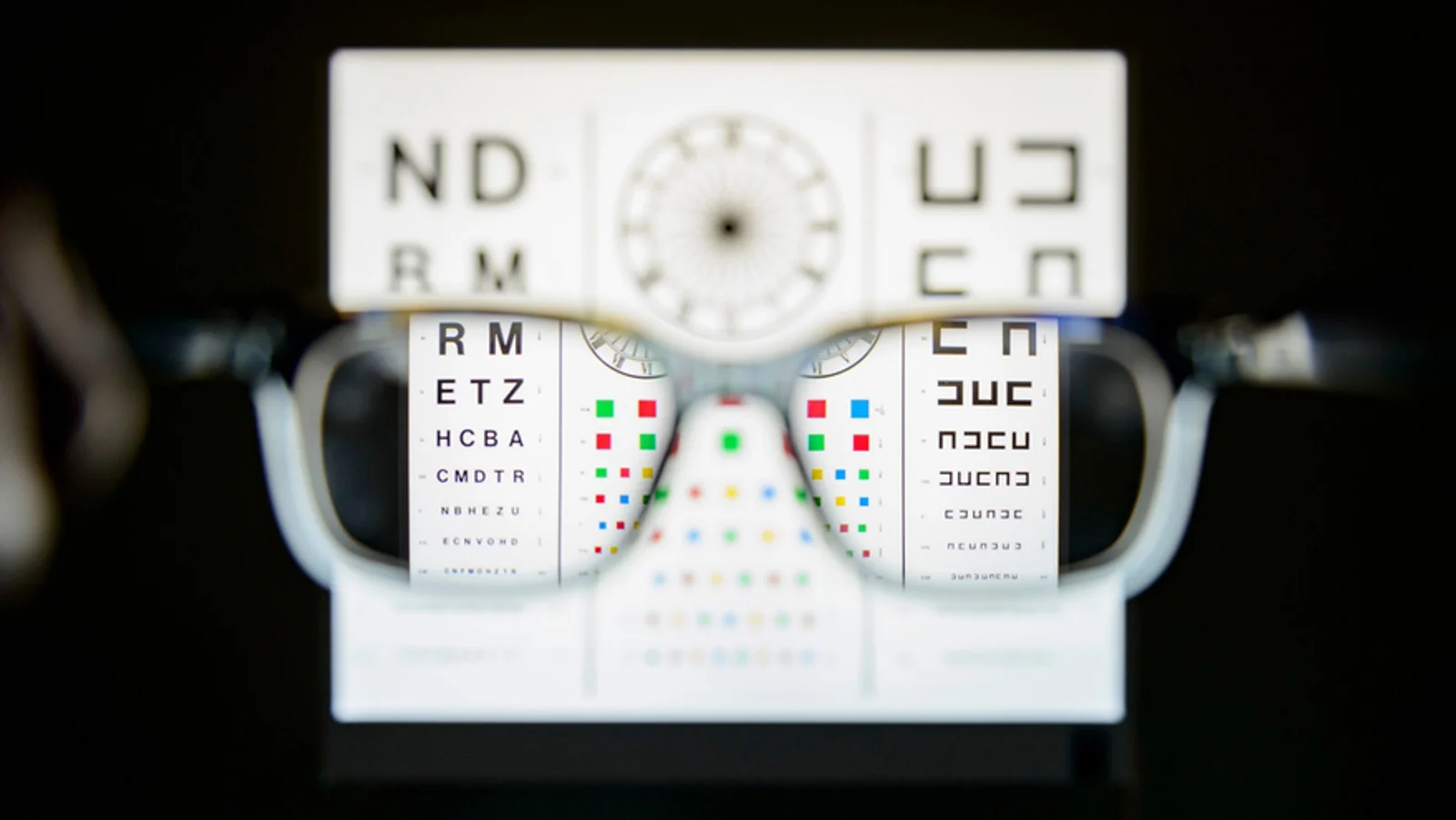
Weak eye coordination doesn’t always look like a vision problem. It often shows up as behaviors that mimic attention or learning issues:
- Constantly losing place while reading.
- Skipping words or lines.
- Tilting or turning the head to use one eye more than the other.
- Avoiding books or activities requiring sustained focus.
- Struggling in sports that require hand-eye coordination.
- Complaining of headaches, tired eyes, or words “moving” on the page.
Why Standard Eye Exams Don’t Catch It
School screenings and many basic eye exams test visual acuity — how clearly a child sees letters on a chart. But they don’t usually test function, like how the eyes track moving objects, team together, or switch focus.
- Eye teaming (binocular vision): Do both eyes point in the same direction?
- Tracking: Can the eyes smoothly follow a moving object?
- Saccades: Can they jump quickly and accurately from one word to the next?
- Accommodation: Can they focus clearly when shifting from near to far?
- Visual processing: How efficiently does the brain interpret visual input?
Vision Therapy: Training the Eyes and Brain
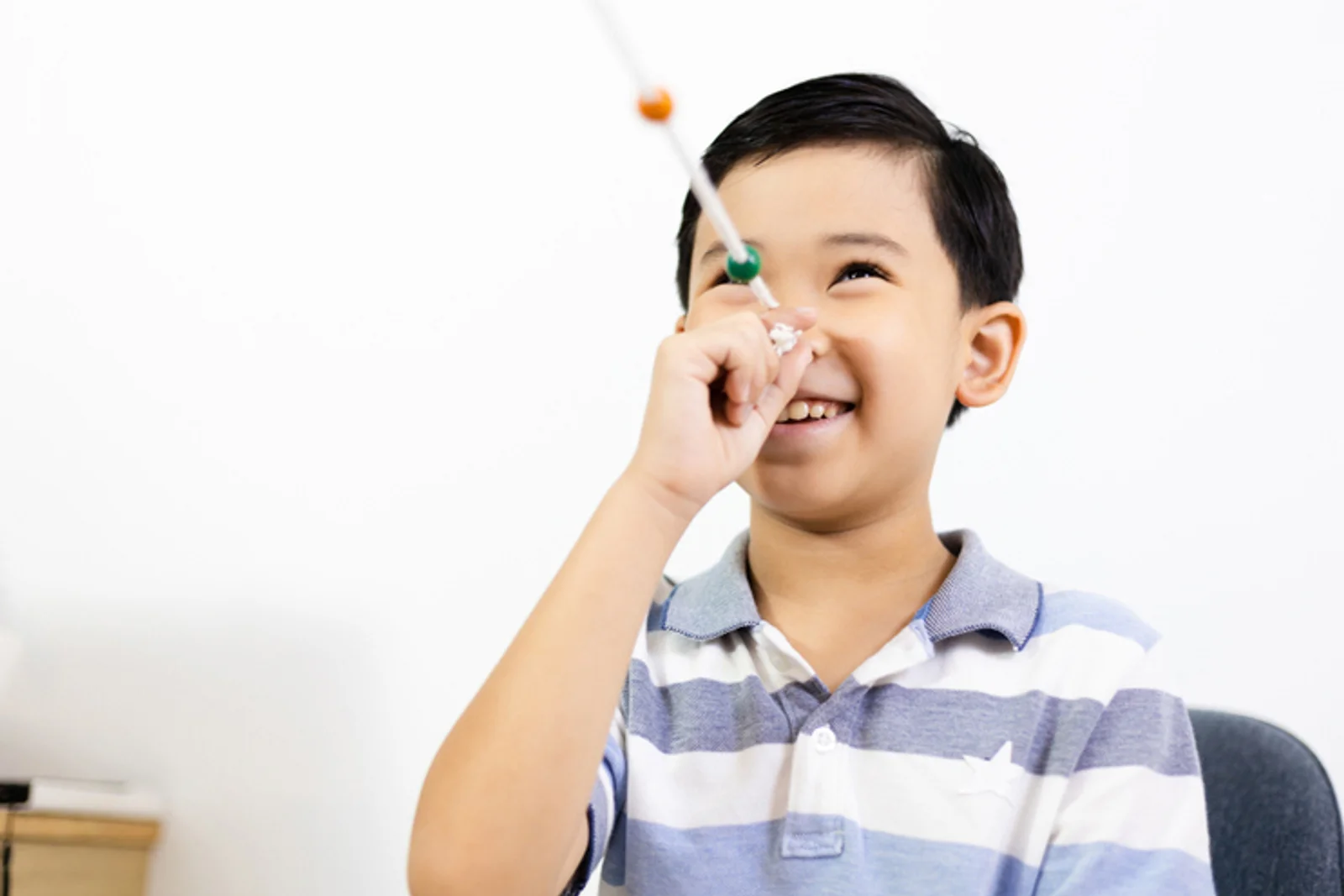
So what is vision therapy? In simple terms, it’s a series of exercises, activities, and sometimes specialized lenses designed to retrain how the eyes and brain work together.
- Tracking exercises with moving targets or digital games.
- Convergence training using prisms, lenses, or special tools.
- Computer-based visual activities that challenge focus and accuracy.
- Balance and coordination drills linking visual and motor skills.
- Homework exercises tailored to each child’s needs.
A Real-Life Example: Jiwon’s Story
Jiwon, a 9-year-old from Incheon, came to Global Ubal Eye Center because she hated reading. Her parents noticed she would lose her place constantly, rub her eyes, and complain that the words “danced” on the page. Her school had suggested she might have an attention problem.
How Vision Therapy Benefits Children Beyond Vision
The effects of vision therapy ripple outwards:
Academic Gains
When eye movements become smooth and automatic, reading fluency and comprehension improve. Homework takes less effort, and children can sustain focus longer.
Confidence in Sports
Catching a ball, hitting a shuttlecock, or judging a teammate’s movement becomes easier when the eyes work together properly. Many children rediscover the joy of play.
Emotional Well-Being
Children who once felt “slow” or “clumsy” realize the problem wasn’t them — it was their eyes. That shift often restores self-esteem and reduces frustration.
Why Early Intervention Matters
Children’s brains are highly adaptable. The earlier a vision problem is identified, the easier it is to retrain the system. Left untreated, poor coordination can contribute to long-term struggles in school, sports, and even social situations.
The South Korean Context: High Demands on Young Eyes
In Korea, children face particularly high visual demands. Long study hours, extensive homework, and heavy use of smartphones and tablets mean their eyes are under constant strain. Even small coordination issues can quickly become major obstacles.
What Parents Can Do Now
If you suspect your child may have an eye coordination issue:
Conclusion: Helping Your Child See and Thrive
When children stumble in school or sports, the easy assumption is that they lack focus, discipline, or motivation. But sometimes, the truth is much simpler — their eyes are not working together as they should.
More Articles
Continue reading our ophthalmology guides and vision care insights.

SMILE vs LASIK: Recovery Benchmarks for Vision Correction Care
South Korea has solidified its position as a global epicenter for ophthalmology, with the domestic LASIK and refractive surgery market projected to reach **USD 167.37 million by 2035**, growing at a steady CAGR of 8.54%.
Learn More

Prevalence of Myopia in Korea: The Value of Dream Lens Therapy
The prevalence of myopia among young people in South Korea has reached critical levels, often described as a "myopia epidemic." According to recent data from the **Korean National Health and Nutrition Examination Survey (KNHANES)**, the prevalence of myopia...
Learn More

Multidisciplinary Care: The Future of Korean Pediatric Eye Clinics
The landscape of pediatric eye care in South Korea is shifting rapidly. With nearly **21.9% of Korean children** estimated to be affected by various visual disorders according to nationwide health screenings, the demand for specialized intervention has never...
Learn More