Comprehensive Eye Care & Vision Correction in Incheon · Multilingual International Concierge
23+ Years Clinical Experience
en-US


Ophthalmology Guide
How to Spot Strabismus (Crossed Eyes) in Kids and Treat It Early
Learn how to spot strabismus (crossed eyes) in kids, its early signs, and treatment options to protect vision health. Get expert tips—learn more today!
Schedule a ConsultationIntroduction
As parents, we learn to notice every little detail about our children. Their first smile, the way they toddle across the living room, the spark of wonder in their eyes when they discover something new. But sometimes, while gazing into those bright young eyes, a parent notices something that feels off — one eye looking straight while the other drifts slightly inward, outward, upward, or downward.
What Exactly Is Strabismus?
Strabismus is a condition where the eyes are misaligned and fail to focus on the same point at the same time. One eye may fixate on an object while the other drifts inward (esotropia), outward (exotropia), upward (hypertropia), or downward (hypotropia). The misalignment can be constant or may come and go.
Why Strabismus Happens
Strabismus can develop for many reasons. Some of the most common include:
- Genetics: Children with a family history of strabismus are more likely to develop it.
- Refractive errors: Farsightedness, when uncorrected, can cause eye strain and misalignment.
- Neurological issues: Rarely, strabismus may be linked to problems in the brain’s control of eye movements.
- Eye muscle imbalance: If one or more of the six muscles that control eye movement are weaker or stronger than the others, alignment problems can occur.
- Associated conditions: Premature birth, Down syndrome, or cerebral palsy can increase the risk of strabismus.
Common Signs Parents Should Watch For
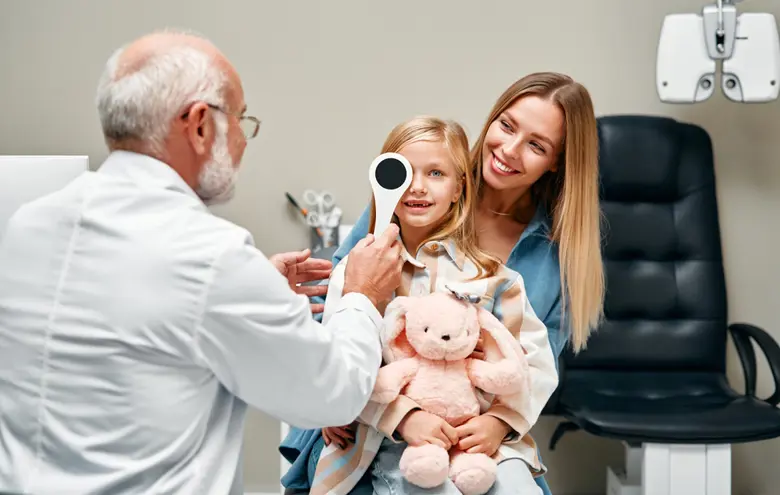
Not every case of strabismus is obvious, and children themselves may not notice anything wrong. Parents are often the first line of defense in spotting the signs. Here are some important clues:
- Visible misalignment: One eye drifts in, out, up, or down, especially when the child is tired.
- Frequent head tilting: Children may tilt or turn their head to align their vision.
- Closing or covering one eye: Especially in bright light or when focusing on something up close.
- Difficulty with coordination: Trouble catching a ball, frequent tripping, or bumping into objects.
- Eye strain or complaints of double vision: Older children may verbalize that things look blurry or doubled.
Why Early Detection Is Crucial
The brain’s visual development is most adaptable during early childhood. By about age seven or eight, the brain’s flexibility to correct imbalances sharply decreases. This means that treating strabismus early gives children the best chance to develop normal binocular vision — the ability to use both eyes together effectively.
How Strabismus Is Diagnosed
A pediatric ophthalmologist is the best specialist to evaluate suspected strabismus. The exam typically includes:
- Eye alignment testing: Assessing how the eyes move together.
- Visual acuity measurement: Checking each eye separately for clarity.
- Binocular vision testing: Determining how well the eyes work as a pair.
- Refraction testing: Measuring the need for corrective lenses.
- Retinal evaluation: Looking for any underlying eye disease.
Treatment Options for Strabismus
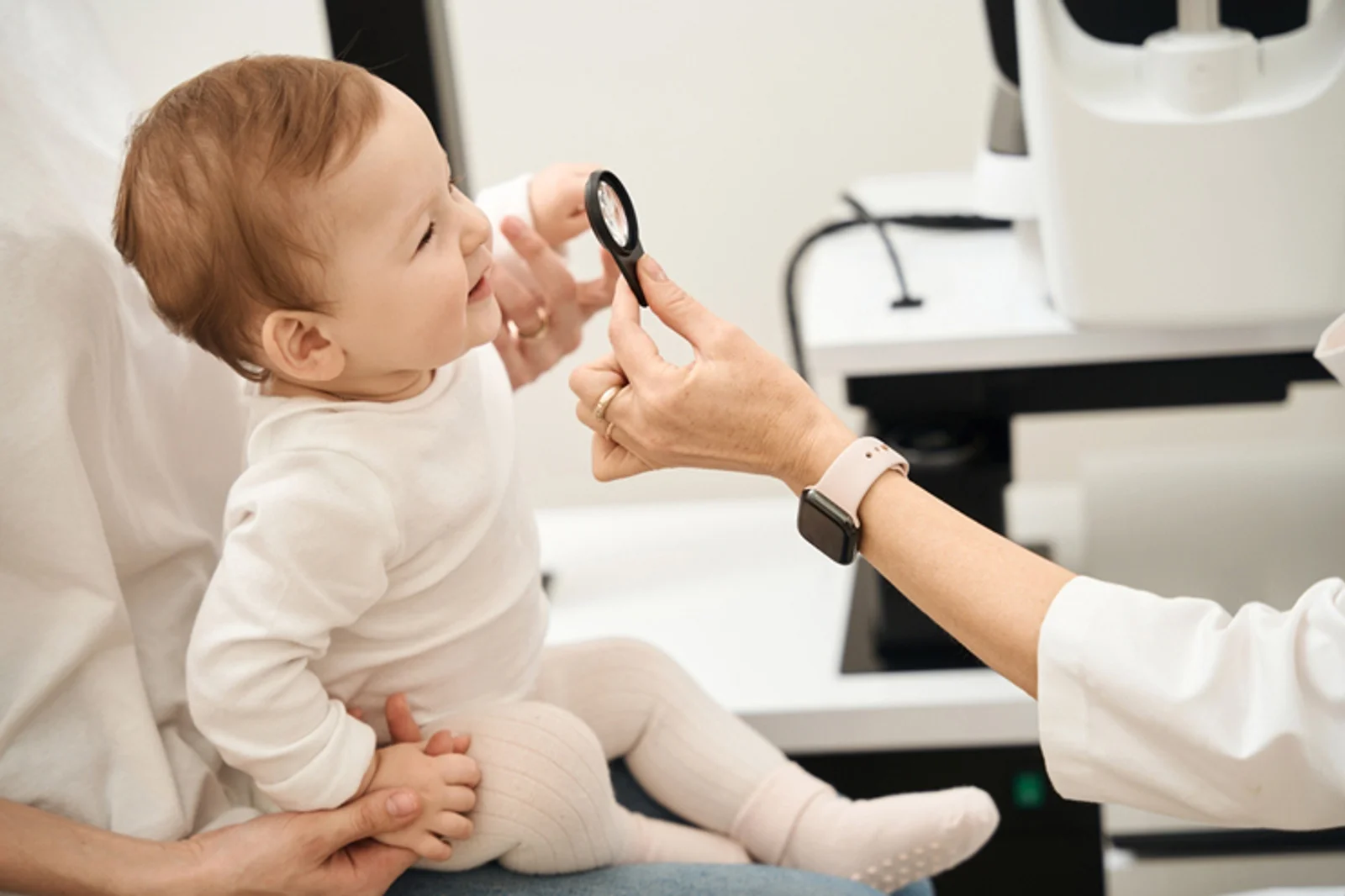
The encouraging truth is that strabismus is treatable, and with early intervention, most children achieve good outcomes. Treatments include:
- Eyeglasses: In some cases, simply correcting farsightedness with glasses aligns the eyes.
- Patching therapy: Covering the stronger eye so the weaker one is forced to work harder.
- Atropine eye drops: Blurring the stronger eye to stimulate use of the weaker one.
- Vision therapy: Exercises to improve coordination, focusing, and teamwork between the eyes.
- Surgery: Adjusting the eye muscles to correct misalignment, usually reserved for cases where other treatments are insufficient.
The Parent’s Role in Treatment Success
Parents are the backbone of successful treatment. Patching therapy, for instance, can be challenging, as few children enjoy wearing an eye patch. But with encouragement, creativity, and consistency, it becomes manageable. Parents can make patching time fun by letting children decorate their patches with stickers, reading together during patch time, or rewarding them with small treats.
A Real-Life Case Example
Long-Term Outlook
Conclusion: Clear Vision, Confident Future
More Articles
Continue reading our ophthalmology guides and vision care insights.

SMILE vs LASIK: Recovery Benchmarks for Vision Correction Care
South Korea has solidified its position as a global epicenter for ophthalmology, with the domestic LASIK and refractive surgery market projected to reach **USD 167.37 million by 2035**, growing at a steady CAGR of 8.54%.
Learn More

Prevalence of Myopia in Korea: The Value of Dream Lens Therapy
The prevalence of myopia among young people in South Korea has reached critical levels, often described as a "myopia epidemic." According to recent data from the **Korean National Health and Nutrition Examination Survey (KNHANES)**, the prevalence of myopia...
Learn More

Multidisciplinary Care: The Future of Korean Pediatric Eye Clinics
The landscape of pediatric eye care in South Korea is shifting rapidly. With nearly **21.9% of Korean children** estimated to be affected by various visual disorders according to nationwide health screenings, the demand for specialized intervention has never...
Learn More