Comprehensive Eye Care & Vision Correction in Incheon · Multilingual International Concierge
23+ Years Clinical Experience
en-US


Ophthalmology Guide
How to Keep Your Eyes Healthy with Dry Eye Syndrome: Treatments
Discover effective dry eye treatments to relieve discomfort and protect vision. Learn how to keep your eyes healthy with proven tips and expert care.
Schedule a ConsultationIntroduction: When Your Eyes No Longer Feel Invisible
Most of us take our eyes for granted. We blink, we read, we scroll through our phones late at night — and we assume our vision will always cooperate. But for patients with dry eye syndrome, the eyes suddenly become impossible to ignore. The discomfort is constant.
Understanding Dry Eye Syndrome
More Than Just “Not Enough Tears”
When people hear the term dry eye, they imagine it means the eyes simply don’t produce enough tears. In reality, most cases are not about quantity but quality. The tear film — a delicate balance of oil, water, and mucus layers — is essential for maintaining a smooth, protective surface on the cornea. If the oil glands along the eyelids (meibomian glands) fail to produce healthy oils, tears evaporate too quickly.
Common Symptoms
- Grittiness, burning, or stinging
- Blurry or fluctuating vision, especially after reading
- Redness and irritation
- Sensitivity to light
- Paradoxically, excessive tearing (the eye’s reflex to dryness)
Why Dry Eye Matters for Long-Term Eye Health
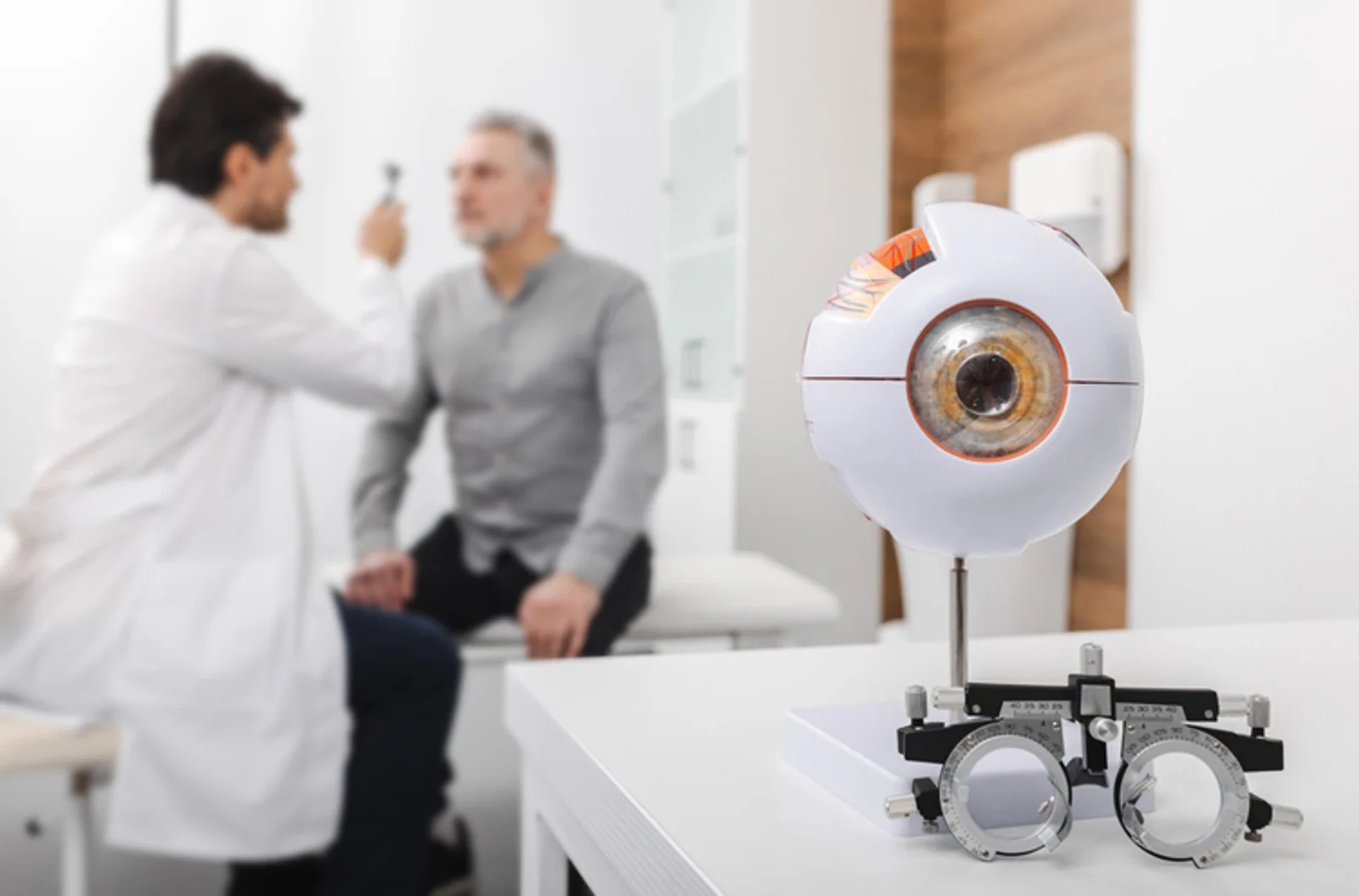
More Than Just an Annoyance
To be honest, many patients don’t seek treatment until the problem interferes with their lifestyle. They avoid driving at night because headlights scatter in their vision. They stop wearing contact lenses. Some even limit outdoor activities on windy days.
- Vision clarity suffers. Without a stable tear film, light entering the eye scatters, creating blur and glare.
- Infection risk increases. Tears are the eye’s natural defense system. When they are unstable, bacteria have an easier time causing infection.
- Corneal damage may occur. Chronic dryness leads to micro-abrasions or scarring, which can permanently impair sight.
Treatments for Dry Eye: From Simple Relief to Advanced Care
At Global Ubal Eye Center, treatment begins with careful diagnostic tests. We measure tear production, assess tear break-up time, and sometimes use imaging to evaluate meibomian gland structure. Based on these findings, we tailor treatment to each patient.
1. Artificial Tears and Lubricating Drops
For mild cases, artificial tears are often enough. But not all drops are equal. Preservative-free formulas are safer for long-term use, since preservatives can irritate the ocular surface. We often recommend patients keep a small supply at work, home, and in their bag — because consistency matters more than occasional use.
2. Warm Compresses and Eyelid Hygiene
If blocked meibomian glands are the culprit, warm compresses can help melt the oil and restore healthier tear quality. We teach patients gentle eyelid massage techniques and cleansing routines. Think of it as “daily maintenance” for the oil glands, much like brushing your teeth keeps gums healthy.
3. Prescription Medications
Some patients have inflammation as the main driver of dry eye. In these cases, prescription drops such as cyclosporine or lifitegrast help calm the immune response and improve natural tear production. For severe flare-ups, we may use steroid drops — but always under close supervision, since steroids carry long-term risks.
4. Punctal Plugs
For moderate to severe cases, we sometimes place punctal plugs in the tear drainage ducts. These tiny, biocompatible devices prevent tears from draining too quickly, keeping the eyes moist longer. The procedure is quick, painless, and reversible.
5. Advanced Therapies
When standard treatments are not enough, we explore advanced options:
- Autologous serum eye drops — created from the patient’s own blood, rich in natural growth factors that heal the ocular surface.
- Intense pulsed light (IPL) therapy — used to improve meibomian gland function in patients with evaporative dry eye.
- Specialty contact lenses — such as scleral lenses, which create a protective reservoir of fluid over the cornea.
Lifestyle Adjustments That Make a Real Difference
No treatment is complete without supporting habits at home and work. Here are changes we encourage our patients to make:
The Global Ubal Eye Center Approach
Conclusion: Living Comfortably with Dry Eye
More Articles
Continue reading our ophthalmology guides and vision care insights.

SMILE vs LASIK: Recovery Benchmarks for Vision Correction Care
South Korea has solidified its position as a global epicenter for ophthalmology, with the domestic LASIK and refractive surgery market projected to reach **USD 167.37 million by 2035**, growing at a steady CAGR of 8.54%.
Learn More

Prevalence of Myopia in Korea: The Value of Dream Lens Therapy
The prevalence of myopia among young people in South Korea has reached critical levels, often described as a "myopia epidemic." According to recent data from the **Korean National Health and Nutrition Examination Survey (KNHANES)**, the prevalence of myopia...
Learn More

Multidisciplinary Care: The Future of Korean Pediatric Eye Clinics
The landscape of pediatric eye care in South Korea is shifting rapidly. With nearly **21.9% of Korean children** estimated to be affected by various visual disorders according to nationwide health screenings, the demand for specialized intervention has never...
Learn More