Comprehensive Eye Care & Vision Correction in Incheon · Multilingual International Concierge
23+ Years Clinical Experience
en-US

Ophthalmology Guide
How Presbyopia Correction with Cataract Surgery Can Change Your Life
Discover how presbyopia correction with cataract surgery restores clear vision, reduces dependence on glasses, and improves daily life. Learn more today!
Schedule a ConsultationIntroduction: When Vision Loss Changes Everyday Life
Imagine sitting in your favorite café in Incheon, menu in hand, and realizing that the letters blur unless you stretch your arm awkwardly. You adjust the distance, squint a little, maybe even turn on your phone flashlight to see better. Later, while driving home, the streetlights look hazy, with halos circling around them. At first, you brush it off as fatigue. But over time, it becomes impossible to ignore.
Understanding Presbyopia: The Stiffening Lens
Presbyopia is one of those conditions that doesn’t announce itself suddenly. It usually begins in the early 40s, when the natural lens inside the eye becomes less flexible. Think of the lens like a camera’s zoom function — when it’s young, it shifts focus easily from a distant mountain to the fine print on a page.
Understanding Cataracts: The Clouding Lens
Cataracts affect the very same lens. Instead of losing flexibility, the proteins within the lens begin to clump together, scattering light and creating cloudiness. Colors look faded, night driving becomes difficult, and vision feels like looking through frosted glass.
Cataract Surgery Today: More Than Just Clarity
Traditionally, cataract surgery’s purpose was simple: remove the cloudy lens and replace it with a clear artificial one. The replacement lens, called an intraocular lens (IOL), restored clarity but did not restore the ability to focus at different distances. Patients still needed reading glasses afterward.
Types of Presbyopia-Correcting Lenses
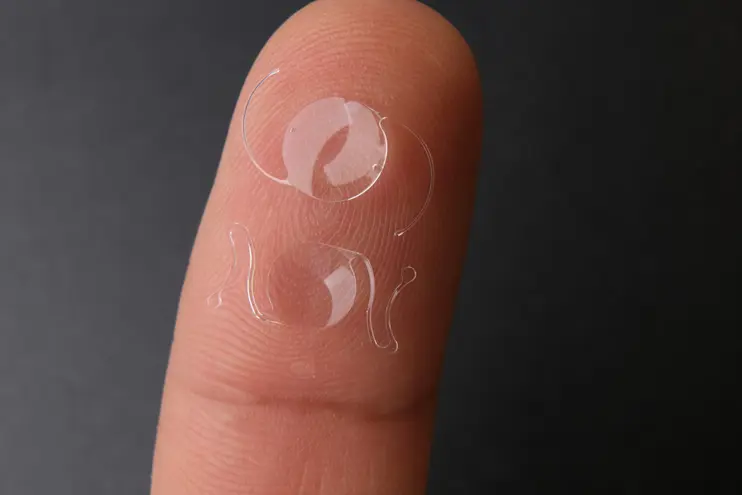
Not every lens works for every lifestyle. The choice of IOL is deeply personal, and this is where detailed consultation matters most. Some of the most widely used include:
- Multifocal and Trifocal IOLs: Designed with multiple zones of focus, these lenses provide sharp vision at near, intermediate, and distance ranges. They are excellent for patients who want to reduce dependence on glasses across all tasks.
- Extended Depth of Focus (EDOF) IOLs: These create a continuous range of clear vision, particularly comfortable for intermediate tasks like computer work, while still offering good distance clarity.
- Toric IOLs: For patients with astigmatism, these lenses correct irregular corneal curvature alongside presbyopia and cataracts.
The Surgery Process: What to Expect
Cataract surgery with presbyopia correction is usually quick, safe, and performed under local anesthesia. Here’s what patients typically experience at our clinic:
Life After Surgery: Real Freedom
The transformation after surgery is often described as nothing short of life-changing. Patients report:
- Freedom from glasses: Being able to check a smartphone, read a menu, or shop without fumbling for reading glasses.
- Sharper distance vision: Driving, traveling, or enjoying outdoor sports without the haze of cataracts.
- Increased confidence: Many patients say they feel more youthful and independent, no longer limited by visual aids.
- Emotional relief: Vision loss can quietly erode self-esteem. Restoring clarity lifts not just eyesight but mood and confidence.
What People Often Overlook
To be honest, the choice isn’t only about technology. It’s also about matching expectations with reality. No IOL is perfect in every situation. Some multifocal lenses may create halos around lights, while others may not give as much near sharpness. The skill of the surgeon in customizing and aligning the lens is critical.
Risks and Considerations
Like all surgeries, cataract procedures carry risks, though they are relatively rare. These may include infection, inflammation, or residual refractive errors requiring minor correction. With modern techniques and experienced surgeons, complication rates are very low. Still, patients should feel empowered to ask questions and understand both benefits and limitations.
A Real Patient Story
One of our patients, a retired schoolteacher, lived for years with cloudy vision and stacks of reading glasses. After undergoing cataract surgery with a trifocal IOL, she told us:
Why Choose Global Ubal Eye Center
Conclusion: Reclaiming More Than Vision
More Articles
Continue reading our ophthalmology guides and vision care insights.

SMILE vs LASIK: Recovery Benchmarks for Vision Correction Care
South Korea has solidified its position as a global epicenter for ophthalmology, with the domestic LASIK and refractive surgery market projected to reach **USD 167.37 million by 2035**, growing at a steady CAGR of 8.54%.
Learn More

Prevalence of Myopia in Korea: The Value of Dream Lens Therapy
The prevalence of myopia among young people in South Korea has reached critical levels, often described as a "myopia epidemic." According to recent data from the **Korean National Health and Nutrition Examination Survey (KNHANES)**, the prevalence of myopia...
Learn More

Multidisciplinary Care: The Future of Korean Pediatric Eye Clinics
The landscape of pediatric eye care in South Korea is shifting rapidly. With nearly **21.9% of Korean children** estimated to be affected by various visual disorders according to nationwide health screenings, the demand for specialized intervention has never...
Learn More