Comprehensive Eye Care & Vision Correction in Incheon · Multilingual International Concierge
23+ Years Clinical Experience
en-US


Ophthalmology Guide
How Presbyopia Correction Helps Avoid Glasses After Cataract Surgery
Discover how presbyopia correction after cataract surgery restores clear vision at all distances and reduces dependence on glasses. Learn more today!
Schedule a ConsultationIntroduction
Picture this: you’ve just had cataract surgery. The world looks brighter, sharper, and more vibrant than you remembered. You can finally recognize faces at a distance, read street signs, and enjoy the sparkle of sunlight on water. But when you sit down to read a text message or open a favorite book, you realize you still need to reach for your reading glasses.
What Happens to the Eye During Cataract Surgery
To understand the issue, let’s look at what cataract surgery really does.
Why Presbyopia Matters More Than You Think
Presbyopia often sounds minor when described clinically — it’s just the stiffening of the lens that makes near focus harder after age 40. But in everyday life, it’s disruptive.
- Reading a text message from your family
- Checking medication labels
- Browsing a menu in a dimly lit restaurant
- Sewing, knitting, or cooking with fine details
- Using a smartphone, tablet, or computer
Modern Solutions for Presbyopia During Cataract Surgery
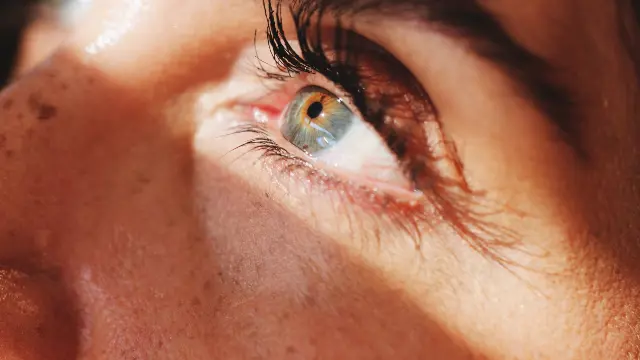
Fortunately, modern ophthalmology offers several ways to address presbyopia during cataract surgery. These approaches aim to give patients clear vision not only at distance, but also at near and intermediate ranges — often eliminating or greatly reducing the need for glasses.
1. Multifocal and Trifocal IOLs
These premium intraocular lenses are designed with concentric rings that divide light into multiple focal points. Patients can shift between near, intermediate, and far vision without switching glasses.
2. Extended Depth-of-Focus (EDOF) Lenses
EDOF lenses are one of the most exciting advances in the past decade. Instead of creating multiple focal points, they extend the natural range of focus, producing smoother, more continuous vision. Patients can see far and intermediate distances clearly, and near tasks are easier than with standard lenses. Importantly, they often cause fewer night-vision issues than multifocals.
3. Blended Vision (Monovision)
In this strategy, one eye is set for distance vision and the other for near. The brain adapts, combining the two to give functional vision across ranges. Some people adjust easily, while others need time to adapt.
More Than Just Convenience
It’s easy to think of presbyopia correction as a matter of convenience, but it goes deeper than that. Research shows that reducing dependence on glasses improves:
- Quality of life: Patients feel younger and more independent.
- Mental health: Not needing glasses reduces frustration and boosts confidence.
- Daily function: From cooking to shopping, tasks become smoother without constantly searching for glasses.
The Doctor’s Perspective: What Many Patients Don’t Realize

Here’s a truth you won’t often read online: not every patient is a candidate for every type of presbyopia-correcting lens.
Cultural Attitudes Toward Glasses: A Korean and Global View
In South Korea, glasses carry mixed perceptions. Younger generations see them as a fashion accessory, but older adults often view them as a sign of aging. Many of our patients tell us they want cataract surgery to give them the freedom of “natural eyes” again, not just clear distance vision.
A Glimpse Into the Future of Cataract Surgery
We are entering a new era where cataract surgery is no longer viewed as a procedure that simply removes a cloudy lens. Instead, it is becoming a highly personalized treatment that can redesign vision itself. In the past, many patients accepted that surgery would clear the haze but still leave them dependent on glasses.
Conclusion: Seeing Clearly, Living Freely
Cataract surgery remains one of the most life-changing procedures in modern medicine. Yet when presbyopia is left untreated, patients often feel that the results are incomplete. The dependence on reading glasses can overshadow the joy of restored clarity.
More Articles
Continue reading our ophthalmology guides and vision care insights.

SMILE vs LASIK: Recovery Benchmarks for Vision Correction Care
South Korea has solidified its position as a global epicenter for ophthalmology, with the domestic LASIK and refractive surgery market projected to reach **USD 167.37 million by 2035**, growing at a steady CAGR of 8.54%.
Learn More

Prevalence of Myopia in Korea: The Value of Dream Lens Therapy
The prevalence of myopia among young people in South Korea has reached critical levels, often described as a "myopia epidemic." According to recent data from the **Korean National Health and Nutrition Examination Survey (KNHANES)**, the prevalence of myopia...
Learn More

Multidisciplinary Care: The Future of Korean Pediatric Eye Clinics
The landscape of pediatric eye care in South Korea is shifting rapidly. With nearly **21.9% of Korean children** estimated to be affected by various visual disorders according to nationwide health screenings, the demand for specialized intervention has never...
Learn More