Comprehensive Eye Care & Vision Correction in Incheon · Multilingual International Concierge
23+ Years Clinical Experience
en-US


Ophthalmology Guide
How New Treatments Are Changing the Future of Macular Degeneration
Discover how new treatments are transforming the future of macular degeneration care. Explore breakthrough options and protect your vision—learn more today!
Schedule a ConsultationIntroduction
Imagine slowly losing the ability to read your favorite book, recognize your loved ones' faces, or drive safely to familiar places. For millions of people worldwide, this isn't just a hypothetical scenario — it's the daily reality of living with Age-related Macular Degeneration (AMD).
What is AMD — a quick refresher
The macula is the central part of the retina, responsible for the sharp, fine-detail vision we use to read, recognize faces, and drive safely. In AMD, the cells in this region begin to deteriorate, leading to central vision loss. While peripheral vision often remains intact, the impact of central vision loss on quality of life can be devastating.
- Wet AMD: Caused by the growth of abnormal blood vessels under the retina, which leak blood and fluid, damaging macular tissue. This form is typically more aggressive and leads to faster vision loss.
- Dry AMD: Characterized by the gradual thinning and death of the macula's light-sensitive cells. It progresses more slowly but accounts for the majority of AMD cases. In later stages, it leads to geographic atrophy (GA), which can be equally debilitating.
Why new treatments are needed
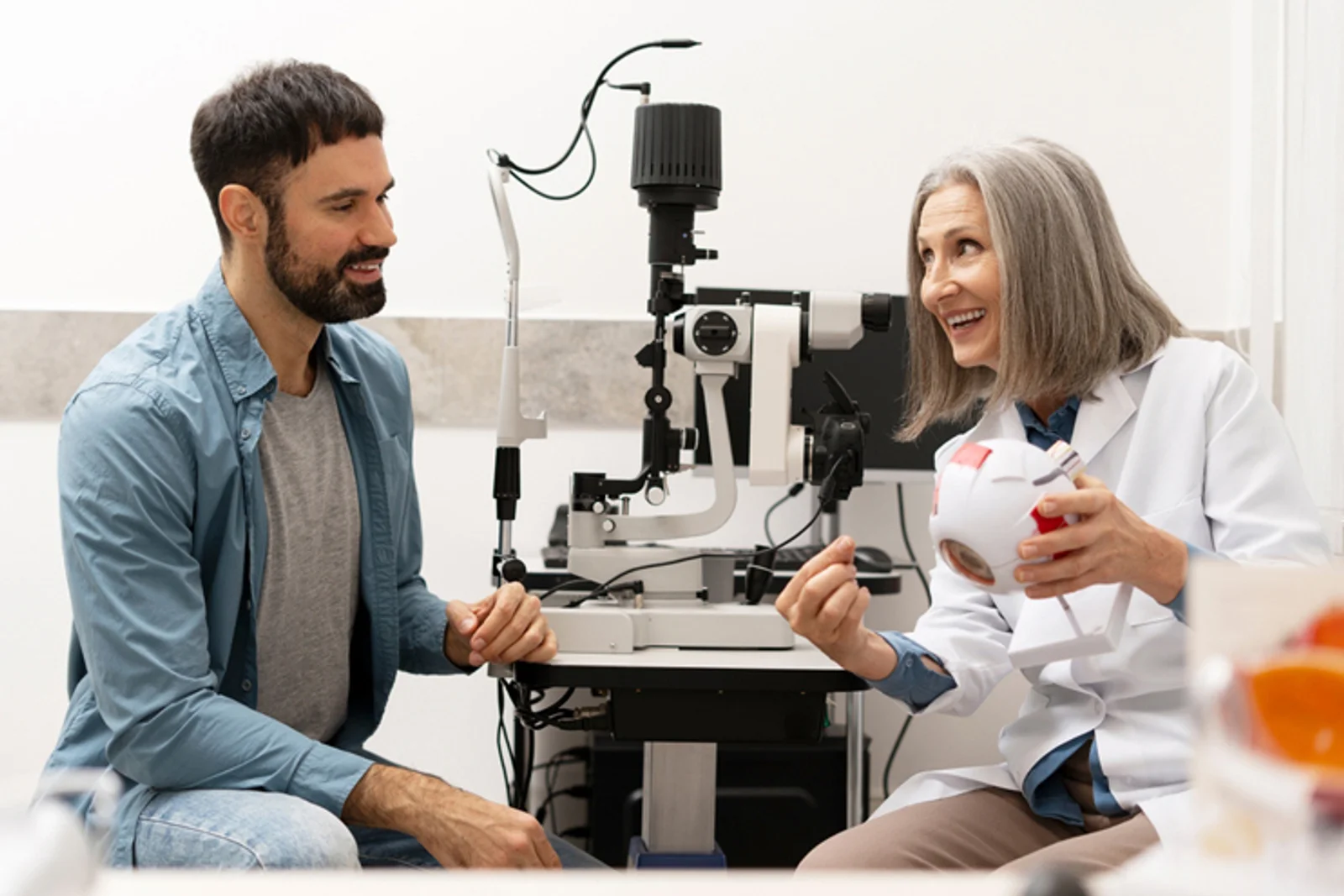
Despite past successes, there are major gaps in AMD care:
How the future is shifting: key treatment frontiers
1. Longer-acting anti-VEGF injections & dual-pathway inhibitors (wet AMD)
Anti-VEGF drugs like Aflibercept (Eylea) and Ranibizumab (Lucentis) have revolutionized wet AMD treatment. However, they require monthly or bimonthly injections into the eye, which can be a heavy burden.
- Sozinibercept (OPT-302): A novel biologic targeting VEGF-C/D, showing promising results when combined with anti-VEGF-A agents.
- Gene therapy (RGX-314): Offers the potential for one-time subretinal injection to deliver sustained anti-VEGF effect for years.
2. The arrival of geographic atrophy therapies (dry AMD)
This is the most significant advancement in decades for dry AMD:
- Pegcetacoplan (SYFOVRE®): Recently approved to slow GA progression by inhibiting complement C3. Administered monthly via injection.
- Avacincaptad pegol (IZERVAY™): Another intravitreal therapy targeting complement C5, showing efficacy in delaying GA lesion growth.
- Sefaxersen: In clinical trials, using antisense oligonucleotides to inhibit complement factor B, a crucial part of the inflammatory cascade.
3. Regenerative medicine & retinal implants
The next frontier isn’t just preservation — it’s restoration.
- Stem-cell therapy: Transplantation of lab-grown retinal pigment epithelium (RPE) cells to replace degenerated tissue. Early trials show encouraging safety and efficacy.
- OpRegen (Lineage Cell Therapeutics): Subretinal delivery of RPE cells for GA. Some patients have shown visual improvement.
- Retinal implants: Such as the Argus II, designed to stimulate the retina in advanced degenerative conditions. These are early-stage but hint at what may be possible.
Global Ubal Eye Center's approach: Innovation + Human Touch
We don’t just adopt new treatments. We adapt them to the person.
- Advanced diagnostics: We employ multimodal imaging, including OCT-Angiography and Fundus Autofluorescence, to detect subtle AMD changes before they cause vision loss.
- Genetic & risk profiling: We factor in smoking history, cardiovascular risk, diet, and family history to personalise therapy.
- Trial access: For eligible patients, we facilitate enrolment in multinational studies.
- Multilingual care: Our staff speaks English, Russian, Mongolian, Japanese, and Korean, ensuring nothing is lost in translation.
- Patient education: We provide AMD education kits and explain each treatment step in plain language.
What patients should know and ask
We always encourage patients to be proactive:
- “Do I have wet or dry AMD?”
- “How quickly is my condition progressing?”
- “Are there treatments or clinical trials available to me?”
- “What lifestyle habits can help?”
- “Can I space out my treatments without compromising results?”
A real-world case: Vision preserved, dignity maintained
A 64-year-old engineer from Vladivostok came to us after being diagnosed with dry AMD. His central vision was deteriorating, and local doctors had no options to offer.
Conclusion: Reimagining the future of AMD
Macular degeneration is no longer a life sentence. It’s a challenge — yes — but no longer one without tools or hope. We are standing at the edge of a new era in ophthalmology, one where the prognosis for AMD is no longer dictated by inevitability but shaped by innovation.
More Articles
Continue reading our ophthalmology guides and vision care insights.

SMILE vs LASIK: Recovery Benchmarks for Vision Correction Care
South Korea has solidified its position as a global epicenter for ophthalmology, with the domestic LASIK and refractive surgery market projected to reach **USD 167.37 million by 2035**, growing at a steady CAGR of 8.54%.
Learn More

Prevalence of Myopia in Korea: The Value of Dream Lens Therapy
The prevalence of myopia among young people in South Korea has reached critical levels, often described as a "myopia epidemic." According to recent data from the **Korean National Health and Nutrition Examination Survey (KNHANES)**, the prevalence of myopia...
Learn More

Multidisciplinary Care: The Future of Korean Pediatric Eye Clinics
The landscape of pediatric eye care in South Korea is shifting rapidly. With nearly **21.9% of Korean children** estimated to be affected by various visual disorders according to nationwide health screenings, the demand for specialized intervention has never...
Learn More