Comprehensive Eye Care & Vision Correction in Incheon · Multilingual International Concierge
23+ Years Clinical Experience
en-US


Ophthalmology Guide
How Macular Degeneration Impacts Your Lifestyle and What You Can Do
Discover how macular degeneration affects daily life and explore practical tips to manage symptoms and protect your vision. Learn more and take control today!
Schedule a ConsultationIntroduction: Living in a World That’s Slowly Blurring
Imagine waking up one morning and realizing that the center of your vision—the very part you use to read your phone, recognize your child’s face, or admire a painting—has begun to fade. Not gone completely, but distorted, dim, unreliable. That’s often how macular degeneration enters people’s lives—not with pain or sudden blindness, but with subtle losses that accumulate until they reshape everything.
The Silent Shift: How AMD Alters Day-to-Day Living
1. Losing Central Vision = Losing Precision.
Imagine trying to read a book where the middle of every page is smudged. Or recognizing a loved one’s face—except their nose and mouth are missing. This is often the first symptom of AMD: a subtle fading or distortion in the center of your vision. The peripheral vision remains, but the sharp, detailed vision we rely on for reading, driving, cooking, and seeing facial expressions starts to vanish.
2. Everyday Activities Become Emotional Battlegrounds.
We’ve had patients say, “I just wanted to read to my granddaughter again.” That simple wish can become a challenge. Cooking becomes difficult when you can’t read labels. Crossing the street feels dangerous without clear sight. Even simple pleasures like watching a drama on TV lose their comfort.
3. Your Independence Starts to Shrink.
When AMD progresses, many patients begin avoiding activities they once enjoyed. Driving at night? Too risky. Joining friends for dinner in dimly lit restaurants? Too stressful. Hobbies like knitting, sewing, or gardening? Suddenly out of reach without adjustments.
Why It Happens: Genetics, Environment, and Lifestyle
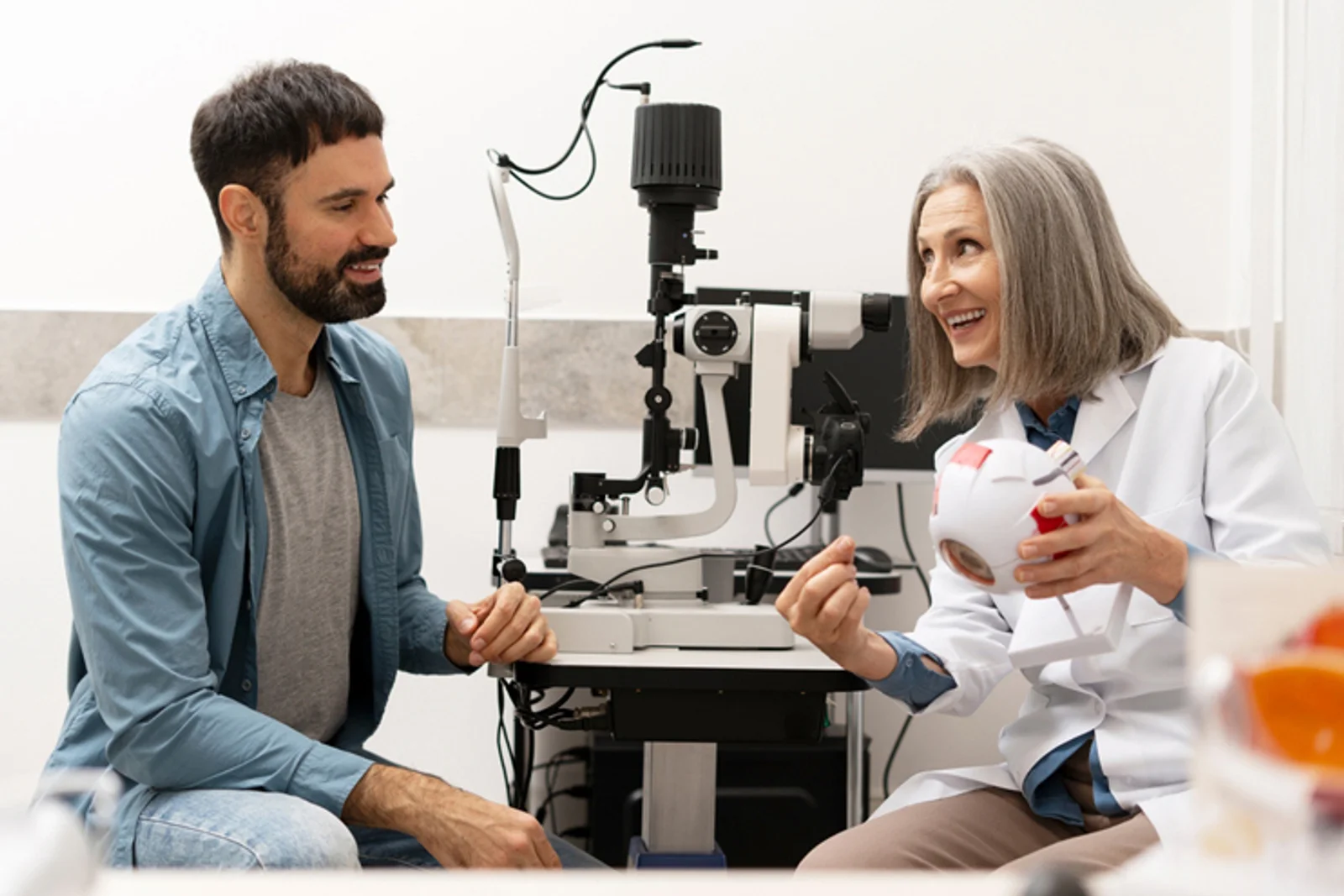
AMD doesn’t appear overnight. It’s often the result of a combination of:
- Genetic predisposition – If someone in your family had AMD, your risk increases.
- Aging – This is the biggest factor. After 50, the risk increases each year.
- Lifestyle influences – Smoking, poor nutrition, obesity, hypertension, and UV exposure all contribute.
What You Can Do to Protect Your Vision (and Lifestyle)
1. Get Diagnosed Early—Even If You Feel Fine
Macular degeneration can be sneaky. That’s why early detection is crucial. At Global Ubal Eye Center, we use high-resolution OCT scans, fundus imaging, and other advanced tools to catch even the earliest signs. The earlier you act, the more options you have to preserve vision.
2. Quit Smoking—Today
This isn’t just a health PSA—it’s a fact. Smoking significantly increases the risk and severity of AMD. For our patients who quit, the rate of progression often slows. It’s one of the most impactful changes you can make.
3. Nourish Your Eyes
Eat a diet rich in:
- Leafy greens like kale and spinach
- Bright-colored vegetables (peppers, corn, carrots)
- Omega-3 fatty acids from fish like salmon
- Supplements, if advised by your doctor (especially those based on AREDS2 research)
4. Protect Your Eyes From UV and Blue Light
Wear quality sunglasses outdoors and avoid long exposure to bright screens without breaks. Blue-light blocking filters may be helpful, especially for patients spending extended time on computers or smartphones.
5. Monitor Changes With Tools Like the Amsler Grid
A simple grid test at home can help detect distortion or dark spots—signs that wet AMD might be forming. If you see wavy lines or missing areas, contact your eye doctor immediately.
6. Explore Treatment Options for Wet AMD
If caught early, wet AMD can often be treated with anti-VEGF injections, laser therapies, or photodynamic therapy. At Global Ubal Eye Center, we customize treatment plans based on the patient’s stage, health history, and lifestyle.
7. Adapt Your Environment
- Increase lighting in your home
- Use large-font books or e-readers
- Add contrast strips on stairs and cooking areas
- Consider low-vision aids or rehabilitation services
Why Your Choice of Clinic Matters

Conclusion: You’re Still in Control of the Story
More Articles
Continue reading our ophthalmology guides and vision care insights.

SMILE vs LASIK: Recovery Benchmarks for Vision Correction Care
South Korea has solidified its position as a global epicenter for ophthalmology, with the domestic LASIK and refractive surgery market projected to reach **USD 167.37 million by 2035**, growing at a steady CAGR of 8.54%.
Learn More

Prevalence of Myopia in Korea: The Value of Dream Lens Therapy
The prevalence of myopia among young people in South Korea has reached critical levels, often described as a "myopia epidemic." According to recent data from the **Korean National Health and Nutrition Examination Survey (KNHANES)**, the prevalence of myopia...
Learn More

Multidisciplinary Care: The Future of Korean Pediatric Eye Clinics
The landscape of pediatric eye care in South Korea is shifting rapidly. With nearly **21.9% of Korean children** estimated to be affected by various visual disorders according to nationwide health screenings, the demand for specialized intervention has never...
Learn More