Comprehensive Eye Care & Vision Correction in Incheon · Multilingual International Concierge
23+ Years Clinical Experience
en-US


Ophthalmology Guide
How Lens Implants Correct Near and Far Vision Post-Cataract Surgery
Discover how lens implants restore both near and far vision after cataract surgery. Learn about the types of lenses and how they enhance your sight.
Schedule a ConsultationIntroduction
Cataract surgery is a highly effective procedure that restores clarity to the vision of millions worldwide. However, beyond simply removing the cloudy lens, advancements in lens implants have dramatically transformed the results of the surgery. Today, patients no longer have to settle for just basic vision restoration.
What Are Lens Implants?
Lens implants, also known as intraocular lenses (IOLs), are artificial lenses that replace the clouded natural lens that forms as a cataract. The purpose of cataract surgery is to remove the cataract and restore clear vision. However, the natural lens also plays a key role in focusing light onto the retina, allowing you to see objects clearly both near and far.
Types of Lens Implants That Correct Both Near and Far Vision
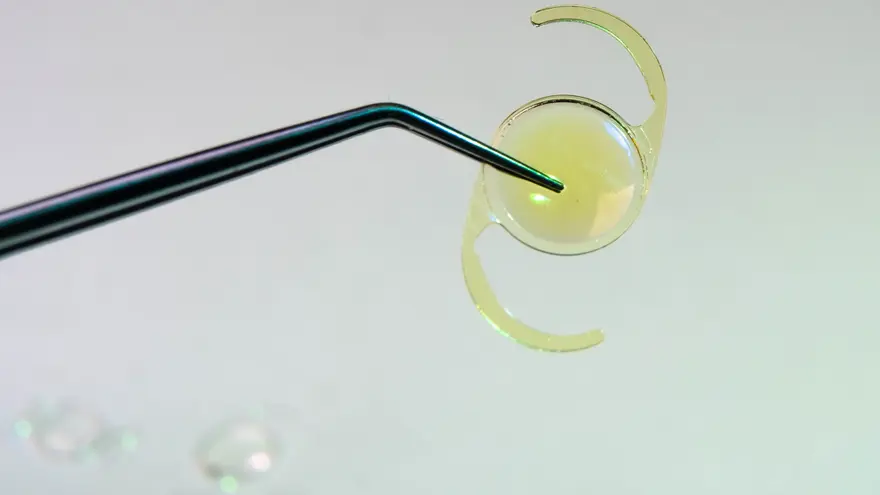
There are several types of lens implants available today, each with specific benefits for different patients. Here are the main types that correct both near and far vision:
1. Multifocal IOLs:
Multifocal IOLs are designed with multiple focal points, allowing patients to see clearly at different distances. These lenses are similar to bifocal or progressive glasses, but they are built directly into the lens implant. By incorporating several distinct focal points, multifocal IOLs give patients the ability to see clearly at near, intermediate, and far distances.
- Improved vision at near, intermediate, and far distances.
- Reduced dependency on glasses after cataract surgery.
2. Accommodating IOLs:
Accommodating IOLs are designed to mimic the natural accommodation of the eye. The natural lens in your eye changes shape to focus on objects at different distances, and accommodating IOLs aim to replicate this ability. These lenses have a flexible design, allowing them to shift their position slightly within the eye to focus on both near and far objects.
- Better natural focus on near and distant objects.
- More gradual adjustment compared to multifocal IOLs.
3. Extended Depth of Focus (EDOF) IOLs:
EDOF lenses are a newer type of implant that offers a continuous range of vision, including both near and far. Rather than having distinct focal points, EDOF lenses are designed to create a smooth transition of focus across different distances.
- Smooth, continuous vision across near, intermediate, and far distances.
- Reduced glare and halos compared to multifocal IOLs.
How Lens Implants Correct Near and Far Vision
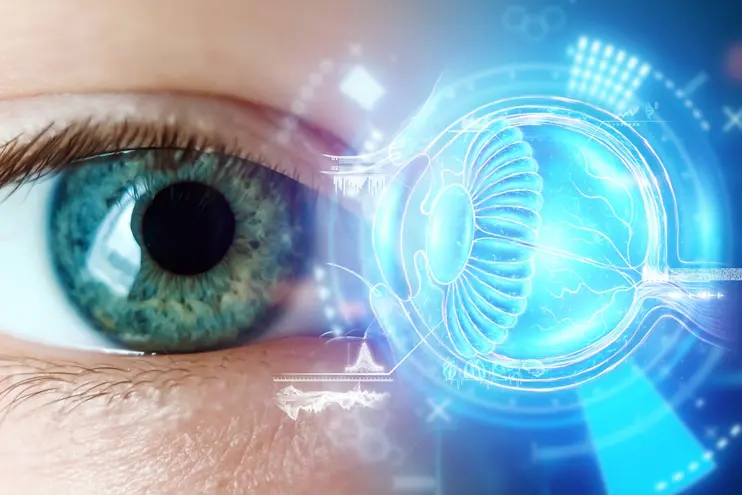
The correction of near and far vision after cataract surgery depends on the type of lens implant chosen and how well it fits the individual’s visual needs. Here’s how the process works:
Benefits of Lens Implants for Near and Far Vision
The Importance of a Personalized Approach
At Global Ubal Eye Center, we understand that every patient’s vision is unique. Dr. Heecheol Bae and our team of experts take the time to carefully assess your eye health, lifestyle, and vision needs before recommending a lens implant. Cataract surgery is not just about removing the cataract; it’s about ensuring that your vision afterward is as clear, comfortable, and functional as possible.
Conclusion
Lens implants have revolutionized cataract surgery, offering patients the opportunity to correct their near and far vision with precision and ease. Whether opting for multifocal, accommodating, or extended depth of focus lenses, these advanced IOLs can provide a level of convenience and clarity that was once only dreamed of.
More Articles
Continue reading our ophthalmology guides and vision care insights.

SMILE vs LASIK: Recovery Benchmarks for Vision Correction Care
South Korea has solidified its position as a global epicenter for ophthalmology, with the domestic LASIK and refractive surgery market projected to reach **USD 167.37 million by 2035**, growing at a steady CAGR of 8.54%.
Learn More

Prevalence of Myopia in Korea: The Value of Dream Lens Therapy
The prevalence of myopia among young people in South Korea has reached critical levels, often described as a "myopia epidemic." According to recent data from the **Korean National Health and Nutrition Examination Survey (KNHANES)**, the prevalence of myopia...
Learn More

Multidisciplinary Care: The Future of Korean Pediatric Eye Clinics
The landscape of pediatric eye care in South Korea is shifting rapidly. With nearly **21.9% of Korean children** estimated to be affected by various visual disorders according to nationwide health screenings, the demand for specialized intervention has never...
Learn More