Comprehensive Eye Care & Vision Correction in Incheon · Multilingual International Concierge
23+ Years Clinical Experience
en-US

Ophthalmology Guide
How Lens Implants Correct Near and Far Sightedness Post-Cataract
Discover how lens implants correct nearsightedness and farsightedness after cataract surgery. Restore clear vision—learn more about your options today!
Schedule a ConsultationIntroduction
If you're approaching cataract surgery and also struggling with nearsightedness or farsightedness, you're probably wondering: will the new lens implant fix both problems at once? It's a common—and important—question we hear often at Global Ubal Eye Center in Incheon.
The Problem: Cataracts and Refractive Errors
Cataracts cloud the natural lens inside your eye, reducing clarity and contrast. But what many patients don’t realize is that the lens also plays a major role in focusing light precisely onto your retina. That’s why, when it becomes cloudy, it doesn’t just blur your vision—it can change the way your eye focuses light, aggravating issues like nearsightedness (myopia) or farsightedness (hyperopia).
How IOLs Replace and Improve the Natural Lens
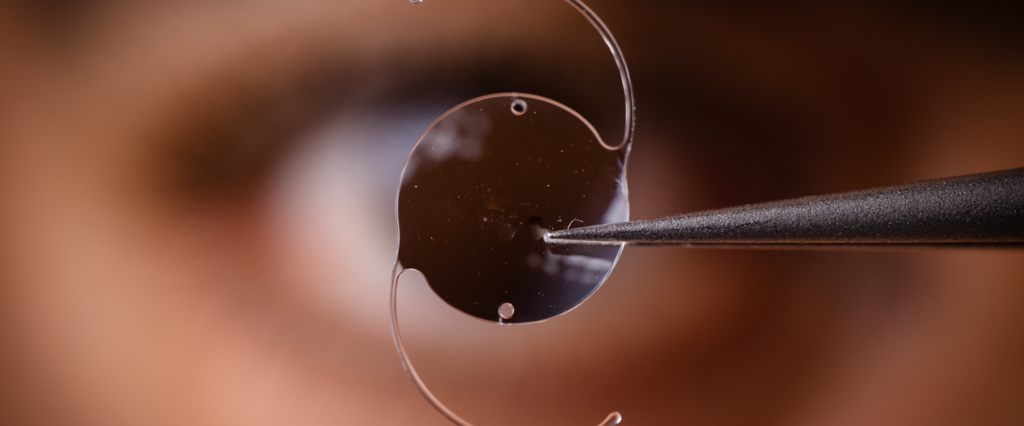
An intraocular lens is a small, artificial lens that replaces the eye's natural lens during cataract surgery. Modern IOLs are made of soft, foldable materials and designed to stay in the eye permanently. But their real magic lies in how they’re selected.
How IOLs Correct Nearsightedness and Farsightedness

Let’s say you’ve been nearsighted your whole life. You’ve always needed glasses to see far away, but can read up close without them. With the right IOL power, we can correct that nearsightedness—bringing distant objects into clear focus without glasses. That’s life-changing for someone who’s relied on thick lenses for decades.
Multifocal and EDOF Lenses: Seeing Near and Far
At Global Ubal Eye Center, we offer advanced IOLs like multifocal and extended depth-of-focus (EDOF) lenses. These lenses are engineered with special optical zones that let you focus at different distances—near, intermediate, and far—without needing multiple pairs of glasses.
- Multifocal IOLs use concentric rings that split light to multiple focal points. They're ideal for people who want a greater range of focus and are willing to adapt to mild visual phenomena such as halos or glare.
- EDOF lenses provide a continuous range of vision with a single elongated focus point, often with fewer visual disturbances. These are excellent for people who spend a lot of time on computers or digital devices.
What About Astigmatism or Presbyopia?
Astigmatism is another factor we must consider. It results from an irregularly shaped cornea that prevents light from focusing evenly on the retina. If left uncorrected during cataract surgery, it can compromise the clarity of your vision even after lens implantation.
The Importance of Personalization

Here’s what many websites won’t tell you: success isn’t just about picking a high-tech lens. It’s about choosing the right lens for your eyes and your lifestyle.
Real-World Experience: What Patients Learn After Surgery
Here’s something we've noticed over decades of treating patients:
- Some patients are surprised to find they no longer need glasses at all after surgery—especially with multifocal or EDOF lenses.
- Others, despite improved clarity, may still prefer reading glasses for fine print or specific tasks.
- A few patients need time to adapt to multifocal lenses, as the brain learns to process multiple focal zones.
Step-by-Step: How We Correct Your Vision
Conclusion: The Future of Your Vision Starts Now
Lens implants after cataract surgery aren’t just about seeing clearly—they’re about seeing your best, for the life you want to live. We see vision not as a luxury, but as a cornerstone of daily well-being and independence.
More Articles
Continue reading our ophthalmology guides and vision care insights.

SMILE vs LASIK: Recovery Benchmarks for Vision Correction Care
South Korea has solidified its position as a global epicenter for ophthalmology, with the domestic LASIK and refractive surgery market projected to reach **USD 167.37 million by 2035**, growing at a steady CAGR of 8.54%.
Learn More

Prevalence of Myopia in Korea: The Value of Dream Lens Therapy
The prevalence of myopia among young people in South Korea has reached critical levels, often described as a "myopia epidemic." According to recent data from the **Korean National Health and Nutrition Examination Survey (KNHANES)**, the prevalence of myopia...
Learn More

Multidisciplinary Care: The Future of Korean Pediatric Eye Clinics
The landscape of pediatric eye care in South Korea is shifting rapidly. With nearly **21.9% of Korean children** estimated to be affected by various visual disorders according to nationwide health screenings, the demand for specialized intervention has never...
Learn More