Comprehensive Eye Care & Vision Correction in Incheon · Multilingual International Concierge
23+ Years Clinical Experience
en-US


Ophthalmology Guide
How Fast Do Cataracts Progress Without Surgery?
Discover how fast cataracts progress without surgery, what symptoms to watch for, and when to seek treatment. Learn more about protecting your vision today.
Schedule a ConsultationIntroduction: The Quiet Thief of Sight
You don’t wake up one day with a cataract. It creeps in — subtly, patiently. Maybe the streetlights seem more dazzling than they used to. Maybe you're switching glasses more often, or you find yourself avoiding night driving altogether.
What Is a Cataract, Really?
To put it simply, a cataract is when the lens inside your eye — which should be clear like glass — starts to become cloudy, like a frosted window. But that simple description doesn’t capture just how much it can affect your life.
- Nuclear cataracts (the most common) tend to blur distance vision and cause color dullness.
- Cortical cataracts can cause glare and halos, especially at night.
- Posterior subcapsular cataracts often progress quickly and interfere with reading and bright light vision — especially in younger people or those on steroids.
How Quickly Do Cataracts Progress?
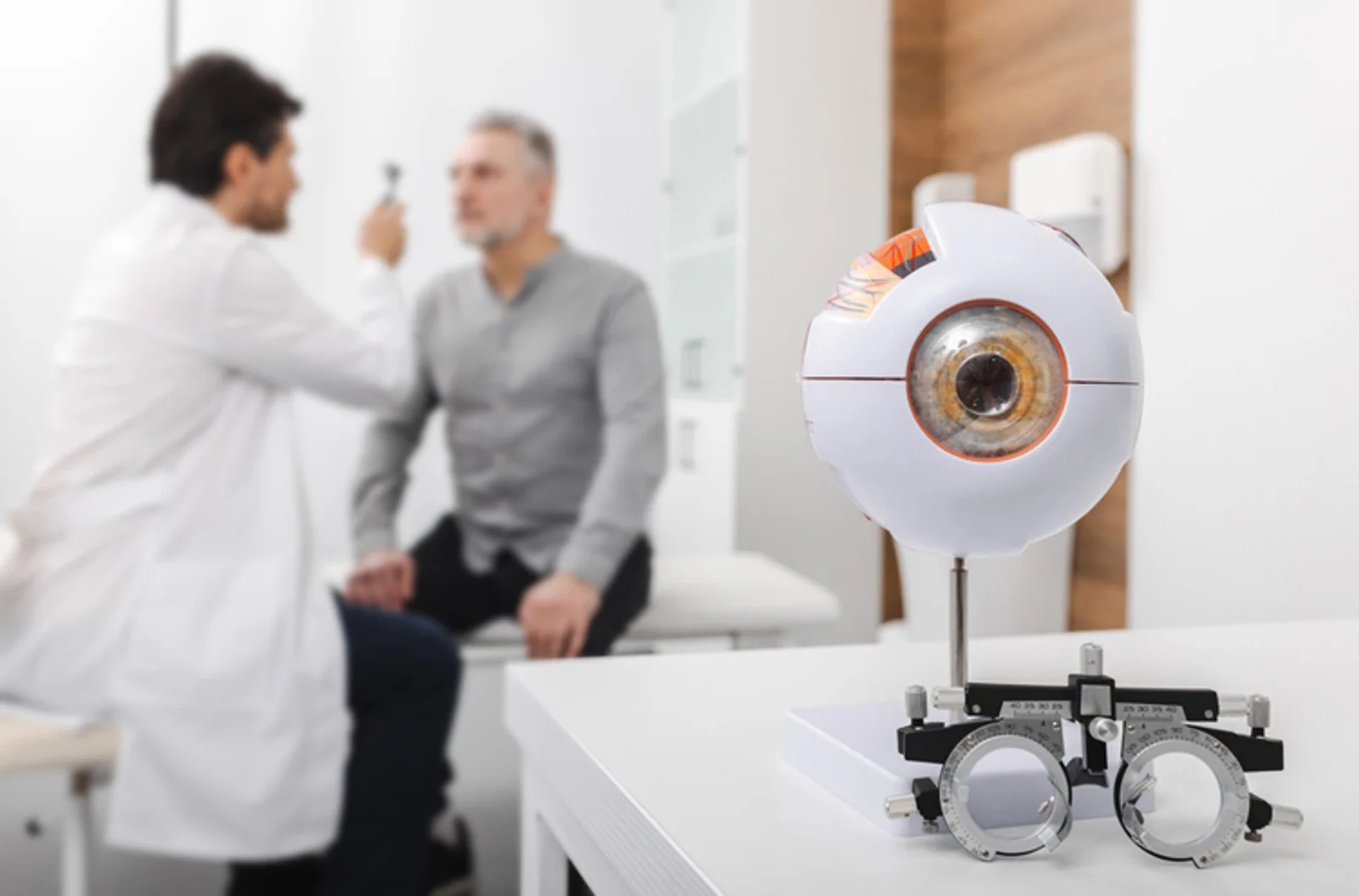
The progression of cataracts isn’t the same for everyone. Some people notice little change for years, while others experience rapid deterioration in a matter of months. Here’s how we typically see it unfold at Global Ubal Eye Center:
Stage 1: Early Cataracts (0–2 Years)
Symptoms are mild — if noticeable at all. You may struggle slightly with glare or find your vision a bit dull, but daily life isn’t impacted. Most people at this stage manage with minor adjustments, such as better lighting or updated glasses.
Stage 2: Moderate Cataracts (2–5 Years)
Symptoms become more pronounced:
- Blurred or foggy vision
- Trouble seeing at night
- Faded colors
- Difficulty reading or using screens
Stage 3: Advanced Cataracts (5+ Years)
Without treatment, the lens becomes significantly clouded. You may struggle with basic tasks — even in daylight. In rare cases, untreated cataracts can lead to:
- Legal blindness (vision worse than 20/200)
- Phacomorphic glaucoma (from swelling of the lens)
- Inflammation and increased intraocular pressure
Is It Dangerous to Delay Cataract Surgery?
In the early stages, delaying cataract surgery is usually safe — as long as your vision is being monitored by an eye specialist. However, the risks of waiting increase with time:
Can You Slow Down Cataract Progression?
There’s no cure outside of surgery, and no eye drop or supplement has been scientifically proven to reverse cataracts. That said, certain habits can help slow progression:
- Wearing sunglasses that block UV rays
- Managing chronic conditions (especially blood sugar in diabetes)
- Eating antioxidant-rich foods (leafy greens, berries, nuts)
- Avoiding smoking
When Is the Right Time for Cataract Surgery?

There’s no one-size-fits-all answer — and honestly, that’s a good thing. The “right time” for cataract surgery depends less on numbers from a machine and more on you: your lifestyle, your safety, your comfort, and your personal goals.
- Are you avoiding driving at night because of glare or halos?
- Have you stopped doing hobbies you love — reading, sewing, golfing — because of blurry or dim vision?
- Do you find yourself bumping into things, struggling to read menus, or relying more on others?
- Do your glasses or contact lenses no longer improve your clarity the way they used to?
Our Approach at Global Ubal Eye Center
We combine decades of surgical expertise with leading-edge technology. When it comes to cataracts, precision matters.
- Advanced diagnostics to detect cataracts and hidden eye diseases early
- Laser-assisted surgery for minimal invasiveness and high accuracy
- Premium intraocular lenses (IOLs) tailored to your vision goals — including multifocal or toric lenses for astigmatism
- Multilingual patient support in Korean, English, Japanese, Mongolian, and Russian
Conclusion: Don’t Wait Until It’s Too Late
Cataracts don’t strike like lightning — they erode your vision slowly, subtly. But just because the decline is gradual doesn’t mean it’s harmless.
More Articles
Continue reading our ophthalmology guides and vision care insights.

SMILE vs LASIK: Recovery Benchmarks for Vision Correction Care
South Korea has solidified its position as a global epicenter for ophthalmology, with the domestic LASIK and refractive surgery market projected to reach **USD 167.37 million by 2035**, growing at a steady CAGR of 8.54%.
Learn More

Prevalence of Myopia in Korea: The Value of Dream Lens Therapy
The prevalence of myopia among young people in South Korea has reached critical levels, often described as a "myopia epidemic." According to recent data from the **Korean National Health and Nutrition Examination Survey (KNHANES)**, the prevalence of myopia...
Learn More

Multidisciplinary Care: The Future of Korean Pediatric Eye Clinics
The landscape of pediatric eye care in South Korea is shifting rapidly. With nearly **21.9% of Korean children** estimated to be affected by various visual disorders according to nationwide health screenings, the demand for specialized intervention has never...
Learn More