Comprehensive Eye Care & Vision Correction in Incheon · Multilingual International Concierge
23+ Years Clinical Experience
en-US

Ophthalmology Guide
How All-Laser LASIK Corrects Vision Faster and More Effectively
Discover how All-Laser LASIK corrects vision with precision and faster recovery. Experience clearer sight with less discomfort. Learn more today!
Schedule a ConsultationIntroduction: The Moment the World Comes into Focus
There’s a moment every LASIK patient remembers — the first time they open their eyes after surgery and realize they can see clearly without glasses. Street signs sharpen, colors feel brighter, and even the smallest text comes into focus with an ease they may not have felt in years.
From Blade to Beam: The Evolution of LASIK
When LASIK first became available in the late 1990s, it was revolutionary. Surgeons could reshape the cornea — the clear front surface of the eye — so that light focused properly on the retina. The result? Sharp, natural vision without glasses or contact lenses.
How All-Laser LASIK Works
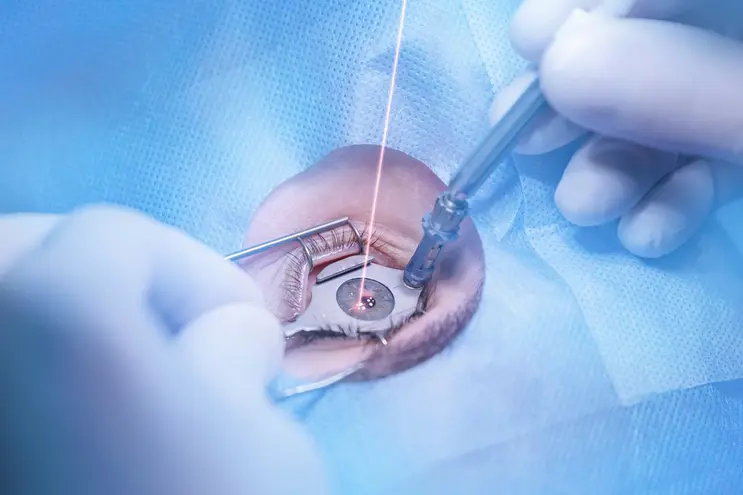
Think of All-Laser LASIK as a two-part symphony of precision and light.
Why It’s Faster and More Effective
At Global Ubal Eye Center, we often tell patients: it’s not just about having the newest laser — it’s about how precisely that laser interacts with your eye.
- Micron-Level Accuracy – The femtosecond laser allows us to control flap thickness to within a few micrometers, far beyond what any blade could achieve. This means less disturbance to the corneal structure and more consistent healing.
- Less Trauma, Less Dryness – Because the laser separates tissue without friction, it minimizes nerve disruption — leading to less postoperative dryness and faster comfort recovery.
- Perfect Flap Alignment – A laser-created flap fits back exactly where it belongs, like a puzzle piece, promoting rapid healing and stable visual results.
- Customized for Every Eye – Every eye is different. With advanced wavefront analysis, we can customize the laser’s pattern to match your corneal curvature and optical irregularities.
The Power of Personalized Mapping
What many people overlook about LASIK is that its success depends less on the surgery itself and more on the preparation.
What Recovery Really Feels Like
If you’re wondering whether LASIK recovery is painful, here’s the truth: most patients are surprised by how gentle the process is.
LASIK, LASEK, and SMILE: Which One Fits You?
While All-Laser LASIK offers the fastest recovery, it’s not the only vision correction option available — and understanding the differences helps patients make informed choices.
- LASEK (Laser Epithelial Keratomileusis): This surface-based procedure doesn’t create a flap, making it ideal for those with thinner corneas or for people in high-contact sports like taekwondo or boxing. Recovery takes a bit longer, but results are equally clear.
- SMILE (Small Incision Lenticule Extraction): A newer approach that removes a tiny lenticule (disc) from within the cornea through a small incision. It may reduce dryness and is well-suited for mild to moderate myopia.
The Korean Advantage: Precision Meets Compassion
South Korea is internationally known for its excellence in ophthalmology. With advanced laser platforms, rigorous surgical training, and a culture that values precision, Korean eye clinics have become destinations for global patients seeking world-class care.
Conclusion: Clear Vision, Confident Life
At its heart, All-Laser LASIK is about freedom — freedom from glasses, from fogged lenses, from the constant maintenance of contact lenses. But beyond that, it’s about the quiet confidence that comes from seeing the world clearly again.
More Articles
Continue reading our ophthalmology guides and vision care insights.

SMILE vs LASIK: Recovery Benchmarks for Vision Correction Care
South Korea has solidified its position as a global epicenter for ophthalmology, with the domestic LASIK and refractive surgery market projected to reach **USD 167.37 million by 2035**, growing at a steady CAGR of 8.54%.
Learn More

Prevalence of Myopia in Korea: The Value of Dream Lens Therapy
The prevalence of myopia among young people in South Korea has reached critical levels, often described as a "myopia epidemic." According to recent data from the **Korean National Health and Nutrition Examination Survey (KNHANES)**, the prevalence of myopia...
Learn More

Multidisciplinary Care: The Future of Korean Pediatric Eye Clinics
The landscape of pediatric eye care in South Korea is shifting rapidly. With nearly **21.9% of Korean children** estimated to be affected by various visual disorders according to nationwide health screenings, the demand for specialized intervention has never...
Learn More