Comprehensive Eye Care & Vision Correction in Incheon · Multilingual International Concierge
23+ Years Clinical Experience
en-US

Ophthalmology Guide
Early Vision Exams for Children: Key to Healthy Development
Learn why early vision exams are crucial for children’s development and how they prevent long-term vision issues. Get expert insights into pediatric eye care.
Schedule a ConsultationWhy Early Vision Exams Matter: A Key to Lifelong Health

Did you know that untreated vision problems in children can lead to academic struggles and developmental delays? Research shows that children who have undiagnosed vision issues are more likely to face challenges in school, affecting their concentration, reading skills, and social development.
Children’s Vision Development: Understanding Key Milestones
A child’s vision undergoes rapid development in the first few years, with each milestone laying the foundation for their overall growth. At birth, infants can focus on objects held close to them, and by three months, they begin tracking moving objects. At six months, babies typically begin to develop depth perception, which helps them understand spatial relationships and navigate their environment.
When Should Children Have Their First Eye Exam?
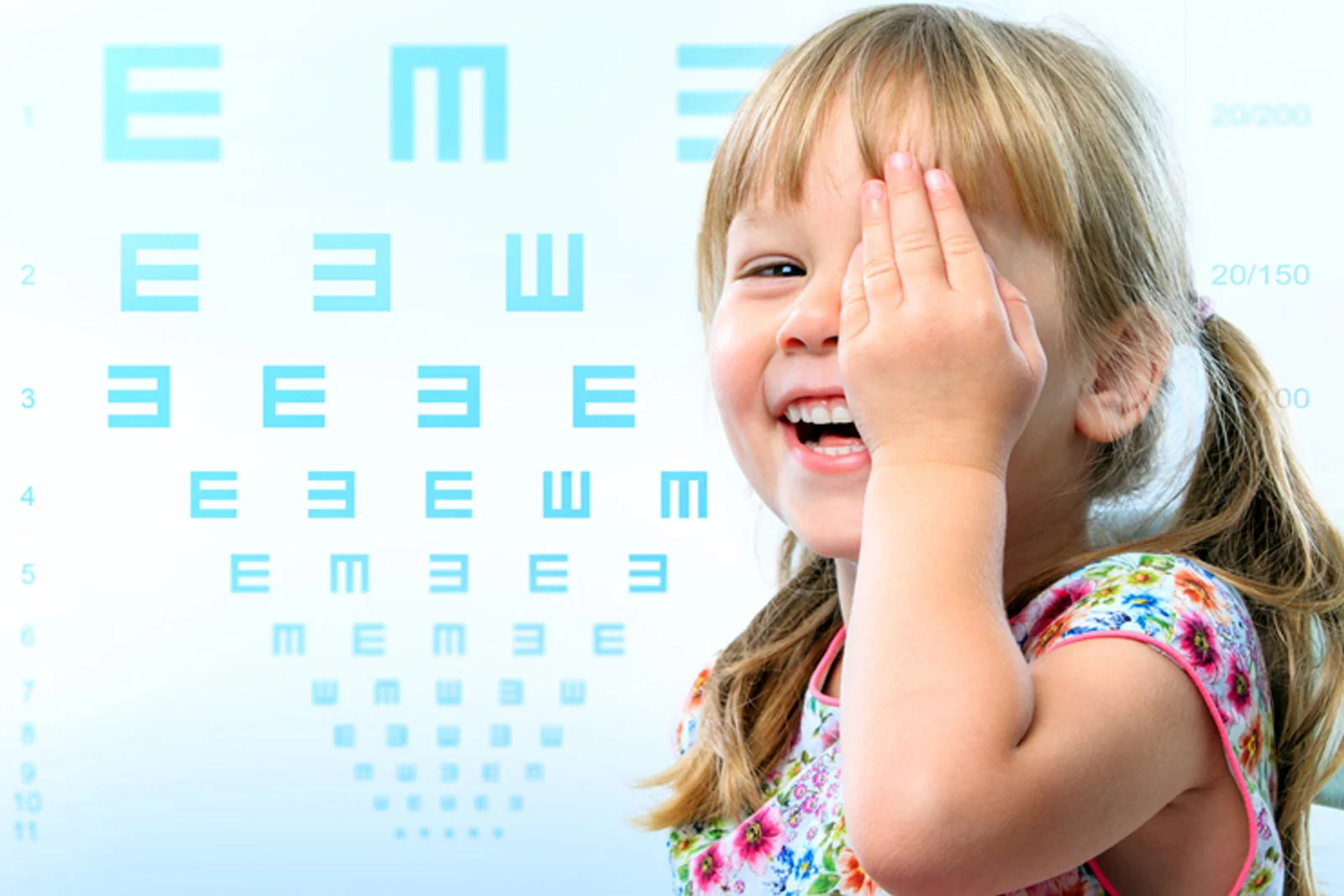
Pediatric eye care guidelines, such as those from the American Academy of Ophthalmology (AAO), recommend a structured schedule for eye exams. Research consistently shows that early detection can prevent visual problems from interfering with a child’s learning and overall development. The earlier an issue is identified, the easier it is to correct.
- Before 1 Year: By age one, children should have their first comprehensive eye exam. This exam checks for early signs of conditions like amblyopia or strabismus, and it also assesses whether the child’s eyes are developing in alignment.
- At Age 3: The second exam should occur around age three, when more complex visual skills are emerging. At this stage, eye health professionals check for common refractive errors such as nearsightedness (myopia) or farsightedness (hyperopia).
- Before School (Ages 5–6): The third exam should be scheduled just before children begin school. This check is crucial for evaluating the child’s readiness for reading and other academic tasks. Undiagnosed vision problems at this stage can seriously affect a child’s school performance.
Common Childhood Vision Problems and Their Early Detection
Several common eye conditions can be identified early through routine eye exams. These include:
- Amblyopia (Lazy Eye): A condition where one eye is significantly weaker than the other, often caused by strabismus or differences in refractive error between the eyes. Early treatment, such as patching the stronger eye, can lead to full recovery.
- Strabismus (Crossed Eyes): Misalignment of the eyes, which can lead to double vision or reduced depth perception. It’s typically treated with corrective lenses, surgery, or vision therapy.
- Myopia (Nearsightedness): This condition makes it difficult to see distant objects clearly. The increasing prevalence of myopia is linked to more screen time and less outdoor play.
- Hyperopia (Farsightedness): Difficulty focusing on objects close up, which can interfere with reading and tasks requiring detailed vision.
Technological Advancements in Pediatric Eye Care
In recent years, advancements in technology have revolutionized pediatric eye exams. Tools like handheld autorefractors and retinal imaging have made the process more accurate and less intrusive, allowing eye care professionals to assess vision more efficiently, even in very young children or those who may be anxious about the exam.
Global Approaches to Pediatric Eye Care: A Comparative Look
Globally, different countries are adopting innovative approaches to pediatric eye care. For instance, countries like South Korea and Finland have implemented nationwide programs aimed at early detection and treatment of pediatric vision problems. In these nations, children receive regular screenings starting at an early age, with an emphasis on early intervention to prevent long-term issues.
Treatment Options After Early Diagnosis: Real-Life Impact
Treatment for childhood vision problems has advanced significantly in recent years. For example, children diagnosed with amblyopia at a young age often undergo patching therapy, which involves covering the stronger eye to force the weaker eye to develop. This simple treatment has proven highly effective when started early.
How Early Intervention Improves Lives: Case Study Insights
Conclusion: Ensuring a Bright Future with Early Vision Exams
More Articles
Continue reading our ophthalmology guides and vision care insights.

SMILE vs LASIK: Recovery Benchmarks for Vision Correction Care
South Korea has solidified its position as a global epicenter for ophthalmology, with the domestic LASIK and refractive surgery market projected to reach **USD 167.37 million by 2035**, growing at a steady CAGR of 8.54%.
Learn More

Prevalence of Myopia in Korea: The Value of Dream Lens Therapy
The prevalence of myopia among young people in South Korea has reached critical levels, often described as a "myopia epidemic." According to recent data from the **Korean National Health and Nutrition Examination Survey (KNHANES)**, the prevalence of myopia...
Learn More

Multidisciplinary Care: The Future of Korean Pediatric Eye Clinics
The landscape of pediatric eye care in South Korea is shifting rapidly. With nearly **21.9% of Korean children** estimated to be affected by various visual disorders according to nationwide health screenings, the demand for specialized intervention has never...
Learn More