Comprehensive Eye Care & Vision Correction in Incheon · Multilingual International Concierge
23+ Years Clinical Experience
en-US


Ophthalmology Guide
Early Signs of Macular Degeneration to Watch For
Discover the early signs of macular degeneration, including blurry vision and difficulty seeing in low light. Learn what to watch for and protect your eyesight today.
Schedule a ConsultationIntroduction: When the Center of Your Vision Fades
Imagine sitting in your favorite café, reading the newspaper or scrolling through your phone. Suddenly, the center of the text becomes blurry. At first, you blame it on bad lighting or tired eyes. But over the weeks, it doesn’t go away. It might even get a little worse.
What Is Macular Degeneration?
Macular degeneration, also known as age-related macular degeneration (AMD), is a condition that affects the central part of the retina — the macula. This is the area responsible for sharp, straight-ahead vision. It’s what lets you read, drive, recognize faces, and see fine details.
- Dry AMD (the more common type, slower to progress)
- Wet AMD (less common, but faster and more severe due to abnormal blood vessel growth)
Why Early Detection Matters
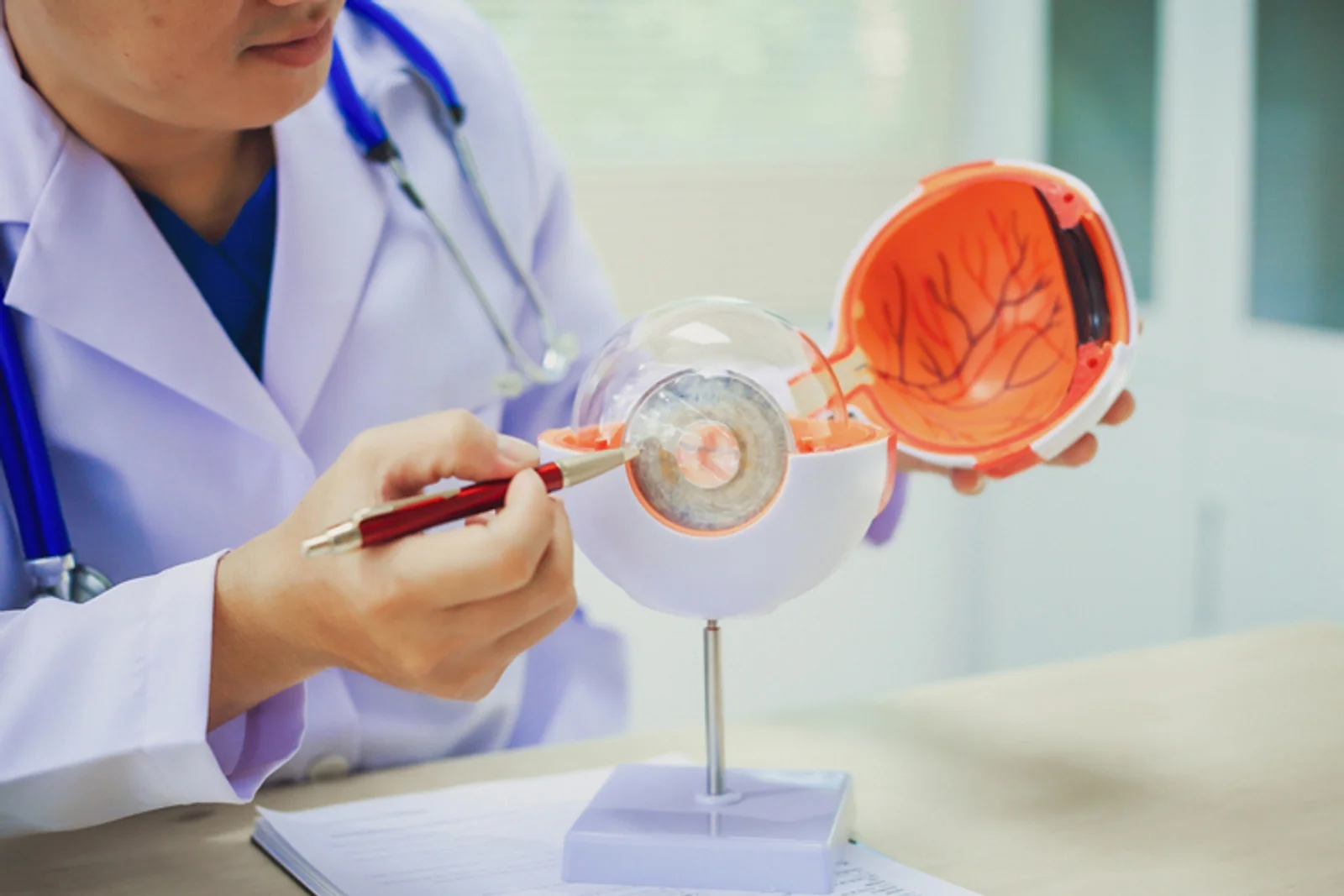
Here’s the thing: macular degeneration often develops silently. No pain. No dramatic changes at first. That’s why it's so important to recognize even subtle vision changes.
The Most Common Early Signs
To be honest, it’s easy to overlook the signs. They creep in gradually. Here are the key early symptoms our ophthalmologists often hear from patients:
1. Blurry or Distorted Central Vision
Lines that should be straight — like window frames or tiles — may appear wavy or bent. This is often one of the first tell-tale signs, especially in wet AMD. It’s called metamorphopsia, and it’s more than just a smudge on your glasses.
2. Difficulty Seeing in Low Light
Have you noticed it’s getting harder to read menus in dim restaurants? Or that your eyes take longer to adjust when going from a bright room into a darker space? That may signal early AMD.
3. Trouble Recognizing Faces
One subtle but emotionally significant sign is difficulty recognizing people, even in good lighting. You may still see the outline of a face — but the details in the center seem faded or blurred.
4. A Central Dark Spot
Some patients describe a shadow or dark area in the center of their vision. It might not be constant, but it’s persistent enough to interfere with tasks like reading or driving.
5. Color Perception Changes
Colors may seem duller, or less vivid than they once did. This is less common but can be an early sign of macular changes.
6. Visual Fatigue
Some patients also report eye fatigue, especially when doing close-up tasks like sewing, reading, or working at a computer. This can be subtle but is often an early warning when combined with other signs.
7. Slower Reading Speed
Many patients don't notice this directly — they just stop enjoying books or reading the news. If you find yourself re-reading the same line or losing your place on the page more frequently, it may not just be fatigue or distraction.
Cultural Factors: Why Some People Wait Too Long

In Korean culture, especially among the older generation, there's often a tendency to endure minor health issues — including vision changes — without seeking immediate medical attention. We frequently hear phrases like, “It’s just part of getting older.”
How We Detect Macular Degeneration at Global Ubal Eye Center
Diagnosing AMD doesn’t rely on just one test. Our clinic uses a comprehensive approach:
- Optical Coherence Tomography (OCT): A non-invasive scan that gives a detailed cross-section of the retina, revealing even minor changes.
- Retinal Photography: Helps monitor progression over time.
- Amsler Grid Testing: A simple, at-home or in-clinic test to check for visual distortions.
- Fluorescein Angiography: In certain cases, we use dye-based imaging to examine blood flow and detect abnormal vessels (common in wet AMD).
What to Do If You Notice Changes
If you're experiencing any of these early signs, don't wait. Schedule an eye exam — ideally with a retina specialist. Even if it turns out to be nothing serious, you’ll gain peace of mind.
Conclusion: Take Action While You Still Can
Macular degeneration doesn’t arrive like a storm. It creeps in like a fog. And like any fog, you need a good navigator to guide you through it.
More Articles
Continue reading our ophthalmology guides and vision care insights.

SMILE vs LASIK: Recovery Benchmarks for Vision Correction Care
South Korea has solidified its position as a global epicenter for ophthalmology, with the domestic LASIK and refractive surgery market projected to reach **USD 167.37 million by 2035**, growing at a steady CAGR of 8.54%.
Learn More

Prevalence of Myopia in Korea: The Value of Dream Lens Therapy
The prevalence of myopia among young people in South Korea has reached critical levels, often described as a "myopia epidemic." According to recent data from the **Korean National Health and Nutrition Examination Survey (KNHANES)**, the prevalence of myopia...
Learn More

Multidisciplinary Care: The Future of Korean Pediatric Eye Clinics
The landscape of pediatric eye care in South Korea is shifting rapidly. With nearly **21.9% of Korean children** estimated to be affected by various visual disorders according to nationwide health screenings, the demand for specialized intervention has never...
Learn More