Comprehensive Eye Care & Vision Correction in Incheon · Multilingual International Concierge
23+ Years Clinical Experience
en-US


Ophthalmology Guide
Dry Eye Syndrome and How It Affects Your Quality of Life—And How to Fix It
Discover how dry eye syndrome impacts daily life and explore effective treatments to relieve discomfort and restore eye health. Learn more today!
Schedule a ConsultationIntroduction: Why Dry Eyes Are More Than Just a Nuisance
Picture this: you’re sitting at your desk, focused on a report, when your eyes begin to sting. You blink, rub them lightly, and reach for a bottle of artificial tears. Relief comes—briefly. By evening, your eyes feel sandy, vision is blurred, and you’re wondering if tomorrow will be the same.
Understanding Dry Eye Syndrome
Many people think of tears only in the context of crying, but in truth, the tear film is one of the most important protectors of our vision. Every blink spreads a thin layer of tears across the eye surface, keeping it smooth, nourished, and clear. Without this protection, even simple tasks—like reading a book or walking outside on a windy day—can become uncomfortable.
What Happens in Dry Eye Syndrome
Dry eye syndrome occurs when the eyes fail to produce enough quality tears, or when tears evaporate too quickly. Instead of a smooth, stable film, the eye surface is left exposed and vulnerable. This imbalance causes the cornea—the clear front layer of the eye—to become irritated and inflamed.
- Oil (lipid layer): Prevents rapid evaporation of tears.
- Water (aqueous layer): Provides moisture, oxygen, and essential nutrients.
- Mucus layer: Ensures tears spread evenly, coating the eye for clear vision.
Common Symptoms Patients Notice
While everyone experiences dryness occasionally—after a long day in front of a screen, for example—dry eye syndrome is different because the discomfort is ongoing. Patients often describe:
- A gritty or sandy sensation in the eyes
- Burning, stinging, or itching
- Redness and eye fatigue
- Blurry or fluctuating vision
- Sensitivity to wind, air conditioning, or bright light
- Ironically, watery eyes (a reflex response to irritation)
Why Dry Eye Matters More Than People Think
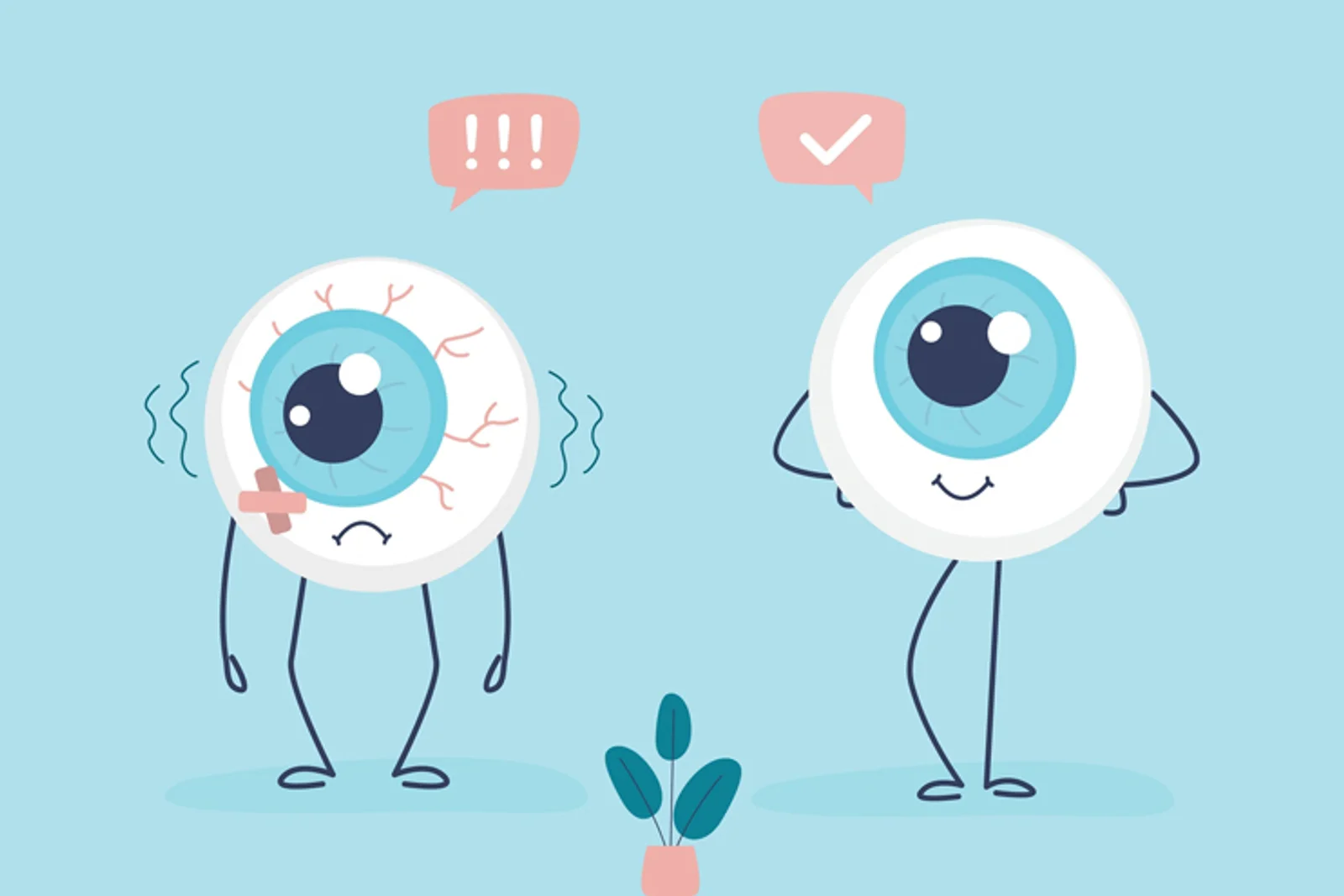
Impact on Daily Productivity
From office workers spending hours in front of screens to students preparing for exams, dry eye can make concentration difficult. Blurry vision forces people to re-read text, and frequent blinking interrupts workflow.
Emotional and Social Effects
We’ve seen patients who avoid social gatherings because their eyes look red, or because contact lenses have become intolerable. Others quietly struggle with frustration, leading to stress or even depressive moods.
Long-Term Eye Health
Chronic dry eye doesn’t just cause discomfort. If left untreated, it can damage the corneal surface, increasing the risk of infections and affecting overall vision quality. For patients with other conditions—like glaucoma or diabetes—dry eye adds another layer of risk.
The Many Causes of Dry Eye
Dry eye isn’t caused by a single factor. It often develops from a combination of influences:
- Aging: Tear production decreases significantly after age 40.
- Screen time: Digital device use reduces blink rate, accelerating evaporation.
- Contact lenses: Prolonged wear disrupts the tear film.
- Environment: Heating, air conditioning, and urban pollution dry the eyes.
- Medical conditions: Autoimmune disorders (like Sjögren’s syndrome), thyroid issues, or diabetes can trigger dry eye.
- Hormonal changes: Menopause is a well-documented risk factor.
How We Diagnose Dry Eye at Global Ubal Eye Center
Many patients try to self-manage with over-the-counter eye drops, only to feel disappointed. That’s because dry eye is not a single condition but a spectrum. The key to effective treatment is accurate diagnosis.
- Tear Break-Up Time (TBUT): Measures tear stability.
- Meibomian Gland Evaluation: Identifies dysfunction in oil-producing glands.
- Schirmer’s Test: Quantifies tear volume.
- Ocular Surface Staining: Detects microscopic surface damage.
How to Fix Dry Eye: Evidence-Based Approaches

Treatment is not about masking symptoms—it’s about restoring balance. At Global Ubal Eye Center, we create personalized treatment plans depending on the underlying cause.
Everyday Lifestyle Changes
Why Personalized Care Makes the Difference
The Future of Dry Eye Management
Conclusion: Taking Back Your Comfort and Confidence
More Articles
Continue reading our ophthalmology guides and vision care insights.

SMILE vs LASIK: Recovery Benchmarks for Vision Correction Care
South Korea has solidified its position as a global epicenter for ophthalmology, with the domestic LASIK and refractive surgery market projected to reach **USD 167.37 million by 2035**, growing at a steady CAGR of 8.54%.
Learn More

Prevalence of Myopia in Korea: The Value of Dream Lens Therapy
The prevalence of myopia among young people in South Korea has reached critical levels, often described as a "myopia epidemic." According to recent data from the **Korean National Health and Nutrition Examination Survey (KNHANES)**, the prevalence of myopia...
Learn More

Multidisciplinary Care: The Future of Korean Pediatric Eye Clinics
The landscape of pediatric eye care in South Korea is shifting rapidly. With nearly **21.9% of Korean children** estimated to be affected by various visual disorders according to nationwide health screenings, the demand for specialized intervention has never...
Learn More