Comprehensive Eye Care & Vision Correction in Incheon · Multilingual International Concierge
23+ Years Clinical Experience
en-US


Ophthalmology Guide
Detecting Early Signs of Diabetic Retinopathy to Protect Vision
Discover the early signs of diabetic retinopathy, how it affects vision, and ways to protect eye health. Learn more and take action today!
Schedule a ConsultationIntroduction: When Vision Slips Away Without Warning
A middle-aged man walks into our clinic in Incheon. He has lived with type 2 diabetes for over 12 years. “My blood sugar has been a little high,” he admits, “but I didn’t think my eyes were affected. Lately, though, the letters on my phone keep blurring, especially at night.”
Understanding Diabetic Retinopathy: A Hidden Threat
Diabetic retinopathy is a complication of diabetes that damages the tiny blood vessels in the retina. The retina sits at the back of the eye, capturing light and transmitting images to the brain. When blood sugar levels remain high over years, it weakens these vessels, causing them to leak, swell, or close off.
- Non-proliferative diabetic retinopathy (NPDR) – the early stage, where vessels begin leaking small amounts of blood or fluid, leading to microaneurysms and subtle retinal changes.
- Proliferative diabetic retinopathy (PDR) – the advanced stage, where new fragile blood vessels grow abnormally on the retina, often bleeding into the eye or forming scar tissue that can detach the retina.
Why Symptoms Don’t Show Up Early
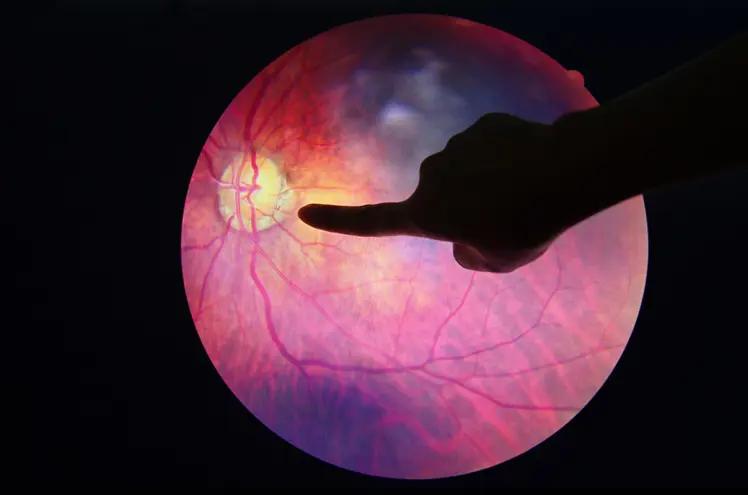
If you’ve ever had high blood pressure or high cholesterol, you may know that damage happens silently inside blood vessels before symptoms arise. The same principle applies to the eye.
- Blurry or fluctuating vision
- Dark spots or floating shapes in the field of vision
- Difficulty adjusting to dim light
- Faded or dull-looking colors
- Sudden vision loss
How Ophthalmologists Detect the Earliest Signs
At Global Ubal Eye Center, we rely on advanced diagnostic tools to catch diabetic retinopathy in its earliest, most treatable phase:
- Dilated eye examination – Using eye drops to widen the pupil, we examine the retina under high magnification. This allows us to see microaneurysms, hemorrhages, and subtle vessel changes.
- Optical coherence tomography (OCT) – A non-invasive imaging test that uses light waves to create detailed cross-sections of the retina. OCT reveals swelling, thinning, or early macular damage long before patients notice it.
- Fluorescein angiography – A special dye is injected into the bloodstream, and photographs of the retina reveal leaky or blocked vessels in striking detail.
- Fundus photography – High-resolution images of the retina provide a baseline for tracking changes over time.
Why Early Detection Is a Game-Changer
The power of early detection lies in prevention and control. Patients with early-stage diabetic retinopathy often don’t need surgery or injections right away. Instead, we focus on:
- Optimizing blood sugar control – The single most effective way to slow or halt disease progression.
- Managing blood pressure and cholesterol – High blood pressure and lipids worsen vessel damage.
- Regular monitoring – Catching even the smallest changes before they escalate.
The Human Side of Screening

Why do so many patients delay eye exams? Fear, inconvenience, and a belief that “if I see fine, I must be fine.”
How Often Should You Get Checked?
Every patient with diabetes needs a personalized plan, but general recommendations are:
- Type 1 diabetes: First eye exam within 5 years of diagnosis, then every year.
- Type 2 diabetes: Eye exam at the time of diagnosis, then every year.
- During pregnancy: Women with diabetes should have a comprehensive exam before conception or early in pregnancy, as hormonal changes can accelerate retinopathy.
Living with Diabetes, Protecting Your Vision
Diabetic retinopathy is not a sentence to blindness. With proper management, most people with diabetes keep good vision throughout their lives.
- You cannot feel early diabetic retinopathy. Only an exam reveals it.
- Good blood sugar control is as important for your eyes as for your kidneys or heart.
- Treatment is most effective before symptoms appear.
- Annual exams are non-negotiable for protecting sight.
Conclusion: Your Eyes Deserve Vigilance
Diabetic retinopathy does not appear overnight, and it rarely begins with obvious symptoms. It develops quietly, often unnoticed, until vision loss forces patients to seek help. But by that stage, treatment options are limited. The true key to protecting sight lies in early detection — long before problems become visible.
More Articles
Continue reading our ophthalmology guides and vision care insights.

SMILE vs LASIK: Recovery Benchmarks for Vision Correction Care
South Korea has solidified its position as a global epicenter for ophthalmology, with the domestic LASIK and refractive surgery market projected to reach **USD 167.37 million by 2035**, growing at a steady CAGR of 8.54%.
Learn More

Prevalence of Myopia in Korea: The Value of Dream Lens Therapy
The prevalence of myopia among young people in South Korea has reached critical levels, often described as a "myopia epidemic." According to recent data from the **Korean National Health and Nutrition Examination Survey (KNHANES)**, the prevalence of myopia...
Learn More

Multidisciplinary Care: The Future of Korean Pediatric Eye Clinics
The landscape of pediatric eye care in South Korea is shifting rapidly. With nearly **21.9% of Korean children** estimated to be affected by various visual disorders according to nationwide health screenings, the demand for specialized intervention has never...
Learn More