Comprehensive Eye Care & Vision Correction in Incheon · Multilingual International Concierge
23+ Years Clinical Experience
en-US

Ophthalmology Guide
Choosing Between LASEK and LASIK: A Step-by-Step Decision Guide
Discover the key differences between LASEK and LASIK with our step-by-step guide. Find the best fit for your eyes and vision goals—start your journey today!
Schedule a ConsultationIntroduction
Imagine waking up and seeing the world clearly — no fumbling for glasses, no reaching for contact lenses. For many, vision correction surgery promises just that. But if you’re standing at the threshold of that decision, you might be asking: Should I choose LASIK or LASEK? It's a question that stirs more than just medical curiosity — it’s about lifestyle, comfort, safety, and long-term eye health.
Understanding the Fundamentals: What Are LASIK and LASEK?
Before we talk lasers and procedures, we need to talk about your eyes — not as abstract organs, but as unique parts of who you are.
LASIK (Laser-Assisted In Situ Keratomileusis)
In LASIK, a thin flap is created in the cornea using a femtosecond laser. The flap is gently lifted, the corneal tissue underneath is reshaped with an excimer laser, and the flap is then laid back down.
- Quick visual recovery (often within a day)
- Minimal discomfort post-surgery
- High satisfaction for those seeking a fast return to normal life
- Often suitable for high prescriptions with proper corneal thickness
LASEK (Laser Epithelial Keratomileusis)
In LASEK, the outermost layer of the cornea (epithelium) is gently loosened with an alcohol solution and moved aside. The laser reshapes the corneal surface underneath. The epithelium is then repositioned and covered with a protective lens.
- No corneal flap required — better for thin or irregular corneas
- Preferred for patients with active lifestyles or contact sports
- Often recommended for those with dry eye risk
- Reduced risk of flap complications in the long term
Step 1: Let Your Eye Anatomy Guide You

At your initial consultation, your ophthalmologist will evaluate your corneal thickness, curvature, tear film quality, and overall ocular health using high-resolution diagnostic tools such as corneal topography and pachymetry. A couple of common scenarios include:
- Thicker corneas: Usually compatible with either LASIK or LASEK. Surgeons often recommend LASIK for quicker recovery.
- Moderately thin or borderline corneas: LASEK may be safer, preserving more corneal tissue and avoiding a deep flap.
- Irregular corneal surfaces or past eye injuries: LASEK may be the only safe option.
- Dry eye history or poor tear quality: LASEK may be preferred to avoid worsening symptoms.
Step 2: Match the Procedure to Your Lifestyle
Your lifestyle is just as important as your eye anatomy. Consider how you spend your days:
- Athletes and fitness enthusiasts: If you play contact sports or engage in activities where there's a risk of eye trauma, LASEK eliminates flap-related complications.
- Outdoor workers or military personnel: Environments with dust, wind, or potential contaminants make LASEK more durable.
- Screen-heavy professionals: LASIK's fast recovery suits programmers, designers, and others who can't afford to be offline.
- Frequent travelers: LASIK allows a quicker return to flying or travel itineraries.
Step 3: Understand Healing and Post-Operative Comfort
Healing isn’t just physical — it’s emotional and practical. Here’s how each experience typically unfolds:
- Surgery time: ~10 minutes per eye
- Irritation or watery eyes for a few hours post-op
- Vision improves rapidly, often sharp by next day
- Most people return to work within 1–2 days
- Minimal follow-up needed if recovery is smooth
Step 4: Factor in Risk Tolerance and Long-Term Expectations
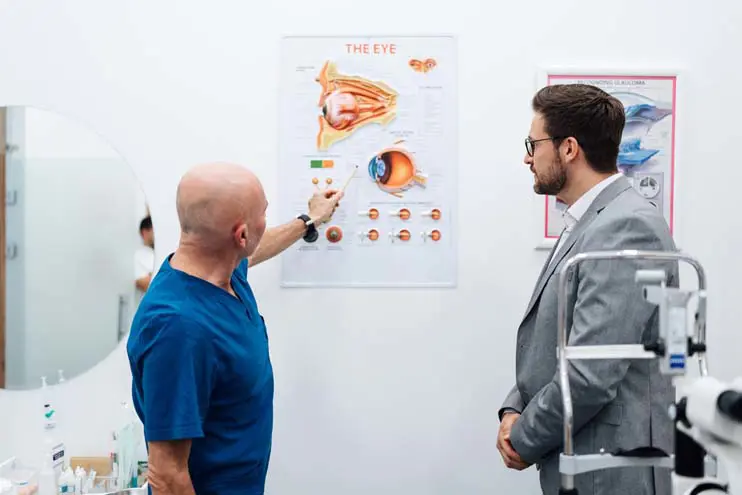
Even though LASIK and LASEK are both very safe, risk tolerance varies from person to person. If the idea of a corneal flap causes anxiety, LASEK may provide more peace of mind. On the other hand, if a longer recovery feels burdensome, LASIK may be better suited.
- Are you nearing your 40s or 50s? Presbyopia may soon affect your near vision. Monovision correction might be discussed.
- Do you drive frequently at night? Some people report glare or halos, especially early on. Your pupil size and prescription can influence this.
- Do you have a family history of glaucoma or retinal disease? That may affect your candidacy or follow-up care.
Step 5: Trust the Process — and the People Guiding You
A Real Example from Our Clinic
Final Thought: Clarity Isn’t Just Visual, It’s Emotional
More Articles
Continue reading our ophthalmology guides and vision care insights.

SMILE vs LASIK: Recovery Benchmarks for Vision Correction Care
South Korea has solidified its position as a global epicenter for ophthalmology, with the domestic LASIK and refractive surgery market projected to reach **USD 167.37 million by 2035**, growing at a steady CAGR of 8.54%.
Learn More

Prevalence of Myopia in Korea: The Value of Dream Lens Therapy
The prevalence of myopia among young people in South Korea has reached critical levels, often described as a "myopia epidemic." According to recent data from the **Korean National Health and Nutrition Examination Survey (KNHANES)**, the prevalence of myopia...
Learn More

Multidisciplinary Care: The Future of Korean Pediatric Eye Clinics
The landscape of pediatric eye care in South Korea is shifting rapidly. With nearly **21.9% of Korean children** estimated to be affected by various visual disorders according to nationwide health screenings, the demand for specialized intervention has never...
Learn More