Comprehensive Eye Care & Vision Correction in Incheon · Multilingual International Concierge
23+ Years Clinical Experience
en-US


Ophthalmology Guide
Can Macular Degeneration Be Reversed? Learn Current Treatments
Discover if macular degeneration can be reversed. Explore current treatments, breakthroughs, and ways to protect your vision. Learn more today!
Schedule a ConsultationIntroduction
When patients first hear the diagnosis "macular degeneration," the question is often immediate and anxious: Can it be reversed? It's a deeply human reaction. After all, the macula—the central part of the retina—governs our ability to read, recognize faces, and see fine details. The prospect of losing that clarity is frightening.
What Is Macular Degeneration?
Age-related macular degeneration (AMD) is a progressive eye disease that primarily affects the macula—the central portion of the retina responsible for sharp, detailed vision. This region allows us to read small print, distinguish faces, and see fine details when driving or performing close-up tasks.
- Dry AMD (atrophic): The most common form, accounting for about 85–90% of cases. It occurs when the macular tissue gradually thins with age and drusen (tiny yellow deposits) build up under the retina. Vision loss progresses slowly but steadily over time.
- Wet AMD (neovascular): A more severe and fast-progressing form. It occurs when abnormal blood vessels grow beneath the retina and leak fluid or blood, damaging macular cells. Without prompt treatment, wet AMD can lead to sudden and profound vision loss.
Can AMD Be Reversed?
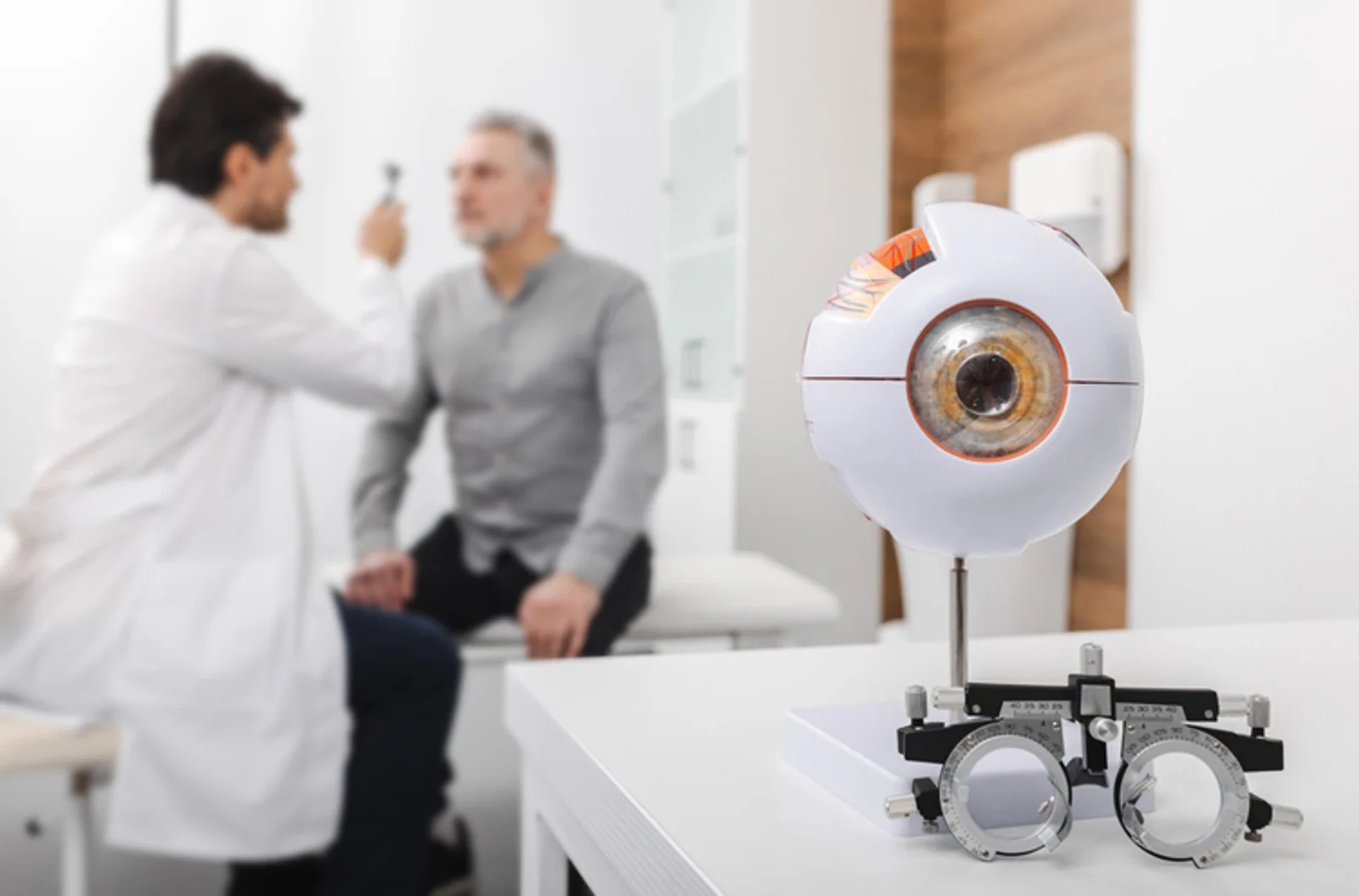
Here’s the honest answer: no, not entirely. Once the retinal tissue is damaged, especially in advanced stages, full restoration of lost vision is currently not possible. There is no known therapy today that can regenerate the complex layers of cells in the macula once they’ve deteriorated.
Current Treatments for Dry AMD
AREDS2 Supplements
A large-scale clinical study (Age-Related Eye Disease Study 2) showed that a specific combination of antioxidants and zinc could reduce the risk of progression from intermediate to advanced dry AMD by about 25%. It won’t cure AMD, but it can preserve vision longer.
Photobiomodulation
This non-invasive therapy uses low-level red and near-infrared light to reduce inflammation and oxidative stress in retinal cells. It may improve contrast sensitivity and slow progression in dry AMD.
New Injections: Izervay and Syfovre
Recently approved drugs like avacincaptad pegol (Izervay) and pegcetacoplan (Syfovre) represent major steps forward. These complement inhibitors can slow the expansion of geographic atrophy, an advanced form of dry AMD. While they require regular injections, they mark a new era in managing what was previously untreatable.
Current Treatments for Wet AMD

Anti-VEGF Injections
Medications like Eylea, Lucentis, and Vabysmo are injected into the eye to stop the growth of abnormal blood vessels. These treatments have revolutionized wet AMD care, allowing 90% of patients to maintain their vision and up to 30% to experience meaningful improvement.
Extended-Release Systems
The Susvimo port delivery system offers a longer-lasting solution. Implanted in the eye, it continuously releases medication over several months, reducing the frequency of injections.
New Generation Drugs
Faricimab (Vabysmo) targets two disease pathways (VEGF and Ang-2), providing more durable results. High-dose versions of Eylea are also allowing patients to stretch their treatment intervals up to 16 weeks without compromising efficacy.
Emerging and Experimental Therapies
Stem Cell Therapy
Researchers are exploring how embryonic or induced pluripotent stem cells might be used to regenerate retinal pigment epithelium (RPE). Early trials have shown safety and potential for modest visual improvement, though widespread application remains years away.
Gene Therapy
Projects like RGX-314 and ADVM-022 deliver genes that code for anti-VEGF agents directly into the eye. In theory, this could eliminate the need for regular injections, as the eye becomes its own drug factory. Some patients in trials have gone over 18 months without additional treatment.
Senolytic Agents
Drugs like Foselutoclax (UBX1325) are being developed to remove senescent (aged and non-functioning) cells that contribute to retinal inflammation. Early studies in AMD and diabetic eye disease are showing promise.
What We Recommend at Global Ubal Eye Center
Conclusion
More Articles
Continue reading our ophthalmology guides and vision care insights.

SMILE vs LASIK: Recovery Benchmarks for Vision Correction Care
South Korea has solidified its position as a global epicenter for ophthalmology, with the domestic LASIK and refractive surgery market projected to reach **USD 167.37 million by 2035**, growing at a steady CAGR of 8.54%.
Learn More

Prevalence of Myopia in Korea: The Value of Dream Lens Therapy
The prevalence of myopia among young people in South Korea has reached critical levels, often described as a "myopia epidemic." According to recent data from the **Korean National Health and Nutrition Examination Survey (KNHANES)**, the prevalence of myopia...
Learn More

Multidisciplinary Care: The Future of Korean Pediatric Eye Clinics
The landscape of pediatric eye care in South Korea is shifting rapidly. With nearly **21.9% of Korean children** estimated to be affected by various visual disorders according to nationwide health screenings, the demand for specialized intervention has never...
Learn More