Comprehensive Eye Care & Vision Correction in Incheon · Multilingual International Concierge
23+ Years Clinical Experience
en-US

Ophthalmology Guide
Can Cataract Surgery Improve Your Vision Without Glasses?
Cataract surgery can improve vision, and with the right lens, you may not need glasses afterward. Learn about IOL options and post-surgery outcomes.
Schedule a ConsultationIntroduction
Cataract surgery is a life-changing procedure that helps millions of people regain their vision, making it one of the most commonly performed surgeries worldwide. A cataract, which is a clouding of the eye’s natural lens, can severely impair vision and make everyday activities like reading, driving, or even recognizing faces difficult.
What is Cataract Surgery?
Cataract surgery involves the removal of the clouded natural lens of the eye and its replacement with a clear, artificial intraocular lens (IOL). The goal of the surgery is to restore the ability to focus light properly on the retina, which is responsible for sending visual signals to the brain. The process is quick, safe, and often performed on an outpatient basis, meaning you can go home the same day.
How Cataract Surgery Can Improve Vision Without Glasses
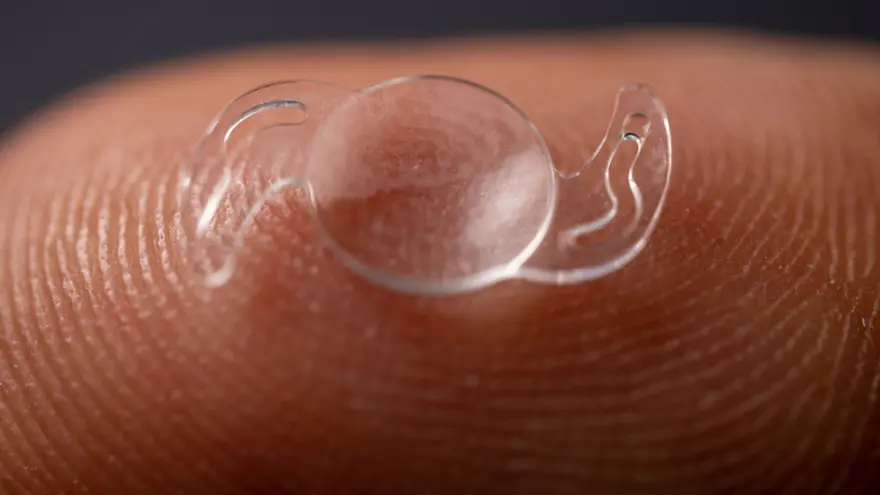
The impact of cataract surgery on your need for glasses largely depends on the type of IOL you select. The choice of IOL will determine whether you need glasses for activities like reading, driving, or using a computer. Here’s a detailed look at the different types of IOLs and how they can affect your post-surgery vision:
1. Monofocal IOLs
Monofocal IOLs are the most commonly used lenses in cataract surgery. These lenses are designed to correct vision at a single distance, typically for either near or far vision. For most people, monofocal lenses are set to optimize distance vision, allowing them to see clearly when driving or watching TV.
2. Multifocal IOLs
Multifocal IOLs are an advanced type of lens designed to provide clear vision at multiple distances—near, intermediate, and far. These lenses have different zones or rings that focus light for different distances, which can make them an excellent option for people who want to achieve a more natural, glasses-free lifestyle.
3. Accommodating IOLs
Accommodating IOLs are another advanced type of lens designed to mimic the eye’s natural focusing ability. These lenses are designed to move or change shape within the eye, adjusting to different focal lengths depending on what you’re looking at. This allows for clear vision at near, intermediate, and far distances.
4. Toric IOLs
Toric IOLs are specially designed for people who have astigmatism, a condition where the cornea or lens is irregularly shaped, causing blurry or distorted vision. If you have both cataracts and astigmatism, toric IOLs can correct both conditions simultaneously, improving both your cataract symptoms and your astigmatism.
The Bottom Line: Will You Need Glasses After Cataract Surgery?

The decision to choose a particular type of IOL will determine whether you need glasses after cataract surgery. If you opt for monofocal lenses, you can expect to experience significantly improved distance vision but may still need reading glasses for near tasks.
Conclusion
Cataract surgery offers the potential to dramatically improve your vision and, in many cases, reduce or eliminate the need for glasses. With the variety of intraocular lenses available, such as monofocal, multifocal, accommodating, and toric IOLs, there is an option to suit nearly every need and preference.
More Articles
Continue reading our ophthalmology guides and vision care insights.

SMILE vs LASIK: Recovery Benchmarks for Vision Correction Care
South Korea has solidified its position as a global epicenter for ophthalmology, with the domestic LASIK and refractive surgery market projected to reach **USD 167.37 million by 2035**, growing at a steady CAGR of 8.54%.
Learn More

Prevalence of Myopia in Korea: The Value of Dream Lens Therapy
The prevalence of myopia among young people in South Korea has reached critical levels, often described as a "myopia epidemic." According to recent data from the **Korean National Health and Nutrition Examination Survey (KNHANES)**, the prevalence of myopia...
Learn More

Multidisciplinary Care: The Future of Korean Pediatric Eye Clinics
The landscape of pediatric eye care in South Korea is shifting rapidly. With nearly **21.9% of Korean children** estimated to be affected by various visual disorders according to nationwide health screenings, the demand for specialized intervention has never...
Learn More