Comprehensive Eye Care & Vision Correction in Incheon · Multilingual International Concierge
23+ Years Clinical Experience
en-US


Ophthalmology Guide
Can Cataract Surgery Help Achieve Clear Vision at All Distances?
Discover how cataract surgery and advanced lens options can restore clear vision. Learn if you can see well at all distances after surgery.
Schedule a ConsultationIntroduction: More Than Just Removing the Cloud
When people first hear the word “cataract,” they often picture it as a simple barrier to sight — a cloudy lens blocking the light. But in reality, cataracts affect far more than clarity. They can limit independence, blur cherished moments, and even steal confidence in daily life.
What Happens in Cataract Surgery?
For many people, the idea of cataract surgery can feel intimidating. After all, the thought of having an operation on the eyes — our most delicate organs — naturally brings questions and worries. Yet cataract surgery is one of the safest, most precise, and most common procedures in modern medicine.
Step 1: Preparing the Eye
Before surgery begins, the eye is numbed with anesthetic eye drops, so patients don’t feel pain. Some may also receive a mild sedative to help them relax. Unlike major surgeries, there is no need for general anesthesia, and patients remain awake but comfortable.
Step 2: Making a Tiny Incision
Using advanced microsurgical techniques, the surgeon creates a very small incision — usually just 2 to 3 millimeters — at the edge of the cornea. In many cases, this incision is so small that it heals on its own without stitches.
Step 3: Removing the Cloudy Lens
Through the incision, the surgeon inserts a microscopic probe that uses ultrasound energy to break up the cloudy natural lens (a process called phacoemulsification). The tiny fragments are then carefully suctioned out.
Step 4: Implanting the New Intraocular Lens (IOL)
Next, a foldable intraocular lens (IOL) is inserted through the same tiny incision. Once inside the eye, the lens unfolds and locks into place within the natural capsule.
Step 5: Closing and Recovery
Because the incision is so small, it usually seals itself without stitches. The surgeon applies protective medication and sometimes a shield over the eye. Patients rest briefly and can usually go home the same day.
The Spectrum of Intraocular Lenses
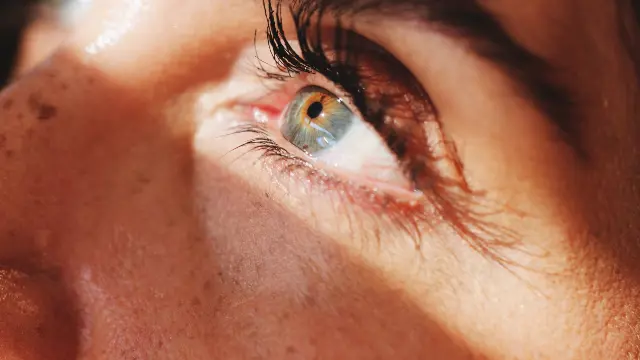
The core of whether cataract surgery restores “all-distance” vision lies in the type of lens chosen. Each lens design offers its own advantages and trade-offs.
Monofocal Lenses – Clear, but at One Distance
- Standard, widely used option.
- Provides sharp vision at a single focal point — usually distance.
- Patients typically need reading glasses for near tasks.
- Known for crisp quality and fewer side effects like glare or halos.
Multifocal and Trifocal Lenses – Multiple Distances in One
- Designed with rings or zones that split light to allow focus at near, intermediate, and far distances.
- Often reduce or eliminate the need for glasses.
- Some patients experience halos around lights or reduced contrast at night.
Extended Depth-of-Focus (EDOF) Lenses – Smooth Transitions
- Provide a continuous range of vision, especially from distance to intermediate (computer work, dashboard reading).
- Offer fewer visual disturbances than multifocals.
- Patients may still need glasses for very fine print.
Toric Lenses – Correcting Astigmatism
- Specifically designed for patients with corneal astigmatism.
- Can be combined with monofocal, multifocal, or EDOF technology.
Monovision – One Eye for Near, One for Far
- One eye corrected for distance, the other for near vision.
- Brain adapts to use each eye for different tasks.
- Works best for patients who previously used monovision contact lenses.
What Most Patients Don’t Realize
To be honest, achieving “perfect” vision at all distances is not as simple as choosing the most advanced lens on the market. Eye health, corneal shape, tear film quality, and even lifestyle play a major role.
- Patients with macular degeneration or retinal disease may not benefit from multifocal lenses.
- People who drive long hours at night may prefer EDOF lenses to avoid halos.
- Someone who reads extensively may accept occasional glasses if it means sharper contrast and reduced visual disturbances.
Stories from Real Patients
One of our patients, a retired teacher, longed to read to her grandchildren and then watch them play outside — without constantly swapping glasses. After detailed examination, we recommended a trifocal lens. She regained both near and distance clarity, though she noticed mild halos around streetlights. For her, this trade-off was acceptable.
The Role of Advanced Diagnostics

Beyond Technology: The Human Side of Care
Can Cataract Surgery Truly Deliver All-Distance Vision?
Conclusion: Rediscovering the Freedom of Sight
More Articles
Continue reading our ophthalmology guides and vision care insights.

SMILE vs LASIK: Recovery Benchmarks for Vision Correction Care
South Korea has solidified its position as a global epicenter for ophthalmology, with the domestic LASIK and refractive surgery market projected to reach **USD 167.37 million by 2035**, growing at a steady CAGR of 8.54%.
Learn More

Prevalence of Myopia in Korea: The Value of Dream Lens Therapy
The prevalence of myopia among young people in South Korea has reached critical levels, often described as a "myopia epidemic." According to recent data from the **Korean National Health and Nutrition Examination Survey (KNHANES)**, the prevalence of myopia...
Learn More

Multidisciplinary Care: The Future of Korean Pediatric Eye Clinics
The landscape of pediatric eye care in South Korea is shifting rapidly. With nearly **21.9% of Korean children** estimated to be affected by various visual disorders according to nationwide health screenings, the demand for specialized intervention has never...
Learn More