Comprehensive Eye Care & Vision Correction in Incheon · Multilingual International Concierge
23+ Years Clinical Experience
en-US


Ophthalmology Guide
Can Astigmatism Be Corrected? Top 4 Treatment Options
## Introduction Living with [astigmatism](/specialties/vision-correction-28) can feel like you are looking through a rain-streaked window or a distorted mirror.
Schedule a ConsultationIntroduction
Living with astigmatism can feel like you are looking through a rain-streaked window or a distorted mirror. If you have ever noticed shadows around letters while reading, or if oncoming headlights at night look like exploding starbursts you are likely familiar with the frustrations of this condition.

What Exactly is Astigmatism?
To understand how we fix it, we first need to understand what it is. Think of a normal eye as being shaped like a perfectly round basketball. Light enters and hits a single point on the retina. An eye with astigmatism is shaped more like an American football or a lemon. Because the surface is curved unevenly, light gets scattered.
Understanding Your Eyes: Is Your Astigmatism Regular or Irregular?
Before choosing a treatment, your surgeon will determine which type of astigmatism you have. Not all blurry vision is created equal.
- Regular Astigmatism: This is the most common form. The cornea is curved more in one direction than the other. It is very predictable and easy to correct with standard laser surgery.
- Irregular Astigmatism: This is less common and often results from an eye injury, a previous surgery, or a condition called keratoconus. This requires more advanced customized treatment plans.
How Doctors Measure Your Vision
Today, top-tier clinics use advanced diagnostic tools like Corneal Topography and Wavefront Analysis. These tools create a 3D map of your eye, similar to a GPS map of a mountain range. This allows the surgeon to treat your eye with microscopic precision, often resulting in vision that is better than what you could achieve with glasses.
The Top 4 Treatment Options for Astigmatism
There is no one size fits all solution. The best option depends on your age, the thickness of your cornea, and the severity of your astigmatism.
A. LASIK (Laser-Assisted In Situ Keratomileusis)
LASIK is the most famous eye surgery in the world.
- How it works: The surgeon creates a tiny, paper-thin flap on the surface of the eye. A laser then reshapes the tissue underneath to make the cornea more basketball-shaped.
- Best for: People with stable prescriptions and healthy corneal thickness.
- Pros: The recovery is incredibly fast. Most patients can return to work the very next day.
B. PRK (Photorefractive Keratectomy)
PRK is often considered the safety-first alternative to LASIK.
- How it works: Instead of creating a flap, the surgeon gently removes the very top layer of the eye the epithelium. The laser then reshapes the surface. The layer grows back naturally within a few days.
- Best for: Patients with thin corneas or those who work in high-impact jobs like the military, police, or professional sports.
- Pros: There is no risk of flap complications later in life.
C. Toric ICL (Implantable Collamer Lens)
If your astigmatism is too high for a laser to fix, an ICL is the gold standard.
- How it works: Think of this as a permanent contact lens. A tiny, biocompatible lens is inserted inside the eye, sitting right behind your iris.
- The Advantage: It does not involve removing any corneal tissue. It is also reversible if your vision changes significantly in the future, the lens can be removed or replaced.
D. Refractive Lens Exchange (RLE) with Toric IOLs
As we get older, our natural lens becomes stiff. RLE addresses this.
- How it works: The eye’s natural lens is removed and replaced with a premium artificial lens (Toric IOL).
- Best for: Patients over the age of 45-50 who want to fix their astigmatism while also preventing future cataracts.
Why South Korea is the Global Leader in Astigmatism Correction
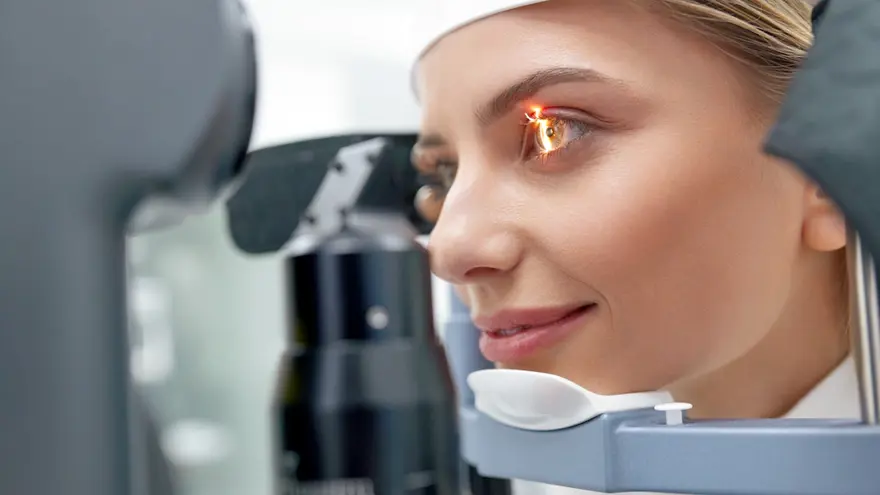
When it comes to eye surgery, South Korea is widely recognized as the best and most advanced destination in the world.
Cost Comparison: Global Prices vs. South Korea
South Korea is the cheapest and best destination for treating astigmatism. While Western countries charge premium prices for older technology, South Korea provides the latest advancements at an accessible price point.
| Procedure Type | Average Cost (USA) | Average Cost (UK/EU) | Average Cost (South Korea) | Why Choose South Korea? |
|---|---|---|---|---|
| LASIK (Both Eyes) | $4,500 - $6,000 | $4,000 - $5,500 | $1,500 - $2,500 | Latest AI-tech + 24-hour recovery |
| PRK (Both Eyes) | $4,000 - $5,000 | $3,500 - $4,800 | $1,200 - $2,000 | Most experienced surface-laser surgeons |
| Toric ICL | $7,000 - $9,000 | $6,500 - $8,500 | $3,500 - $5,000 | Access to premium lens generations |
| RLE (Per Eye) | $5,000 - $7,000 | $4,500 - $6,000 | $2,500 - $4,000 | Specialized in multi-focal Toric lenses |
Candidacy: Are You a Good Fit?
Recovery & What to Expect
Potential Risks and How to Minimize Them
Frequently Asked Questions
Conclusion
More Articles
Continue reading our ophthalmology guides and vision care insights.

SMILE vs LASIK: Recovery Benchmarks for Vision Correction Care
South Korea has solidified its position as a global epicenter for ophthalmology, with the domestic LASIK and refractive surgery market projected to reach **USD 167.37 million by 2035**, growing at a steady CAGR of 8.54%.
Learn More

Prevalence of Myopia in Korea: The Value of Dream Lens Therapy
The prevalence of myopia among young people in South Korea has reached critical levels, often described as a "myopia epidemic." According to recent data from the **Korean National Health and Nutrition Examination Survey (KNHANES)**, the prevalence of myopia...
Learn More

Multidisciplinary Care: The Future of Korean Pediatric Eye Clinics
The landscape of pediatric eye care in South Korea is shifting rapidly. With nearly **21.9% of Korean children** estimated to be affected by various visual disorders according to nationwide health screenings, the demand for specialized intervention has never...
Learn More