Comprehensive Eye Care & Vision Correction in Incheon · Multilingual International Concierge
23+ Years Clinical Experience
en-US


Ophthalmology Guide
Can All-Laser LASIK Fix Astigmatism? Here’s What You Should Know
Yes, All-Laser LASIK can effectively treat astigmatism. Learn how this advanced procedure can improve your vision and provide lasting results.
Schedule a ConsultationIntroduction
When it comes to correcting refractive vision problems like nearsightedness, farsightedness, and astigmatism, LASIK surgery has long been a game-changer.
What is Astigmatism?
Astigmatism is a common refractive error that occurs when the cornea, the clear front surface of the eye, is irregularly shaped. Instead of being round like a basketball, the cornea of someone with astigmatism is more oval, like a football. This irregular shape prevents light from focusing properly on the retina, leading to blurry or distorted vision at all distances.
- Blurred or distorted vision at both near and far distances
- Eye strain or discomfort
- Frequent headaches, especially after reading or focusing for long periods
- Difficulty seeing clearly at night
What is All-Laser LASIK?
All-Laser LASIK, also known as Bladeless LASIK, is a modern variation of traditional LASIK surgery that eliminates the need for a mechanical blade. Instead, it uses advanced lasers for both the corneal flap creation and the reshaping of the cornea. This method offers several advantages over traditional LASIK, including greater precision, faster healing times, and enhanced safety.
How Does All-Laser LASIK Correct Astigmatism?
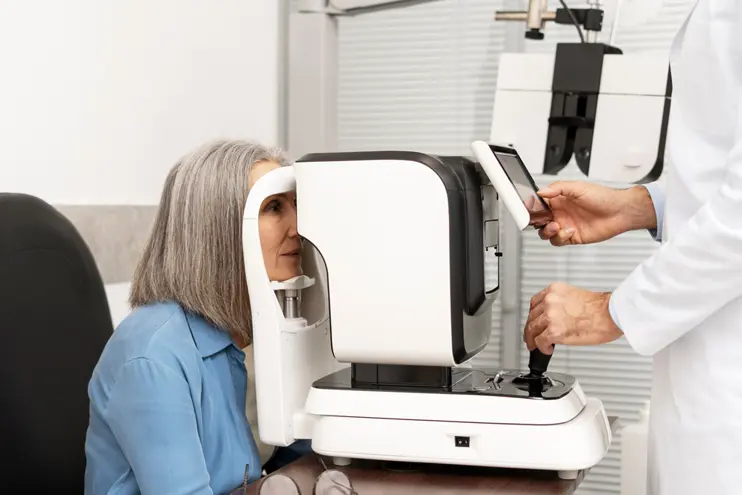
To address astigmatism, All-Laser LASIK works by precisely reshaping the cornea to ensure that light entering the eye is properly focused onto the retina. The excimer laser used in the second stage of the procedure targets the irregularities in the cornea’s surface, allowing the eye to focus light evenly, which improves vision clarity.
- If the cornea is too steep in one area, the laser can flatten that part.
- If the cornea is too flat, the laser can steepen it.
Is All-Laser LASIK Right for You?
While All-Laser LASIK is a safe and effective treatment for many patients with astigmatism, not everyone is a good candidate for the procedure. Here are some factors that determine whether All-Laser LASIK is the right choice for you:
The Benefits of All-Laser LASIK for Astigmatism

If you are a candidate for All-Laser LASIK, there are numerous benefits to the procedure:
What to Expect After All-Laser LASIK
After undergoing All-Laser LASIK, most patients experience immediate or near-immediate improvements in their vision. However, it’s important to understand that the healing process can take some time. Here’s what you can expect:
- Day of Surgery: You may experience some mild discomfort, such as a gritty sensation in your eyes. This is normal and should subside within a few hours.
- First Week: Vision will likely be blurry for the first few days, but most patients can return to regular activities, including work, within 1–2 days.
- 1 Month After Surgery: Your vision should continue to improve over the next few weeks. You may still notice slight fluctuations as your eyes heal.
- Long-Term Results: Within 3–6 months, your vision should stabilize, and you’ll likely enjoy clear, sharp vision without the need for corrective lenses.
Final Thoughts
If you have astigmatism and are considering vision correction, All-Laser LASIK offers an effective and precise treatment option. The advanced technology behind this bladeless procedure allows for more accurate reshaping of the cornea, improving visual clarity and reducing or eliminating the need for glasses or contact lenses.
More Articles
Continue reading our ophthalmology guides and vision care insights.

SMILE vs LASIK: Recovery Benchmarks for Vision Correction Care
South Korea has solidified its position as a global epicenter for ophthalmology, with the domestic LASIK and refractive surgery market projected to reach **USD 167.37 million by 2035**, growing at a steady CAGR of 8.54%.
Learn More

Prevalence of Myopia in Korea: The Value of Dream Lens Therapy
The prevalence of myopia among young people in South Korea has reached critical levels, often described as a "myopia epidemic." According to recent data from the **Korean National Health and Nutrition Examination Survey (KNHANES)**, the prevalence of myopia...
Learn More

Multidisciplinary Care: The Future of Korean Pediatric Eye Clinics
The landscape of pediatric eye care in South Korea is shifting rapidly. With nearly **21.9% of Korean children** estimated to be affected by various visual disorders according to nationwide health screenings, the demand for specialized intervention has never...
Learn More