Comprehensive Eye Care & Vision Correction in Incheon · Multilingual International Concierge
23+ Years Clinical Experience
en-US

Ophthalmology Guide
Are You at Risk for Glaucoma? Why Regular Screenings Are Key
Discover if you're at risk for glaucoma. Learn why regular eye screenings are crucial for early detection and vision protection. Book your exam today!
Schedule a ConsultationIntroduction: The Silent Shadow Over Vision
There is a quiet fear many people share but rarely voice — the fear of losing their sight. Unlike a sudden accident or an acute infection, many eye diseases creep in slowly, almost politely, without announcing themselves. Among them, glaucoma stands out as one of the most deceptive.
What Is Glaucoma, Really?
Glaucoma is not a single disease but rather a group of eye conditions that damage the optic nerve — the delicate bundle of over a million nerve fibers that transmit visual information from the eye to the brain.
- Primary Open-Angle Glaucoma: The most common, slow-progressing form.
- Angle-Closure Glaucoma: Less common but far more sudden, sometimes causing severe pain and vision loss in hours.
- Normal-Tension Glaucoma: Damage occurs despite average eye pressure readings.
- Secondary Glaucoma: Caused by other conditions like eye injury, inflammation, or steroid use.
- Congenital Glaucoma: Rare, but present from birth due to developmental issues.
Who Is at Risk?
At Global Ubal Eye Center, we often see patients surprised to learn that they fall into a risk category without knowing it. Some of the most important risk factors include:
1. Age
Glaucoma risk rises with age, particularly after 40. In Korea, where longevity is increasing, this makes regular eye exams more important than ever.
2. Family History
If a parent or sibling has glaucoma, the chance of developing it is significantly higher. We often encourage patients with a family history to bring relatives in for screening.
3. Ethnicity
Asian populations, including Koreans, are more prone to normal-tension glaucoma, which is trickier to detect since eye pressure readings appear normal.
4. Existing Eye Conditions
Severe nearsightedness (high myopia), thin corneas, or past eye injuries can all increase risk.
5. Systemic Health Conditions
Diabetes, hypertension, and vascular diseases reduce blood flow to the optic nerve, compounding the risk of damage.
6. Lifestyle Factors
Long-term steroid use (eye drops, inhalers, or oral medications) can also raise intraocular pressure.
Why You Can’t Rely on Symptoms
Unlike many diseases that come with clear warning signs — fever, pain, swelling — glaucoma often develops silently.
The Role of Regular Screenings
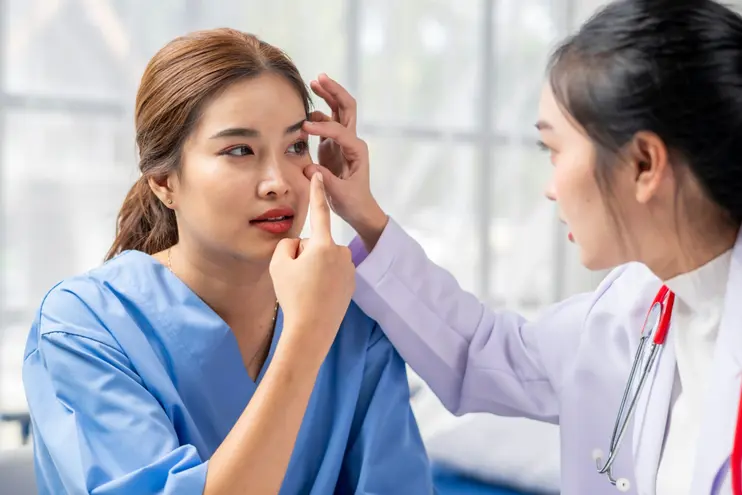
So, what does a glaucoma screening involve? At Global Ubal Eye Center, we use a multi-layered approach that goes far beyond the basic “puff test” for eye pressure.
- Tonometry – Measures intraocular pressure.
- Optical Coherence Tomography (OCT) – High-resolution imaging to detect thinning of the optic nerve fibers.
- Visual Field Testing – Detects blind spots patients may not notice themselves.
- Gonioscopy – Examines the drainage angle of the eye.
- Pachymetry – Measures corneal thickness, which affects pressure readings.
Living With a Glaucoma Diagnosis
For many patients, the first reaction to a glaucoma diagnosis is fear. The thought of losing one’s vision can be overwhelming. But here’s the reassuring truth: with today’s treatments and proper follow-up, many patients live long lives without ever experiencing severe vision loss.
- Medicated Eye Drops: The first line of defense, lowering eye pressure by reducing fluid production or increasing drainage.
- Laser Therapy: A minimally invasive way to improve fluid outflow.
- Surgery (including MIGS — Minimally Invasive Glaucoma Surgery): Recommended for patients who do not respond well to drops or lasers.
The Global Ubal Eye Center Perspective
For over 23 years, Global Ubal Eye Center has been at the forefront of glaucoma care in Korea. Under the guidance of Dr. Heecheol Bae, MD, PhD, our team combines advanced diagnostic tools with compassionate, multilingual patient support.
When Should You Get Checked?
If you fall into any of the risk categories — over 40, family history, diabetes, or high myopia — you should undergo a comprehensive glaucoma screening every 1–2 years. For patients already diagnosed, follow-up visits are typically every 3–6 months, depending on disease severity.
Conclusion: Protecting Your Eyes, Protecting Your Future
Glaucoma does not announce itself with pain or sudden blindness. It moves quietly, stealing vision piece by piece until it’s too late to turn back. Yet the story doesn’t have to end that way. With regular screenings, modern diagnostics, and tailored treatments, glaucoma can be detected early and managed for life.
More Articles
Continue reading our ophthalmology guides and vision care insights.

SMILE vs LASIK: Recovery Benchmarks for Vision Correction Care
South Korea has solidified its position as a global epicenter for ophthalmology, with the domestic LASIK and refractive surgery market projected to reach **USD 167.37 million by 2035**, growing at a steady CAGR of 8.54%.
Learn More

Prevalence of Myopia in Korea: The Value of Dream Lens Therapy
The prevalence of myopia among young people in South Korea has reached critical levels, often described as a "myopia epidemic." According to recent data from the **Korean National Health and Nutrition Examination Survey (KNHANES)**, the prevalence of myopia...
Learn More

Multidisciplinary Care: The Future of Korean Pediatric Eye Clinics
The landscape of pediatric eye care in South Korea is shifting rapidly. With nearly **21.9% of Korean children** estimated to be affected by various visual disorders according to nationwide health screenings, the demand for specialized intervention has never...
Learn More