Comprehensive Eye Care & Vision Correction in Incheon · Multilingual International Concierge
23+ Years Clinical Experience
en-US


Ophthalmology Guide
Are You at Risk for Glaucoma? Why Regular Screenings Are Crucial
Discover if you're at risk for glaucoma. Learn why regular eye screenings are vital for early detection, prevention, and protecting your vision today.
Schedule a ConsultationIntroduction: The Silent Thief of Sight
Imagine sitting in a café in Incheon, sipping your morning coffee, watching people walk by. You glance at the newspaper but notice the words on the edges of the page seem hazy. A week later, you don’t notice anything at all — because your central vision is still clear. Months or even years might pass before you realize you are slowly losing your sight.
What Exactly Is Glaucoma?
Glaucoma is not a single disease, but rather a group of eye conditions that share one thing in common: damage to the optic nerve, the vital pathway that transmits visual information from your eyes to your brain. When the optic nerve becomes impaired, parts of your vision begin to disappear — often starting at the edges (peripheral vision) and progressing inward.
- Open-angle glaucoma: The most common form, where drainage is partially blocked, causing slow and silent optic nerve damage.
- Angle-closure glaucoma: A more sudden, urgent type where the drainage angle becomes blocked completely, leading to rapid pressure rise, severe eye pain, and potential vision loss within hours.
- Normal-tension glaucoma: Optic nerve damage despite eye pressure readings being within normal range.
- Secondary glaucoma: Caused by other eye diseases, injuries, or medications.
Why Is Glaucoma So Dangerous?
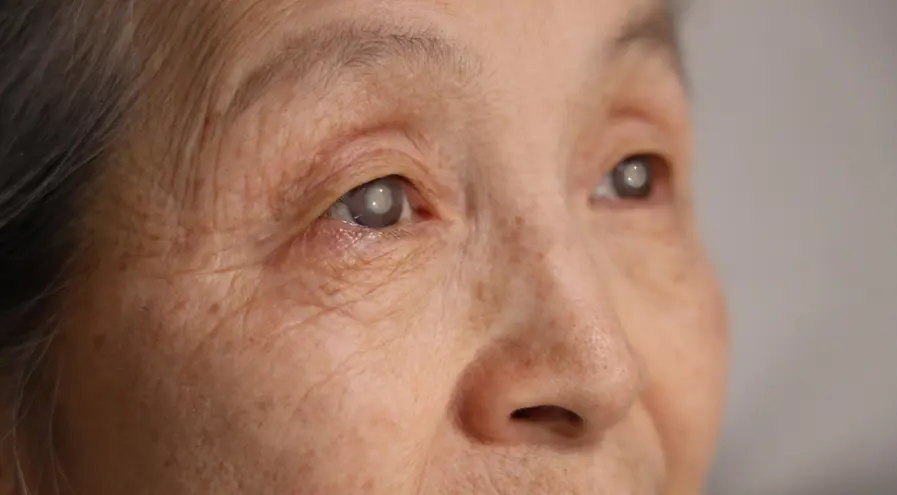
What sets glaucoma apart from many other eye conditions is its irreversible nature. Refractive errors like nearsightedness or farsightedness can be corrected with glasses, contact lenses, or LASIK. Cataracts can be treated with surgery, restoring clear vision. But glaucoma works differently: once the optic nerve fibers are lost, they cannot regenerate.
- Central vision typically remains clear until the late stages.
- Peripheral vision declines so slowly that the brain adapts, filling in the gaps.
- By the time patients notice, significant damage has already occurred.
Who Is at Risk?
While glaucoma can affect anyone, certain factors increase the likelihood:
- Age: Risk rises sharply after 40, especially beyond 60.
- Family History: Genetics play a major role — if a close relative has glaucoma, your chances are significantly higher.
- Ethnicity: East Asian populations (including Koreans) have higher rates of normal-tension glaucoma, while people of African descent face higher risk of open-angle glaucoma.
- Medical Conditions: Diabetes, hypertension, and vascular disorders can contribute.
- Eye Characteristics: High myopia (severe nearsightedness), thin corneas, or past eye trauma increase vulnerability.
The Role of Culture and Aging in Korea
In Korea, vision is highly tied to independence and social connection. Many older patients we see at Global Ubal Eye Center tell us that their greatest fear is not physical illness, but losing their ability to read, travel alone, or enjoy the faces of their grandchildren.
Why Regular Screenings Save Sight

The single greatest weapon against glaucoma is early detection. If caught early, treatments such as medicated eye drops, laser therapy, or minimally invasive surgery can control eye pressure and prevent further vision loss.
- Tonometry: Measuring eye pressure.
- OCT (Optical Coherence Tomography): High-resolution imaging of the optic nerve and retinal layers.
- Visual Field Test: Detects blind spots in peripheral vision.
- Pachymetry: Measures corneal thickness, which influences IOP readings.
- Gonioscopy: Examines the drainage angle inside the eye.
Insights From the Clinic
To be honest, the hardest cases are the ones where a patient sits across from us and says, “I had no idea anything was wrong.” By then, they may have already lost 30–40% of their optic nerve function.
How Often Should You Get Checked?
The frequency of screenings depends on age and risk:
- Under 40, no risk factors: Every 2–4 years.
- Ages 40–54: Every 1–3 years.
- Ages 55–64: Every 1–2 years.
- 65 and older: At least once a year.
- High-risk patients: As recommended, often annually or more frequently.
Advanced Care at Global Ubal Eye Center
Conclusion: Protecting the Vision That Protects Your Life
More Articles
Continue reading our ophthalmology guides and vision care insights.

SMILE vs LASIK: Recovery Benchmarks for Vision Correction Care
South Korea has solidified its position as a global epicenter for ophthalmology, with the domestic LASIK and refractive surgery market projected to reach **USD 167.37 million by 2035**, growing at a steady CAGR of 8.54%.
Learn More

Prevalence of Myopia in Korea: The Value of Dream Lens Therapy
The prevalence of myopia among young people in South Korea has reached critical levels, often described as a "myopia epidemic." According to recent data from the **Korean National Health and Nutrition Examination Survey (KNHANES)**, the prevalence of myopia...
Learn More

Multidisciplinary Care: The Future of Korean Pediatric Eye Clinics
The landscape of pediatric eye care in South Korea is shifting rapidly. With nearly **21.9% of Korean children** estimated to be affected by various visual disorders according to nationwide health screenings, the demand for specialized intervention has never...
Learn More