Comprehensive Eye Care & Vision Correction in Incheon · Multilingual International Concierge
23+ Years Clinical Experience
en-US


Ophthalmology Guide
Are Premium Cataract Lenses the Key to Perfect Vision After Surgery?
Discover how premium cataract lenses can restore clear, sharp vision after surgery. Compare options and find out if they’re right for you—learn more today!
Schedule a ConsultationIntroduction

There’s a quiet moment after every cataract surgery — when the bandage comes off, and a patient blinks into the light again. Some describe it as seeing the world “reborn.” Others simply smile and say, “Everything looks so clear now.”
The Changing Meaning of Cataract Surgery
In the past, cataract surgery was purely restorative. Surgeons removed the opaque natural lens and replaced it with a simple artificial one, called a monofocal IOL. It restored basic clarity, but most patients still needed glasses for reading or driving.
What Are Premium Cataract Lenses?
Premium cataract lenses, also known as advanced technology intraocular lenses (ATIOLs), are designed to do more than just replace the clouded natural lens. They correct additional refractive errors that limit vision.
1. Toric Lenses: Precision for Astigmatism
Astigmatism is one of the most common reasons patients struggle to achieve crisp vision after standard cataract surgery. Toric lenses are engineered to correct this irregular corneal curvature.
When properly aligned — especially using laser-assisted positioning — these lenses often give patients clear, distortion-free distance vision without glasses.
2. Multifocal or Trifocal Lenses: Freedom from Reading Glasses
These lenses split light into multiple focal points, allowing patients to see near, intermediate, and far distances.
The result? You can read a text message, see your computer screen, and look across the street — all without switching glasses.
However, multifocal lenses require careful patient selection and precise alignment. Some people may notice mild glare or halos initially, though most adapt quickly.
3. Extended Depth-of-Focus (EDOF) Lenses: The Smooth Transition
EDOF lenses — such as Alcon’s Vivity or Johnson & Johnson’s Symfony — create a continuous range of vision without the “jump” between focus points.
They are ideal for patients who prioritize visual comfort and night driving, offering a balance between independence from glasses and optical quality.
The Role of Personalization in Choosing the Right Lens
One thing patients often overlook is that the best lens isn’t always the most advanced one — it’s the one that matches their eyes and lifestyle perfectly.
- Detailed corneal topography
- Measurement of astigmatism and lens axis
- Ocular surface evaluation (especially for dry eye)
- Retinal health examination
- Pupil behavior analysis under different light conditions
The Surgery and What Comes After
Cataract surgery with a premium IOL is performed under local anesthesia and usually takes about 10–15 minutes per eye.
Using femtosecond laser guidance, we make ultra-precise incisions and soften the cloudy lens before replacing it with the new implant.
The Value (and Cost) of Premium Lenses
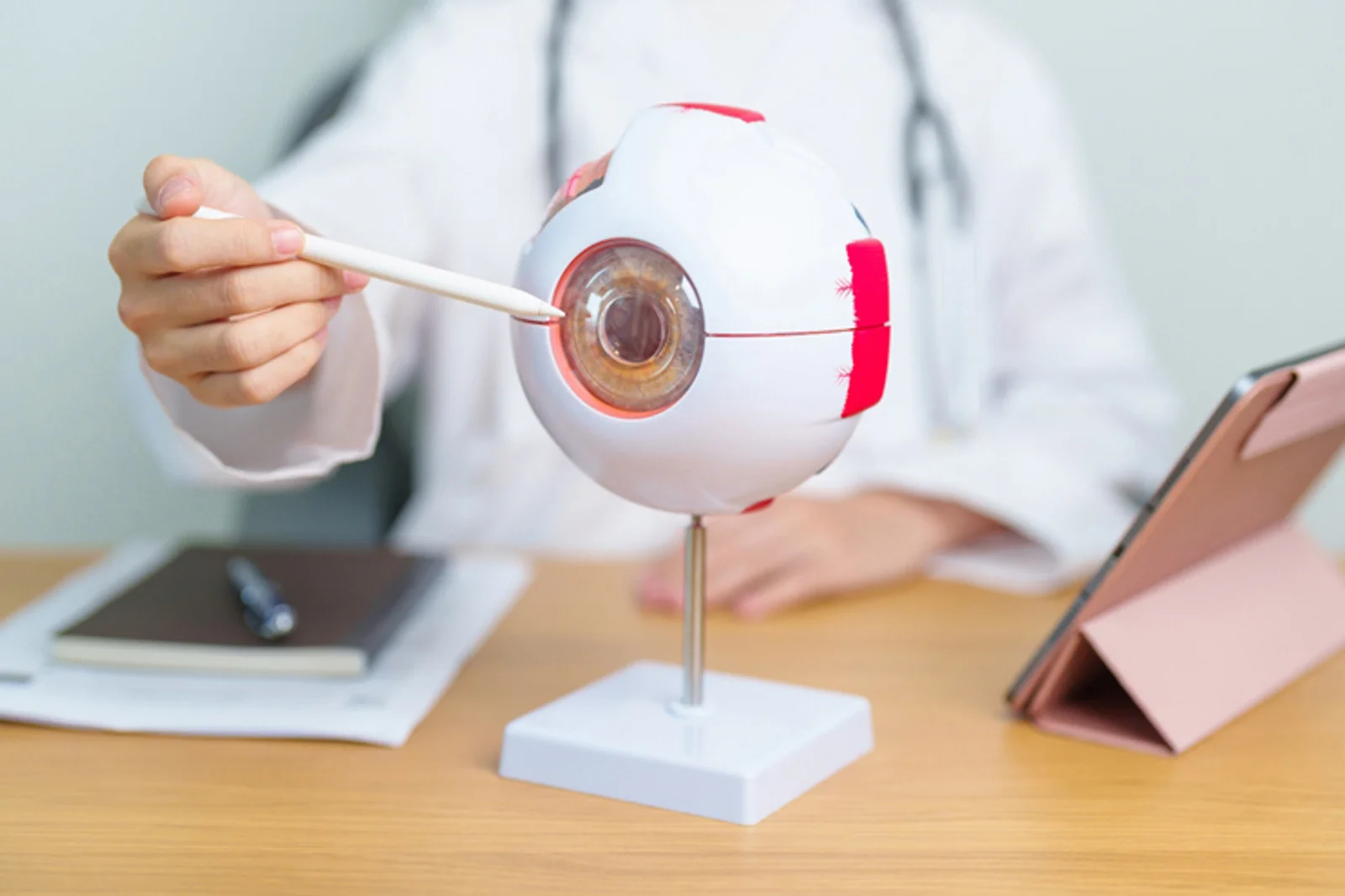
It’s true — premium lenses cost more than standard ones, and they’re not covered by national insurance. But thinking purely in terms of cost often misses the bigger picture.
Are Premium Lenses Right for Everyone?
Not necessarily. While many patients achieve stunning results, not everyone is a candidate.
Certain eye conditions — like advanced glaucoma, macular degeneration, retinal disease, or corneal irregularities — can reduce the benefits of premium IOLs.
What Results Can You Expect?
When properly selected and implanted, premium IOLs can offer:
- Clear distance, intermediate, and near vision
- Reduced dependence on glasses or contact lenses
- Stable, lasting vision over many years
- Improved contrast sensitivity and depth perception (especially with EDOF lenses)
The Human Side of Vision Restoration
Technology alone can’t deliver perfect results. Behind every successful cataract surgery is a partnership between surgeon and patient.
Conclusion: The Choice That Shapes a Lifetime of Vision
So, are premium cataract lenses the key to perfect vision after surgery?
More Articles
Continue reading our ophthalmology guides and vision care insights.

SMILE vs LASIK: Recovery Benchmarks for Vision Correction Care
South Korea has solidified its position as a global epicenter for ophthalmology, with the domestic LASIK and refractive surgery market projected to reach **USD 167.37 million by 2035**, growing at a steady CAGR of 8.54%.
Learn More

Prevalence of Myopia in Korea: The Value of Dream Lens Therapy
The prevalence of myopia among young people in South Korea has reached critical levels, often described as a "myopia epidemic." According to recent data from the **Korean National Health and Nutrition Examination Survey (KNHANES)**, the prevalence of myopia...
Learn More

Multidisciplinary Care: The Future of Korean Pediatric Eye Clinics
The landscape of pediatric eye care in South Korea is shifting rapidly. With nearly **21.9% of Korean children** estimated to be affected by various visual disorders according to nationwide health screenings, the demand for specialized intervention has never...
Learn More