Comprehensive Eye Care & Vision Correction in Incheon · Multilingual International Concierge
23+ Years Clinical Experience
en-US


Ophthalmology Guide
Are Premium Cataract Lenses Right for Your Lifestyle?
Discover if premium cataract lenses suit your vision goals and daily needs. Compare options, benefits, and costs—learn more to make the right choice today!
Schedule a ConsultationIntroduction
Most people associate cataracts with the passage of time — a natural part of aging that slowly clouds the world before their eyes. At first, it may just feel like poor lighting or tired eyes. Street signs look hazy at night, reading small print becomes difficult, and colors seem less vibrant than before. But as the lens of the eye continues to cloud, these subtle inconveniences start to interfere with daily life.
Understanding Cataracts and Lens Replacement
A cataract forms when the natural lens inside your eye becomes cloudy, blocking light from passing clearly to the retina. As the clouding progresses, it leads to blurred vision, glare, and dull color perception. The only effective treatment is to remove the cloudy lens and replace it with a clear, artificial one — known as an intraocular lens (IOL).
The Difference Between Standard and Premium Lenses
Standard, or monofocal, lenses have been the backbone of cataract surgery for decades. They are designed to focus light at a single distance — most often for clear distance vision. That means while you’ll likely see well for driving or outdoor activities, you’ll still need glasses for reading, computer use, or close work.
Types of Premium Cataract Lenses
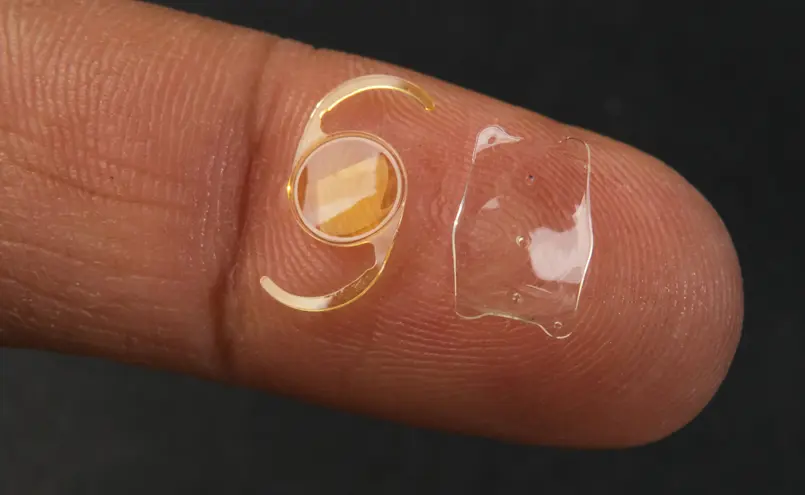
Premium IOLs come in several categories, each designed to meet specific visual needs. The right choice depends on your eye condition, corneal shape, visual habits, and personal preferences.
Multifocal and Trifocal Lenses
Multifocal and trifocal lenses use concentric zones or advanced optics to provide vision at multiple distances — near, intermediate, and far. They’re excellent for people who want freedom from glasses for most activities.
Extended Depth of Focus (EDOF) Lenses
EDOF lenses, such as the Tecnis Symfony or AcrySof IQ Vivity, create an extended range of focus rather than distinct zones. The result is smooth, continuous vision from distance to intermediate — ideal for driving, cooking, and working at a computer.
Toric Lenses
Toric IOLs are designed to correct astigmatism, a common condition where the cornea has an irregular shape that blurs vision at all distances. These lenses are precisely aligned during surgery to correct the irregularity and provide crisp vision.
Matching the Lens to Your Lifestyle
Choosing the right lens begins with understanding your visual priorities. At Global Ubal Eye Center, Dr. Heecheol Bae emphasizes that cataract surgery is not a “one-size-fits-all” procedure.
- The Active Retiree: If you enjoy golf, travel, and photography, a trifocal or EDOF lens can provide natural focus across different activities without needing glasses.
- The Night Driver: If you drive frequently after dark or are sensitive to glare, an EDOF or monofocal lens may be better suited.
- The Book Lover: If your greatest joy is curling up with a novel, a multifocal lens can reduce your dependency on reading glasses.
The Technology and Precision Behind Premium Lens Surgery
Premium lenses demand premium precision. Implanting these lenses isn’t just a routine procedure; it requires exact alignment and measurement for optimal performance. Even a small misalignment can reduce the visual benefit, particularly for toric or multifocal designs.
What Most People Don’t Realize About Premium Lenses

Here’s something that often goes unsaid: premium lenses require neural adaptation.
Are Premium Lenses Suitable for Everyone?
Not always — and that’s an important part of the discussion.
- Optical coherence tomography (OCT) for retinal assessment
- Corneal topography for shape and curvature analysis
- Biometric measurements for IOL power calculation
How to Decide if Premium Cataract Lenses Are Right for You
Choosing a premium lens is ultimately about matching your vision to your lifestyle.
- Do I want to minimize dependence on glasses?
- Do I use screens or drive at night frequently?
- Do I have astigmatism that affects my vision clarity?
- Do I have other eye conditions that might limit lens options?
Conclusion
Cataract surgery today is far more than a procedure to clear vision — it’s a chance to reimagine how you want to see the world. With the right intraocular lens, you can tailor your vision to your lifestyle, whether that means reading without glasses, driving comfortably at night, or simply enjoying the details of everyday life again.
More Articles
Continue reading our ophthalmology guides and vision care insights.

SMILE vs LASIK: Recovery Benchmarks for Vision Correction Care
South Korea has solidified its position as a global epicenter for ophthalmology, with the domestic LASIK and refractive surgery market projected to reach **USD 167.37 million by 2035**, growing at a steady CAGR of 8.54%.
Learn More

Prevalence of Myopia in Korea: The Value of Dream Lens Therapy
The prevalence of myopia among young people in South Korea has reached critical levels, often described as a "myopia epidemic." According to recent data from the **Korean National Health and Nutrition Examination Survey (KNHANES)**, the prevalence of myopia...
Learn More

Multidisciplinary Care: The Future of Korean Pediatric Eye Clinics
The landscape of pediatric eye care in South Korea is shifting rapidly. With nearly **21.9% of Korean children** estimated to be affected by various visual disorders according to nationwide health screenings, the demand for specialized intervention has never...
Learn More