Comprehensive Eye Care & Vision Correction in Incheon · Multilingual International Concierge
23+ Years Clinical Experience
en-US

Ophthalmology Guide
All-Laser LASIK for Astigmatism: How This Procedure Helps
Discover how All-Laser LASIK for astigmatism offers precise, bladeless vision correction with fast recovery. Learn more about this advanced procedure today!
Schedule a ConsultationIntroduction
Imagine waking up and seeing the world clearly — no glasses slipping down your nose, no blurry street signs, no fumbling for contact lenses. For patients with astigmatism, this scenario can feel like a far-off dream. But thanks to advanced technologies like all-laser LASIK, that dream is increasingly within reach.
What Exactly Is All-Laser LASIK?
All-laser LASIK — sometimes called bladeless LASIK — uses a femtosecond laser to create a thin flap in the cornea, instead of a mechanical blade (microkeratome). After this flap is gently lifted, an excimer laser reshapes the underlying cornea to correct the vision problem — in this case, astigmatism.
Why Astigmatism Needs Special Attention
Astigmatism isn’t just a fancy term for “bad eyesight.” It’s a unique type of refractive error caused by an irregular curvature of the cornea (or lens). Instead of a smooth, round shape like a basketball, an astigmatic cornea is more oval — like a rugby ball. This means light entering the eye is focused at multiple points, leading to:
- Blurred vision at all distances
- Double images or “ghosting”
- Eye strain and headaches
- Difficulty seeing at night
Step-by-Step: How All-Laser LASIK Works for Astigmatism
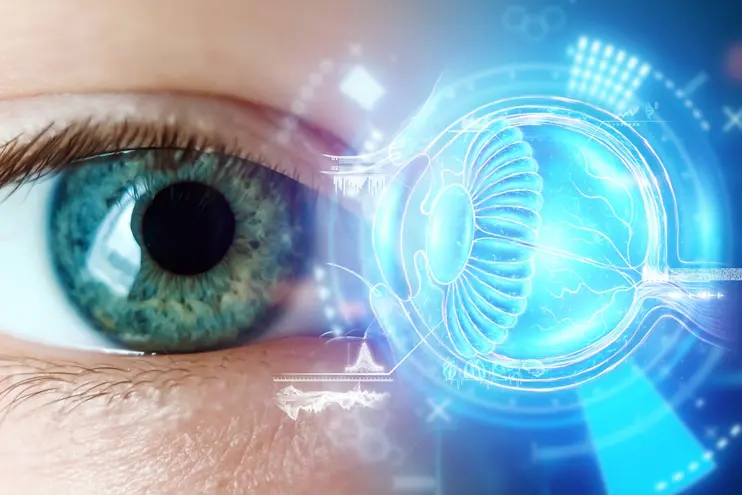
- Detailed Mapping and Evaluation Using corneal topography, wavefront analysis, and pachymetry, we create a 3D map of the patient’s eye. We measure the axis and magnitude of the astigmatism — crucial data for laser planning. This step is not just a formality. It’s the backbone of a successful outcome. We also assess eye health, tear film stability, and corneal thickness to ensure the procedure is safe.
- Femtosecond Laser Flap Creation With micrometer-level precision, the femtosecond laser forms a corneal flap. Unlike a blade, this laser allows exact thickness and diameter control, minimizing risks and improving predictability. This step sets the stage for accurate vision correction by ensuring uniformity — a critical factor when dealing with astigmatism.
- Custom Excimer Laser Ablation The excimer laser removes precise corneal tissue based on the patient’s unique prescription, reshaping the eye into a more spherical form. This tailored correction flattens or steepens the meridians as needed. Think of it like smoothing out the uneven curves of a lens so that light focuses precisely on the retina.
- Flap Repositioning and Healing The flap is laid back in place. Thanks to the uniformity of the cut, healing begins immediately without stitches. Patients usually see noticeable improvement within a day. Because no blades are used, the risk of complications such as irregular healing or flap displacement is greatly reduced.
- Post-Op Monitoring and Dry Eye Management Astigmatic patients can be prone to dry eye after LASIK. We monitor recovery closely and use tear support and anti-inflammatory drops to support healing. Follow-up visits are essential not just to monitor vision, but to ensure long-term corneal stability.
Benefits of All-Laser LASIK for Astigmatism
At Global Ubal Eye Center, we’ve seen firsthand how transformative this procedure can be. Patients often report:
- Sharper, more stable vision — even in low light
- Less dependence on glasses or toric contact lenses
- Quick recovery and return to daily life
- Long-term satisfaction, with most patients achieving 20/20 vision or better
Are You a Good Candidate?
All-laser LASIK is a great option for many, but not everyone. Ideal candidates:
- Are 18 or older with stable vision for at least a year
- Have mild to moderate astigmatism within treatable limits
- Possess a healthy, adequately thick cornea
- Are free from eye diseases like keratoconus or severe dry eye
What Makes Global Ubal Eye Center Different
Astigmatism correction isn’t just about lasers — it’s about people. At Global Ubal, we combine technology with personalized care. Our team offers support in Korean, English, Japanese, Mongolian, and Russian, making international care seamless. We treat each patient with a deep sense of responsibility and long-term vision.
What You Can Expect: Before, During, After
Final Thought: See the World Your Way
More Articles
Continue reading our ophthalmology guides and vision care insights.

SMILE vs LASIK: Recovery Benchmarks for Vision Correction Care
South Korea has solidified its position as a global epicenter for ophthalmology, with the domestic LASIK and refractive surgery market projected to reach **USD 167.37 million by 2035**, growing at a steady CAGR of 8.54%.
Learn More

Prevalence of Myopia in Korea: The Value of Dream Lens Therapy
The prevalence of myopia among young people in South Korea has reached critical levels, often described as a "myopia epidemic." According to recent data from the **Korean National Health and Nutrition Examination Survey (KNHANES)**, the prevalence of myopia...
Learn More

Multidisciplinary Care: The Future of Korean Pediatric Eye Clinics
The landscape of pediatric eye care in South Korea is shifting rapidly. With nearly **21.9% of Korean children** estimated to be affected by various visual disorders according to nationwide health screenings, the demand for specialized intervention has never...
Learn More