Comprehensive Eye Care & Vision Correction in Incheon · Multilingual International Concierge
23+ Years Clinical Experience
en-US


Ophthalmology Guide
Advanced Lens Implants That Adjust to Your Vision Needs
Advanced Lens Implants that adjust to your vision needs offer dynamic clarity and personalized focus. Discover cutting‑edge options and improve your sight—learn more today!
Schedule a ConsultationIntroduction
Imagine waking up one day and being able to read your smartphone, glance across the room, and admire the scenery outside — all without reaching for your glasses. For many, this isn’t just a dream. Thanks to innovations in ophthalmology, advanced intraocular lens (IOL) implants are making it a reality. These lenses go beyond simply replacing a cloudy lens caused by cataracts.
Why Vision Changes with Age — And Why Standard Lenses Fall Short
To understand why advanced lens implants matter, it helps to revisit how our natural lens works. When we’re young, the crystalline lens is soft and flexible. Tiny muscles around it adjust its shape to focus light clearly on the retina — a process called accommodation. That’s why kids effortlessly shift focus from the chalkboard to a book.
What Are Advanced Lens Implants?
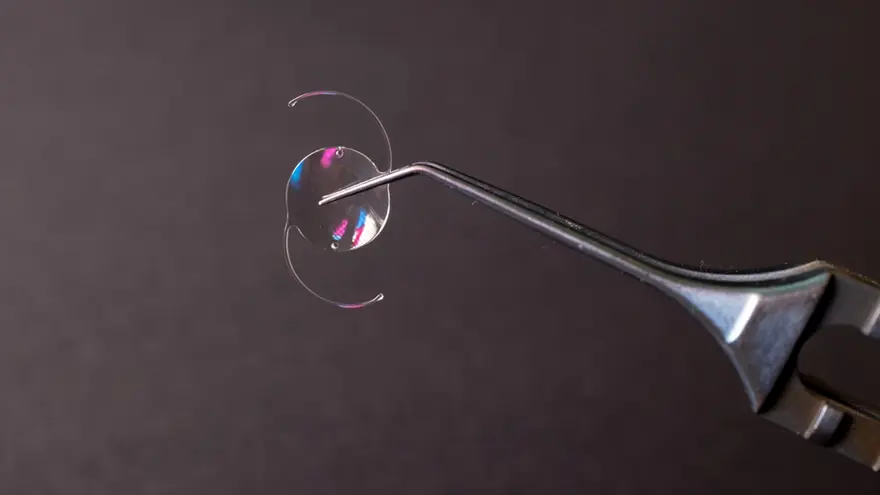
Advanced lens implants are a class of intraocular lenses designed to provide vision at multiple distances — near, intermediate, and far — with minimal reliance on glasses.
Multifocal Lenses
Multifocal IOLs create multiple focal points — typically for near and far — so your brain learns to use the most relevant image. Imagine having two integrated prescriptions in one lens.
Extended Depth of Focus (EDOF) Lenses
Rather than distinct focal points, EDOF lenses stretch the range of clear vision. Think of it as a smooth continuum from near to far.
Accommodative Lenses
These aim to mimic the eye’s natural focusing ability by moving or changing shape slightly within the eye as muscles contract.
Light‑Adjustable Lenses (LALs)
A breakthrough in personalization, LALs allow postoperative refinement of your prescription using controlled light therapy. After surgery, your eye doctor can tune your vision based on how you’re actually seeing in daily life — a bit like fine‑tuning a high‑precision instrument.
How Do These Lenses Work?
At the heart of advanced lens implants is optical engineering — manipulating how light enters the eye to focus sharply on the retina.
- Monofocal Lenses: Like a single‑focus camera lens — sharp at one distance.
- Multifocal Lenses: Like bifocal glasses embedded inside your eye — multiple “zones” of focus.
- EDOF Lenses: Like extending the depth of field in a camera — more of the scene stays in focus without switching zones.
- Light‑Adjustable Lenses: Like updating your glasses prescription after surgery — but without changing glasses.
Who Benefits Most From Advanced Lens Implants?
Advanced lens implants aren’t just for a select few — they’re valuable for a broad range of patients:
People With Cataracts
If your vision is clouded by cataracts and you’re tired of glasses for reading or driving, advanced IOLs can dramatically improve quality of life.
Patients With Presbyopia
Even without cataracts, people seeking freedom from reading glasses may choose lens replacement surgery with an advanced IOL to address presbyopia — particularly if they lead active, visually demanding lives.
Computer and Intermediate Vision Users
Doctors often consider lifestyle: an architect, graphic designer, or avid streamer needs excellent vision at mid‑range distances. EDOF or hybrid lens designs can fit these needs well.
Active Adults
Golfers, travelers, and those who want to minimize glasses throughout their day often find advanced IOLs particularly liberating.
The Patient Experience — What to Expect

You won’t feel the difference during surgery — modern cataract procedures with advanced IOLs are virtually the same as traditional implants. What matters most is preoperative planning.
Personalized Evaluation
Your eye surgeon measures your eye’s shape, prescription, pupil size, and corneal properties. We discuss your daily visual demands — reading, computer work, driving, night vision needs — and align lens choice accordingly.
Surgery Day
Under local anesthesia, the cloudy natural lens is removed and replaced with the chosen advanced IOL. Most patients are comfortable during the procedure and go home the same day.
Choosing the Right Lens for You
Conclusion
More Articles
Continue reading our ophthalmology guides and vision care insights.

SMILE vs LASIK: Recovery Benchmarks for Vision Correction Care
South Korea has solidified its position as a global epicenter for ophthalmology, with the domestic LASIK and refractive surgery market projected to reach **USD 167.37 million by 2035**, growing at a steady CAGR of 8.54%.
Learn More

Prevalence of Myopia in Korea: The Value of Dream Lens Therapy
The prevalence of myopia among young people in South Korea has reached critical levels, often described as a "myopia epidemic." According to recent data from the **Korean National Health and Nutrition Examination Survey (KNHANES)**, the prevalence of myopia...
Learn More

Multidisciplinary Care: The Future of Korean Pediatric Eye Clinics
The landscape of pediatric eye care in South Korea is shifting rapidly. With nearly **21.9% of Korean children** estimated to be affected by various visual disorders according to nationwide health screenings, the demand for specialized intervention has never...
Learn More